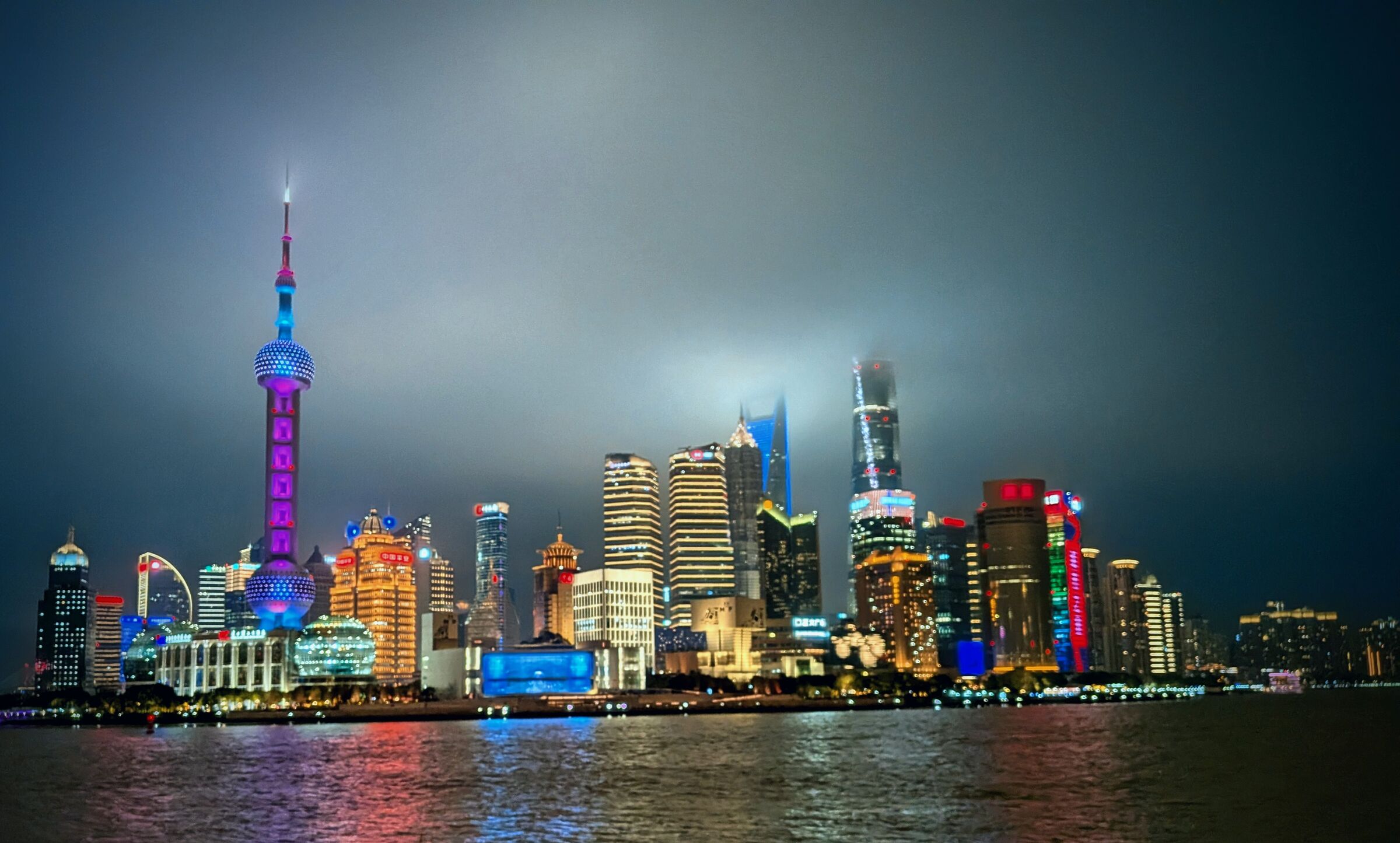
One Week in Shanghai: Dumplings, Tea, Trains, and Mild Confusion
A one-week trip from Athens to Shanghai, with side quests to Zhujiajiao and Hangzhou,
an unhealthy amount of dumplings, and several minor transportation battles.
| Dates | 1–7 March 2026 |
| Flight cost | 280€ roundtrip (Athens–Shanghai) |
| Hostel | Hi Cozy Youth Hostel, Nanjing Road area |
| Apps used | Alipay, WeChat, Amap, Trip.com |
| Cities visited | Shanghai, Zhujiajiao, Hangzhou |
It was September 25, 2025. I came across a roundtrip deal from Athens to Shanghai for 300€. In the end it cost me 280€, which somehow made it feel even more illegal not to book.
My first instinct, naturally, was to send it to friends and try to build a little travel squad around it. Naturally, nobody was interested.
And since some deals are too good to ignore, a few clicks later my reservation for 1–7 March was confirmed.
After a lot of research, the plan was ready.
- Alipay and WeChat set up for payments? ✅
- Amap as my main navigation app? ✅
- Dianping downloaded, even though I eventually never used it? ✅
- eSIM provided by Roamless? ✅
- Revolut cards ready? ✅
- Passport? ✅
- Double-checking that no visa is required for Greek citizens until 31 December 2026? ✅
I used Trip.com to book my hostel and the train trips that I’ll mention below.
Arrival day: patience, airport chaos, and a very warm welcome
On the 1st of March, I arrived at Athens airport armed with two things: luggage and patience.
The trip ahead was about 16 hours and 40 minutes, which for me is long enough to question my life choices at least twice.
After a long wait in Istanbul airport and a decent amount of plane sleep, plus a couple of book chapters, I finally landed at Pudong Airport.
Shanghai, here I come.
At the airport there were signs telling passengers to declare their arrival by scanning a QR code and filling in their details before passport control. After that, I connected to the airport Wi-Fi, opened Amap, and tried to get directions to my hostel.
And… it didn’t work.
It wanted a Chinese phone number. My eSIM plan did not include one. Outside China, the app had worked fine without verification. Inside China, apparently the app had different ambitions.
So I tried to hack my way through it by Googling “Amap is asking for verification”.
Google, of course, did not work.
That was a strong opening move by China.
I switched to mobile data, since I had no VPN set up, and tried again. After a few Reddit posts I found a solution that provided me with a temporary mobile number for seven days. With that, I verified Amap, WeChat, and Alipay, and I was finally ready to move.
Amap told me to take Metro Line 2 to East Nanjing Road, and following the signs in the airport was actually very easy. Another surprise: the metro accepted Visa cards directly, so I used my Revolut card and boarded.
After another exhausting hour on the metro, I was finally there.
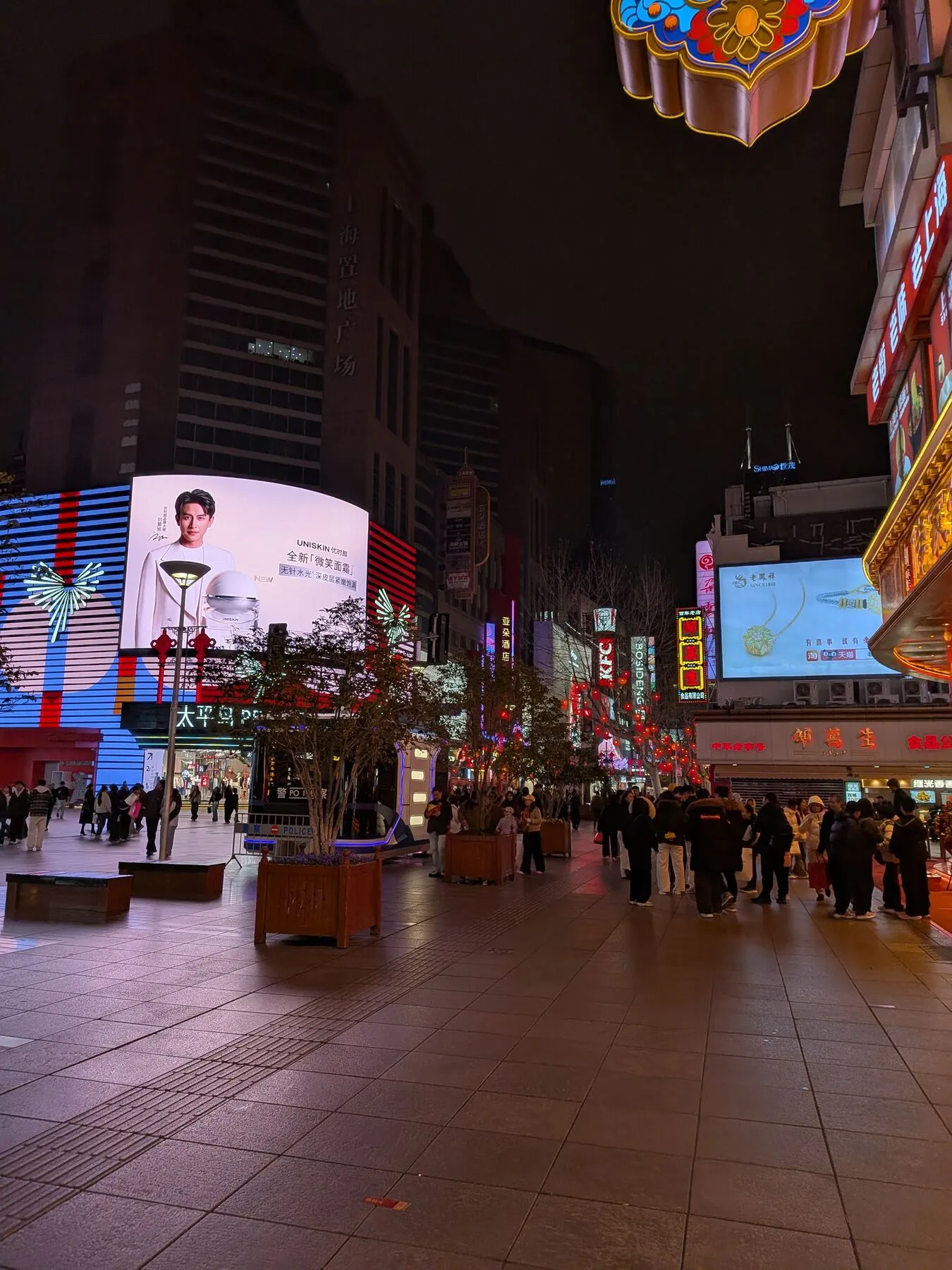 Nanjing Road on my first night in Shanghai
At that point, reading everything in Chinese, realizing that most people didn’t speak English, and seeing that Amap did not offer the same kind of hand-holding I’m used to from Google Maps, I was pretty sure my carefully planned day trips were about to collapse.
They didn’t. China ended up exceeding my expectations.
After a 10-minute walk, I reached Hi Cozy Youth Hostel, in what looked, at first glance, like a slightly sketchy area. In reality, it turned out to be safe, central, and full of tourists.
I was staying in a two-bed dormitory, and to be fair the room was tiny. I was struggling to move around, and it wasn’t in the best hygienic condition either. But the price was fair.
Then came the first highlight of the room: the toilet had a remote control.
Naturally, I spent a little time testing the advanced features of modern civilization before meeting my roommate, Rodrigo, who was staying only one night before continuing to Japan. He suggested we grab dinner together, and on the way downstairs, using the slowest elevator known to mankind, we also met Hao from Beijing.
Yang’s Dumplings was the plan. Hao explained that it was basically the dumpling equivalent of Starbucks: famous, everywhere, and actually quite good.
But first, a stop at a Huawei store on Nanjing Road so Rodrigo could buy a charger for his smartwatch. The store was huge and, because apparently that wasn’t enough, it also hosted a car showroom.
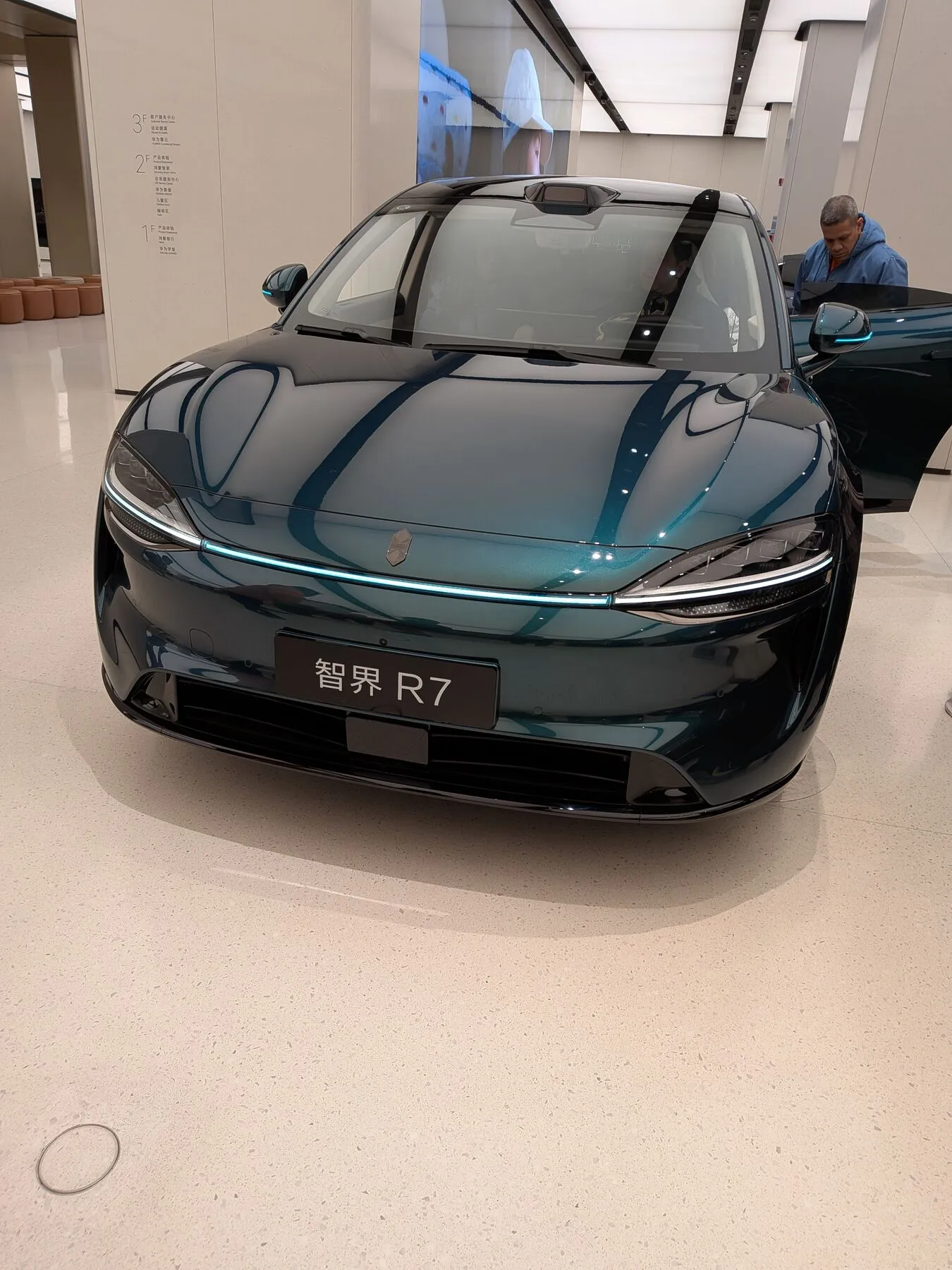 Huawei’s store car showroom
Eventually we ended up at one of the Yang’s Dumplings branches inside a mall on Nanjing Road, where I ordered a soup containing something like chicken and vegetables, plus two pairs of dumplings with crab and meat.
Little did I know that Chinese food is often served at temperatures apparently approved by heavy industry. For the rest of the trip I kept burning my mouth on food and tea because the bowls, plates, and pots seemed physically incapable of cooling down.
One more thing worth noting: most, if not all, restaurants had QR-code menus. You scan with Alipay or WeChat, browse the menu, place the order, pay, and eventually someone brings the food to the table.
A deeply efficient system. Also, one with almost zero human interaction.
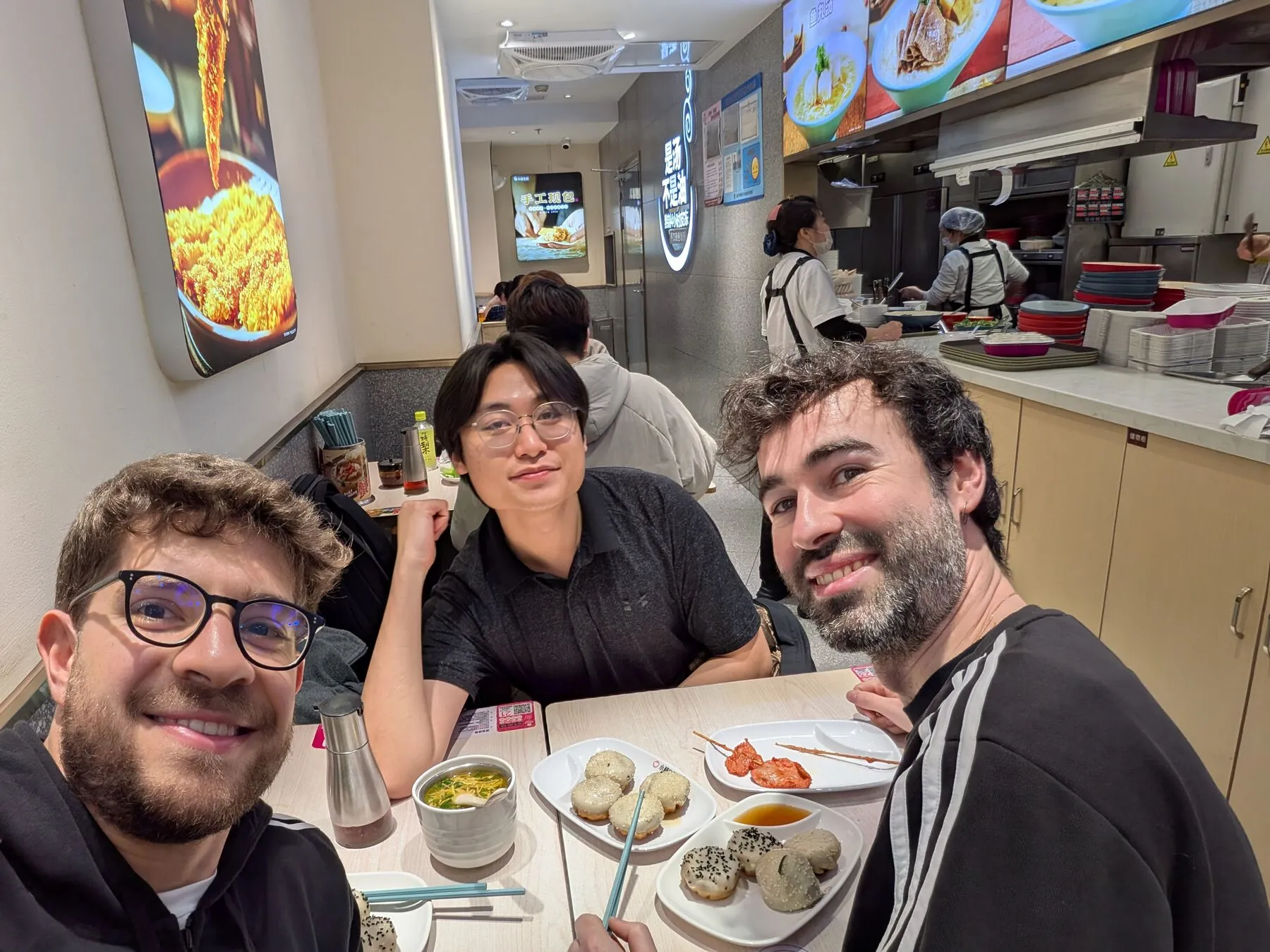 The three of us having dinner
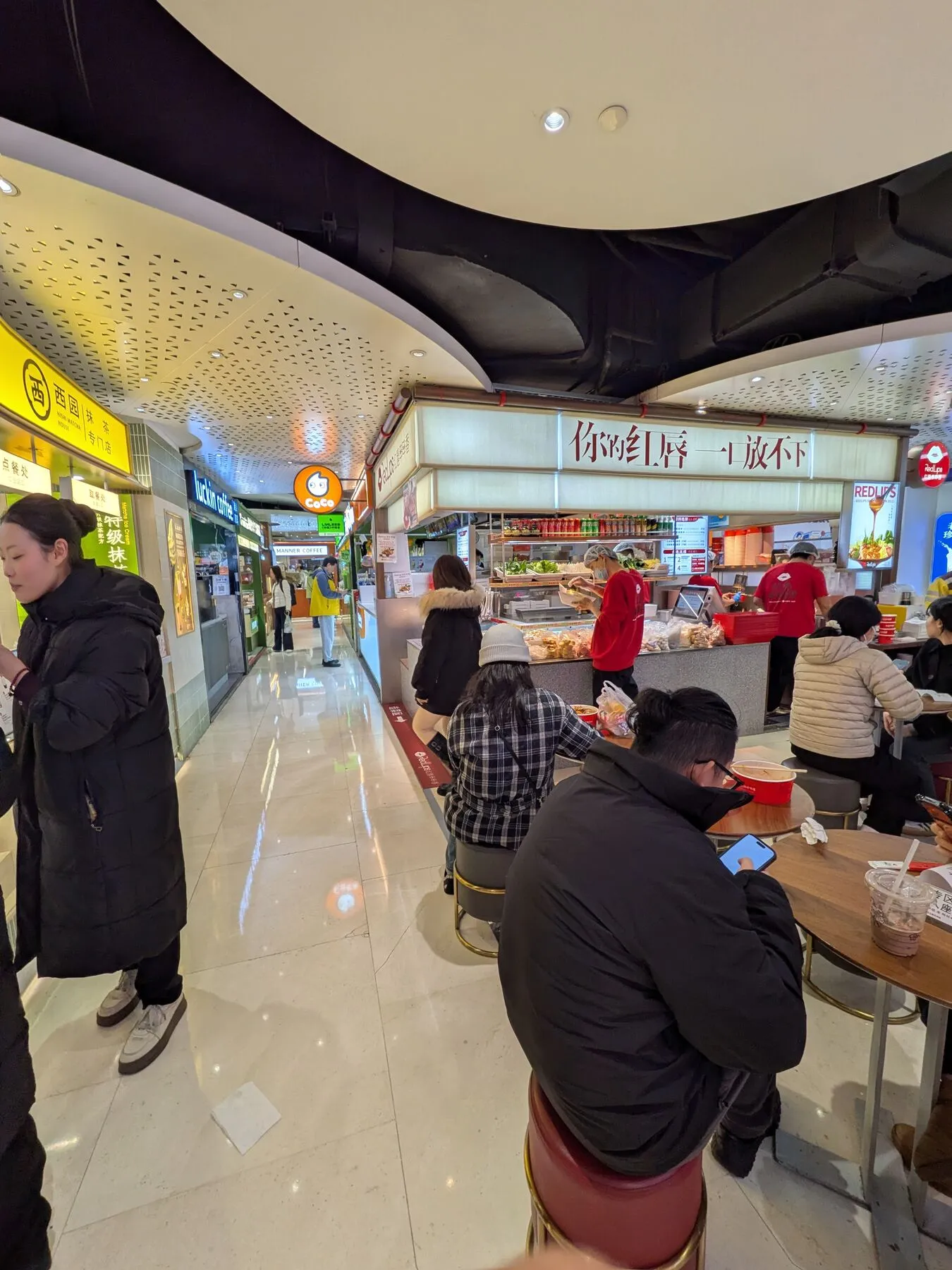 People enjoying their dinner next to us
We still wouldn’t call it a day. We decided to walk to the Bund.
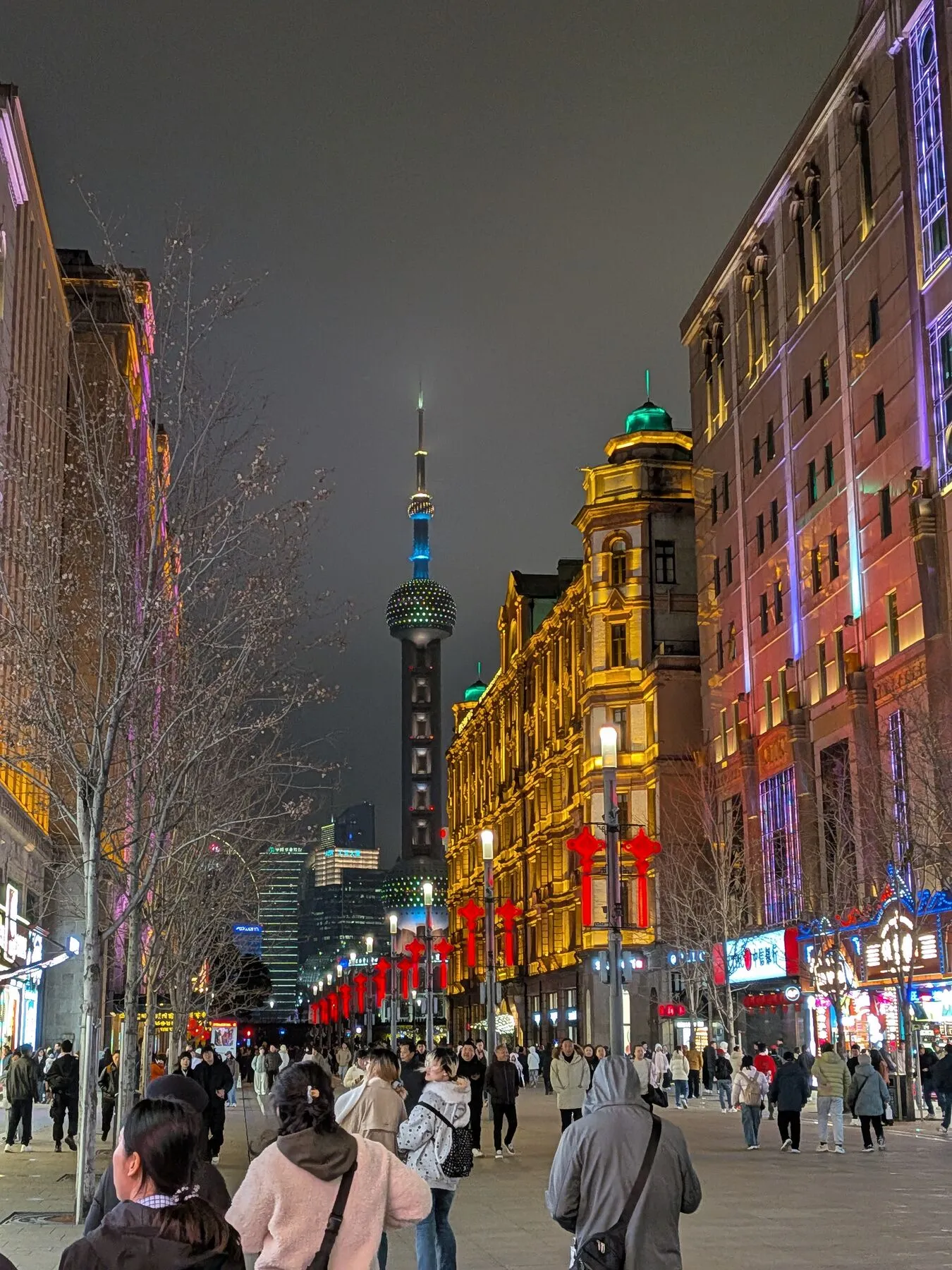 Passing through the lights and stores of Nanjing Road
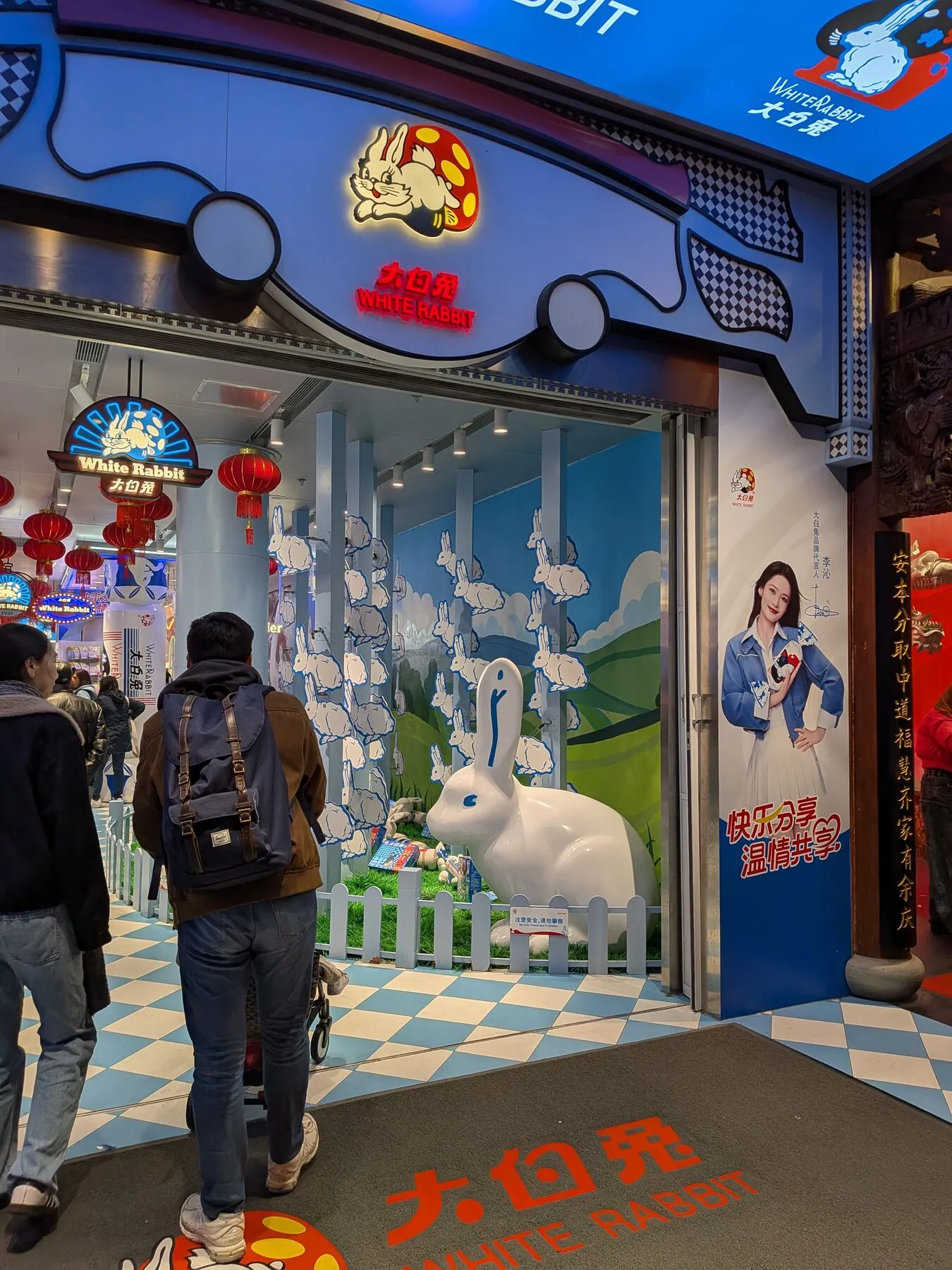 The famous White Rabbit candy store
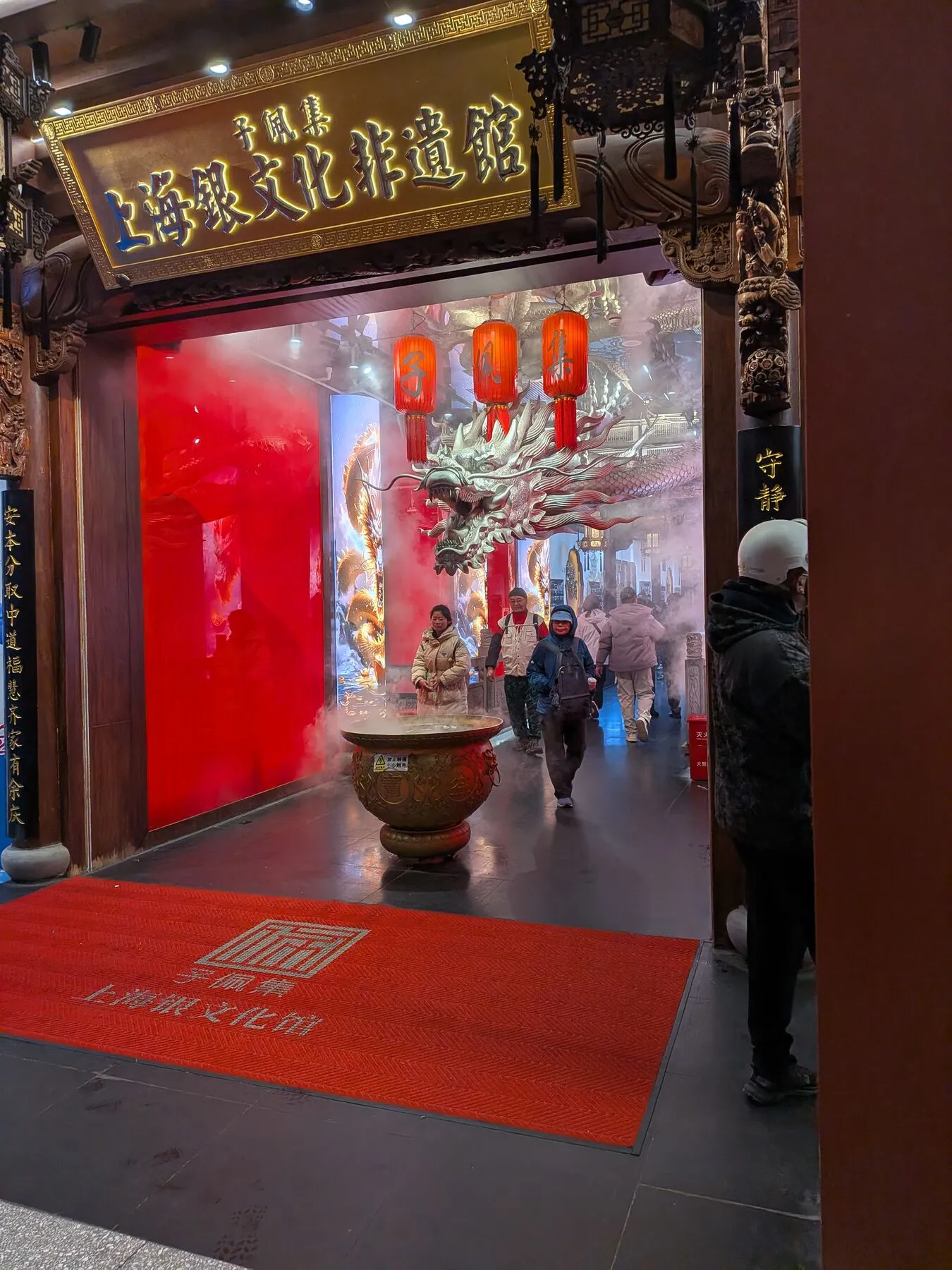 All shops were heavily decorated
And then we were there.
The view was spectacular.
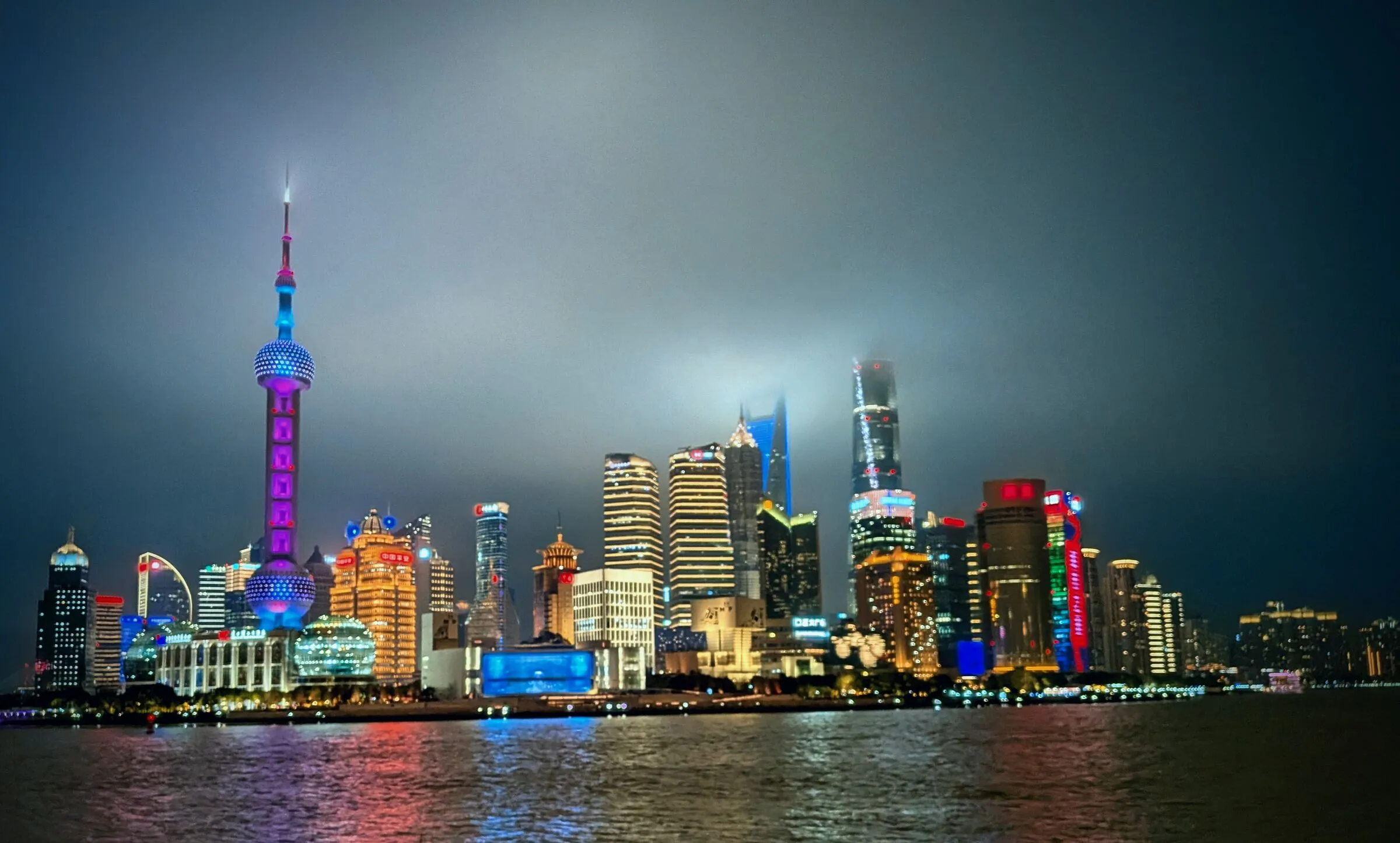 View across Huangpu River
We crossed to the other side through the underwater tunnel, using a vehicle that reminded me of a horror train from an amusement park. There was a small fee for it.
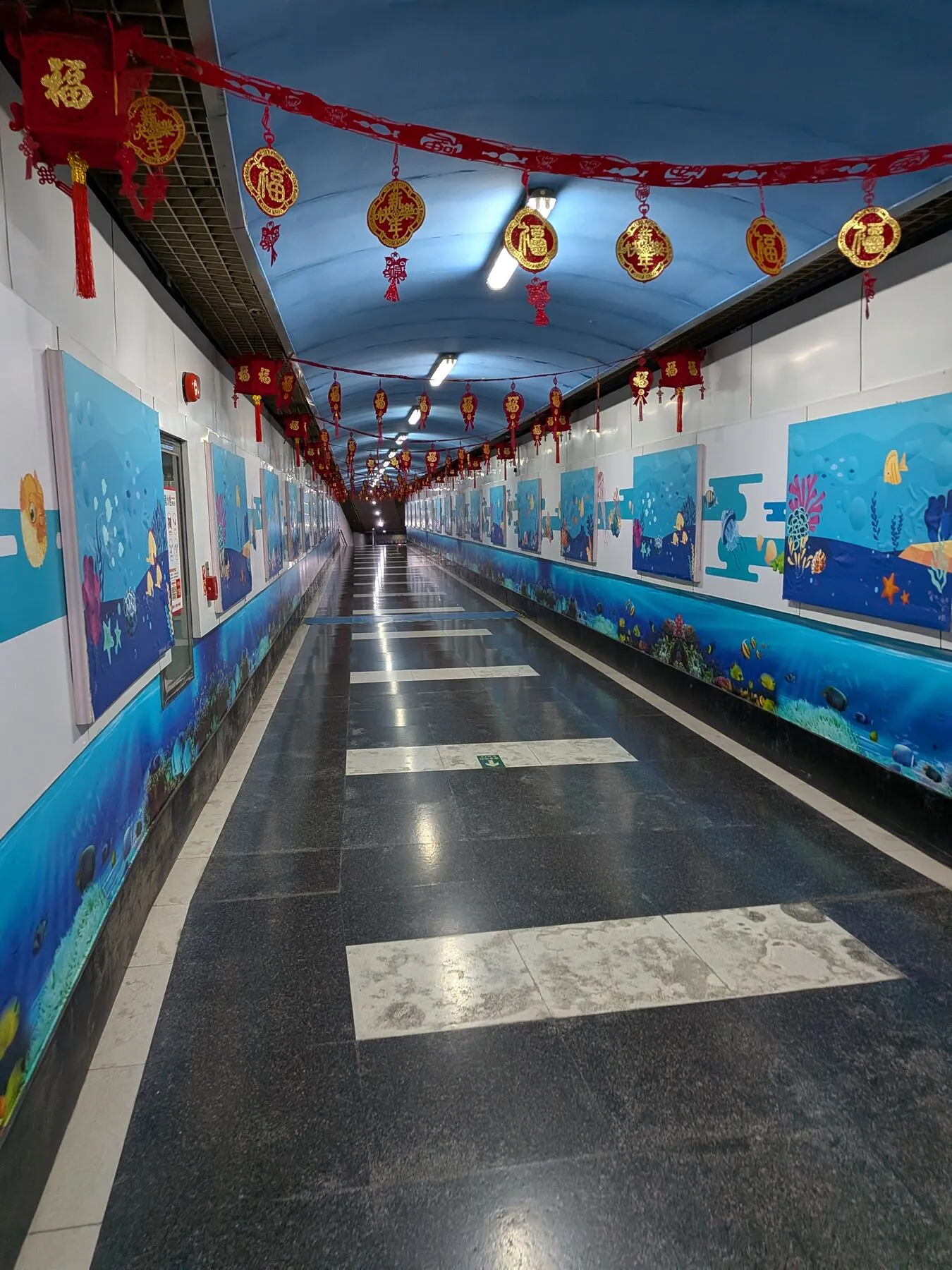 The entrance of the underwater tunnel
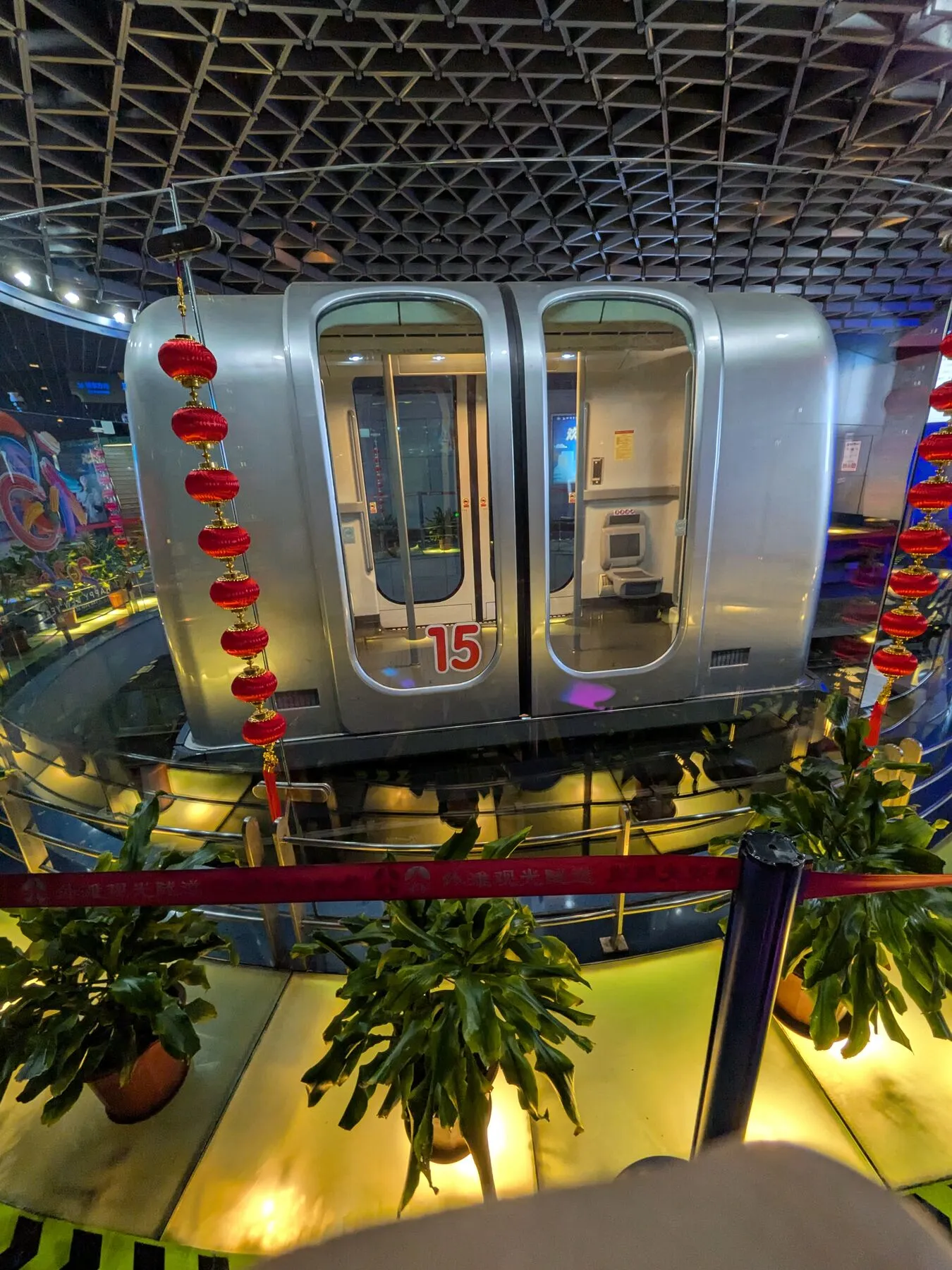 The vessel
After admiring Shanghai Tower from up close, it should have been time to call it a day.
It wasn’t.
We took the metro back and ended our night in the hostel with a game of Go. Hao was absurdly good at it. As he explained, this game, together with Chinese chess, is what many Chinese people casually mean when they say “chess” in everyday life.
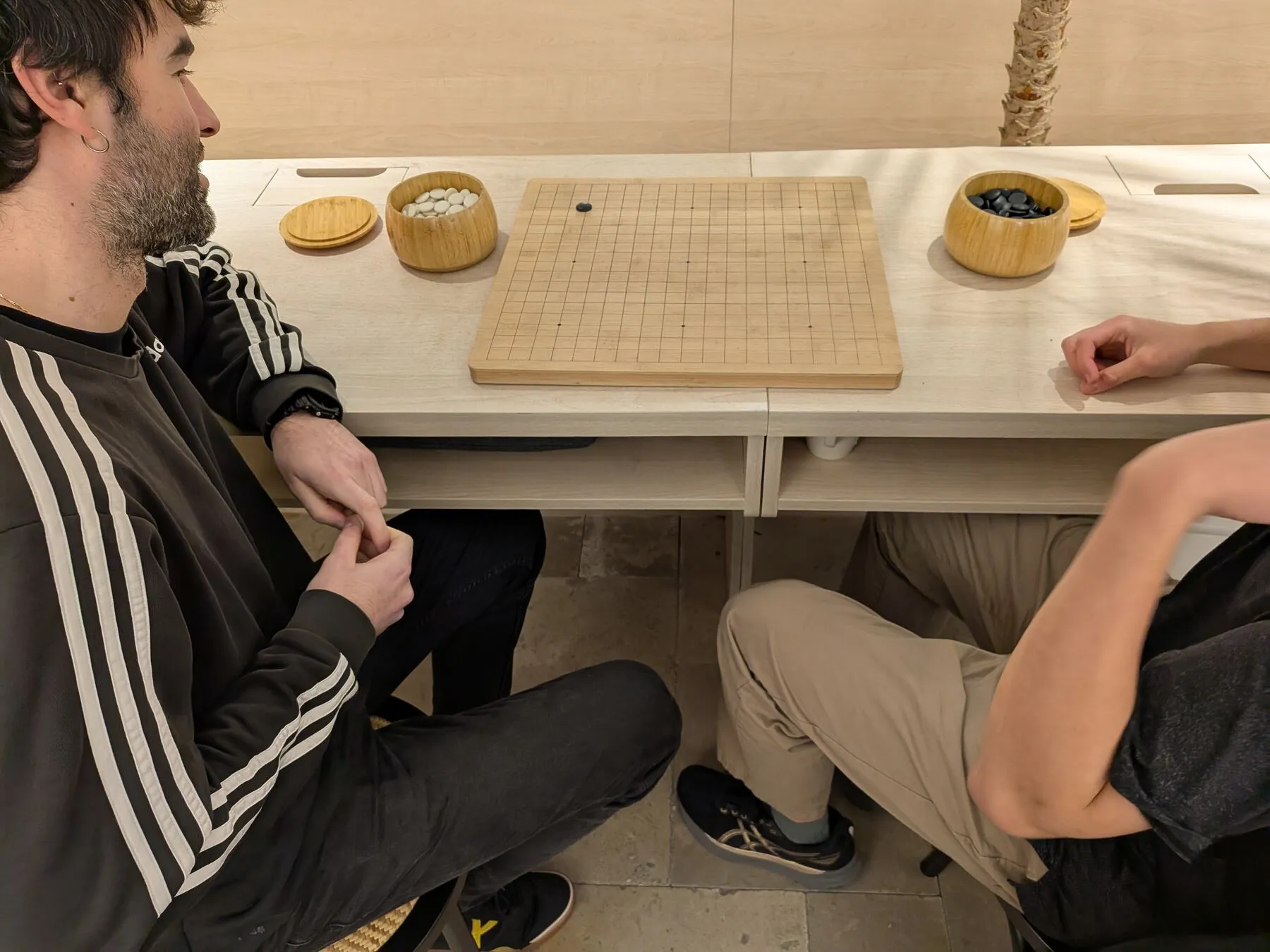 Late-night Go game at the hostel
And that was Monday.
Tuesday: breakfast victories, Yuyuan Garden, silk, and stinky tofu
I woke up starving in my coffin-like bed, got dressed, put Yuyuan Garden into Amap, and headed out.
At the crossroads of Henan Middle Road and Ningbo Road, I spotted two shops that quickly became favorites. One was selling filled buns, and I almost always went for the meat ones. The other made an egg-fried wrap with crab and various vegetables. Both were delicious. Both were very filling.
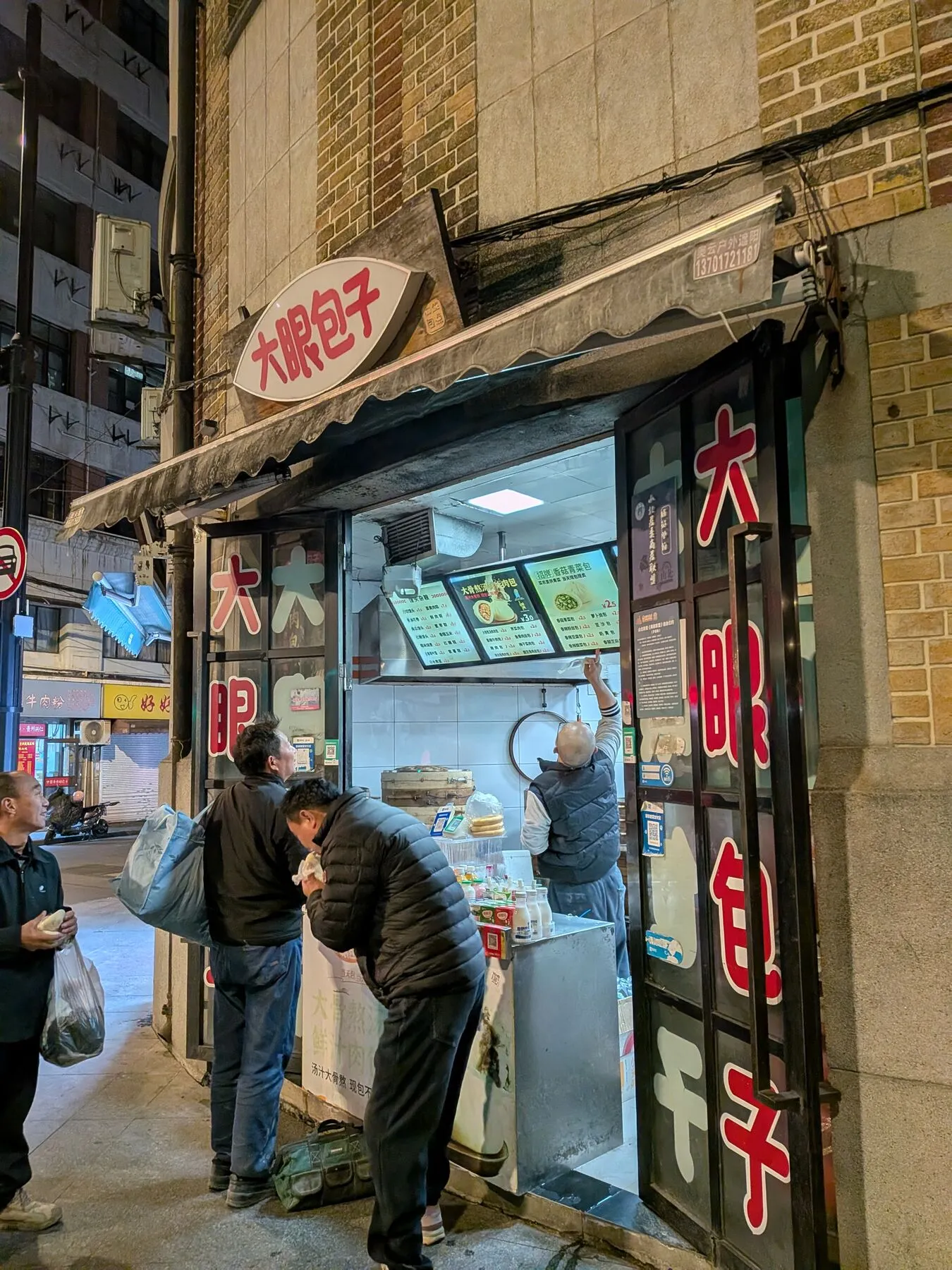 The bun shop
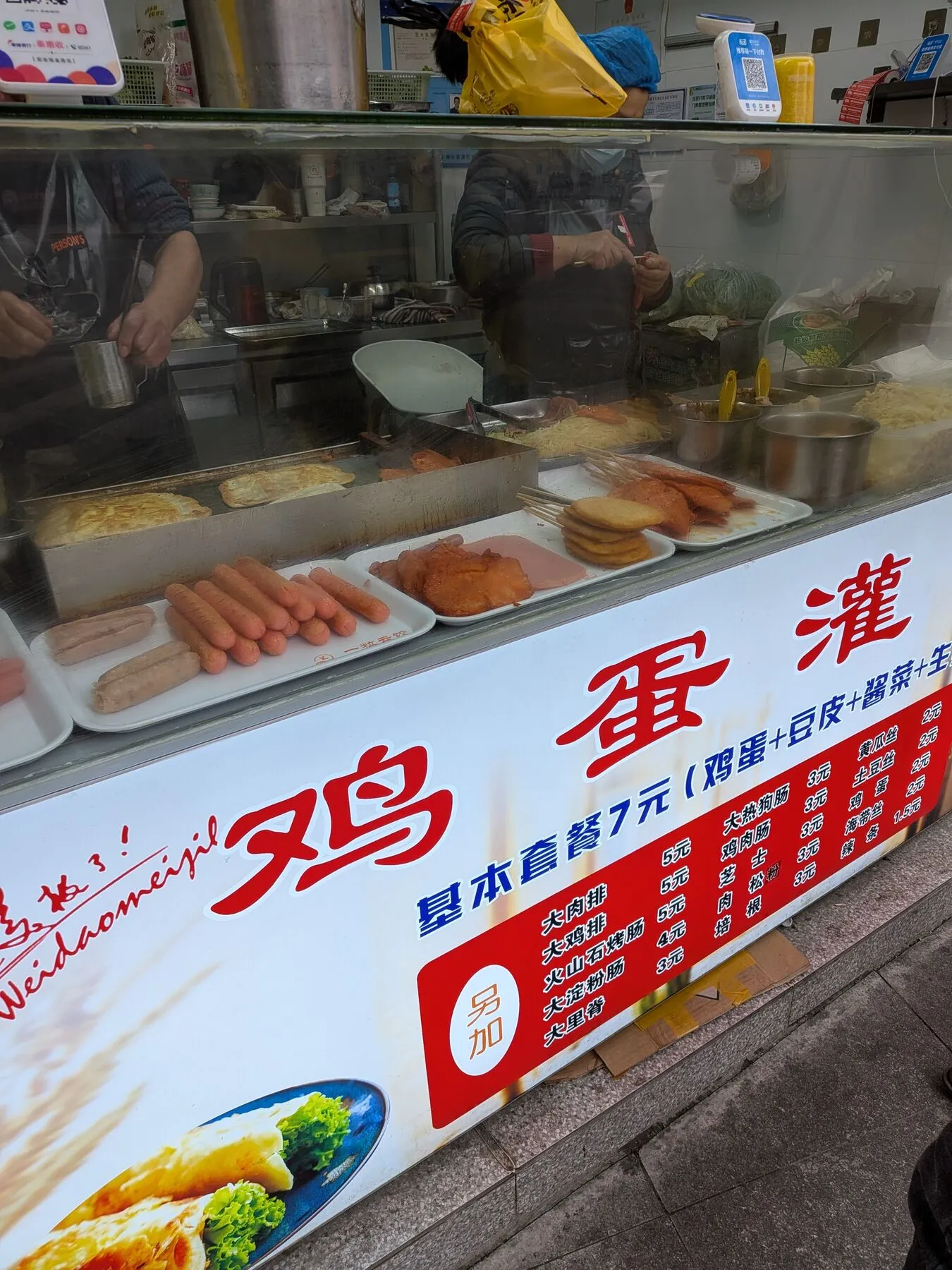 The egg wrap shop
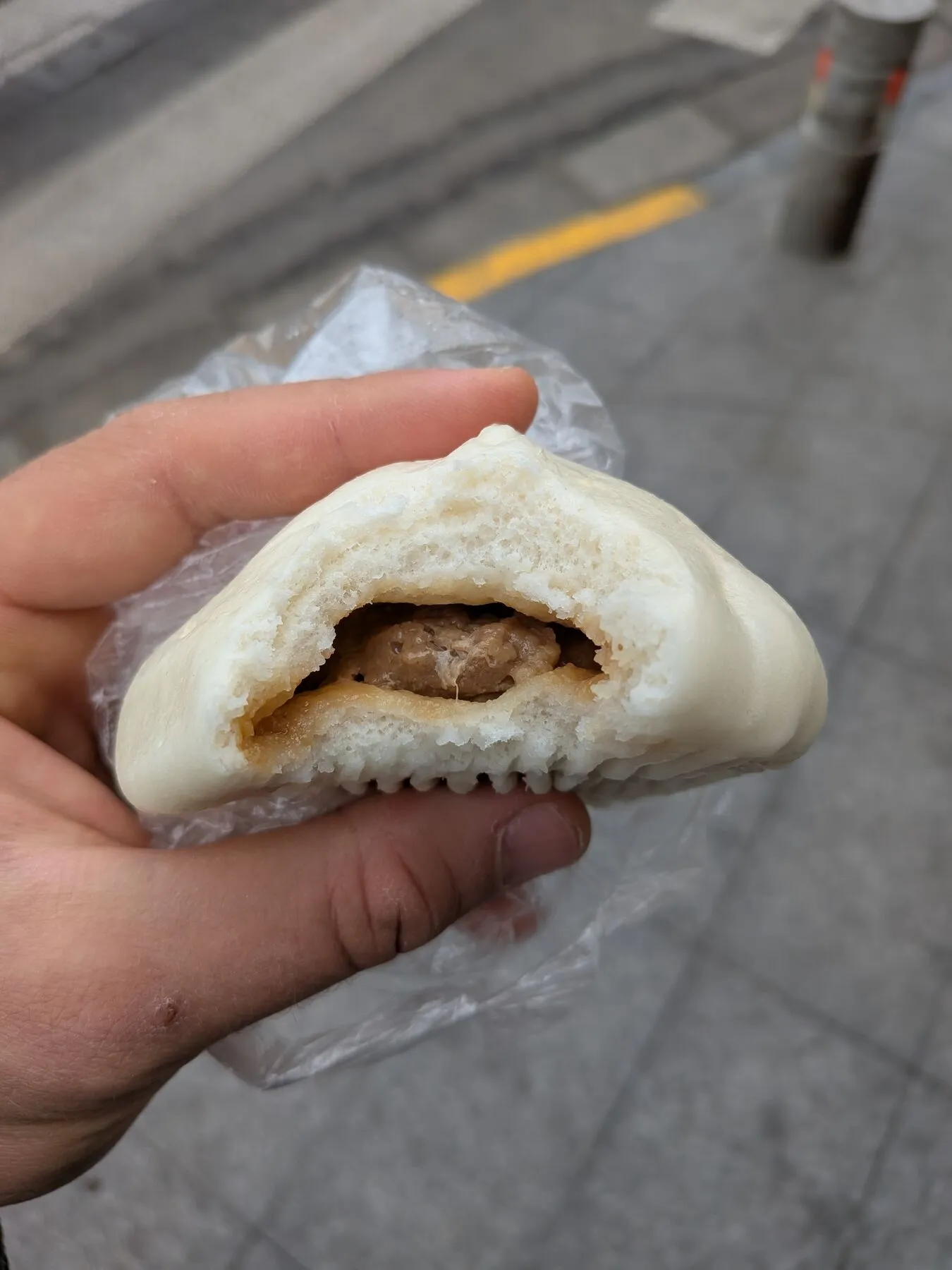 The pork filled bun
One thing that kept surprising me was how much takeaway food was served in plastic bags. Efficient, yes. Healthy-looking, absolutely not.
I am also the kind of person who sees two-hour walk on GPS and thinks, “That’s close enough”.
So I walked.
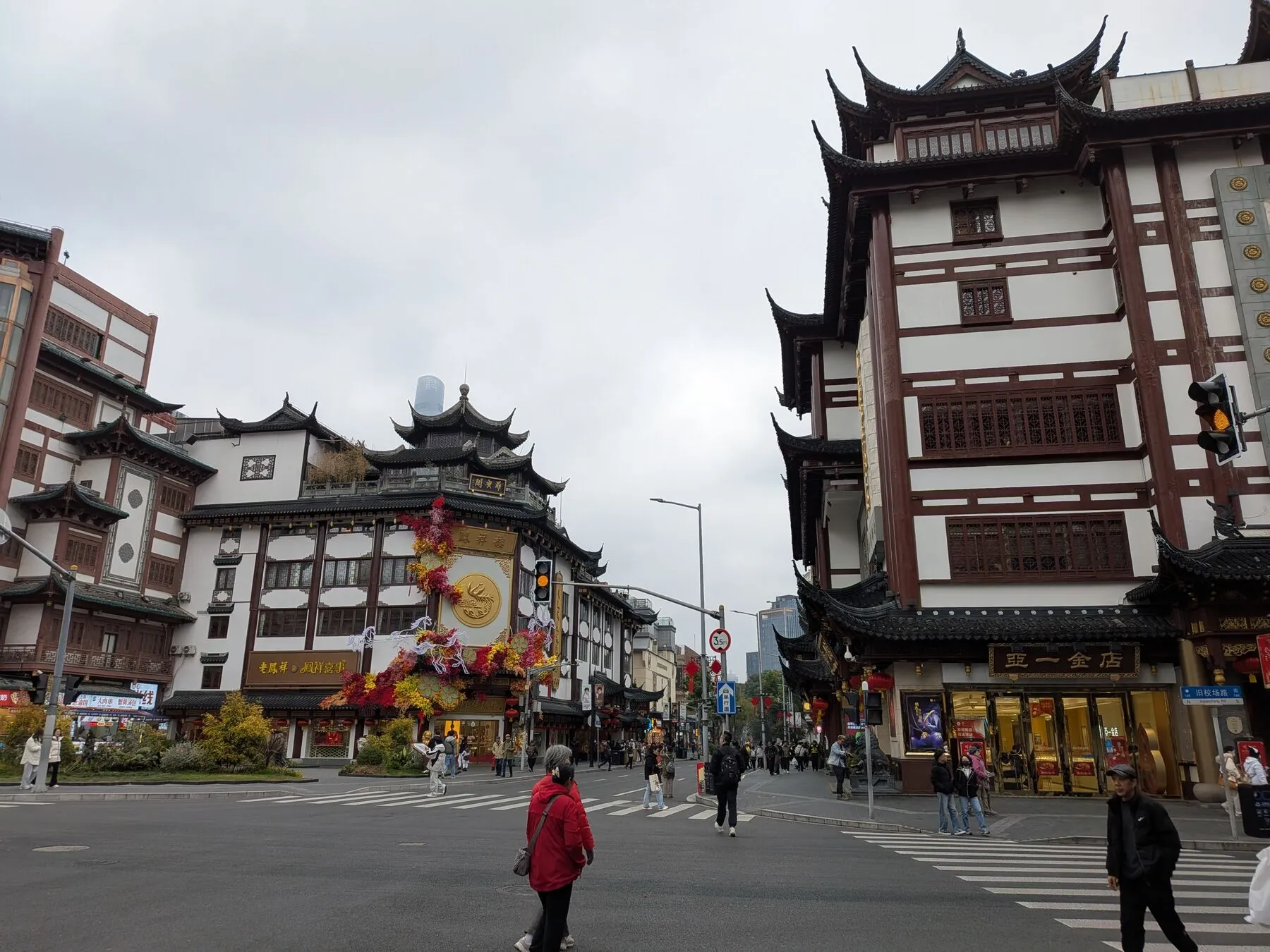 Walking to the Yuyuan Garden
A while later I reached Yuyuan Garden, where Hao joined me. This garden is one of the country’s most famous traditional gardens and dates to the Ming Dynasty.
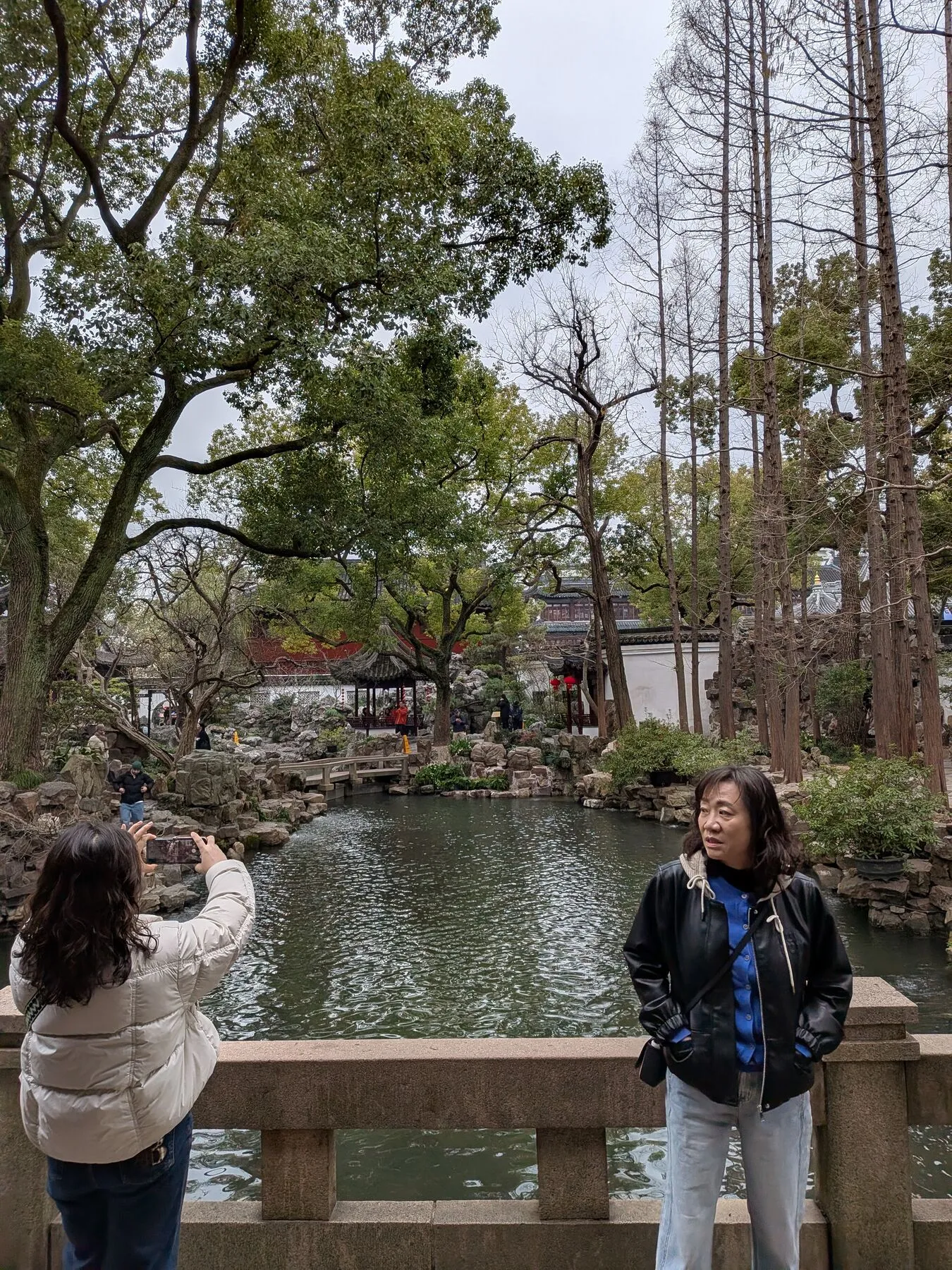
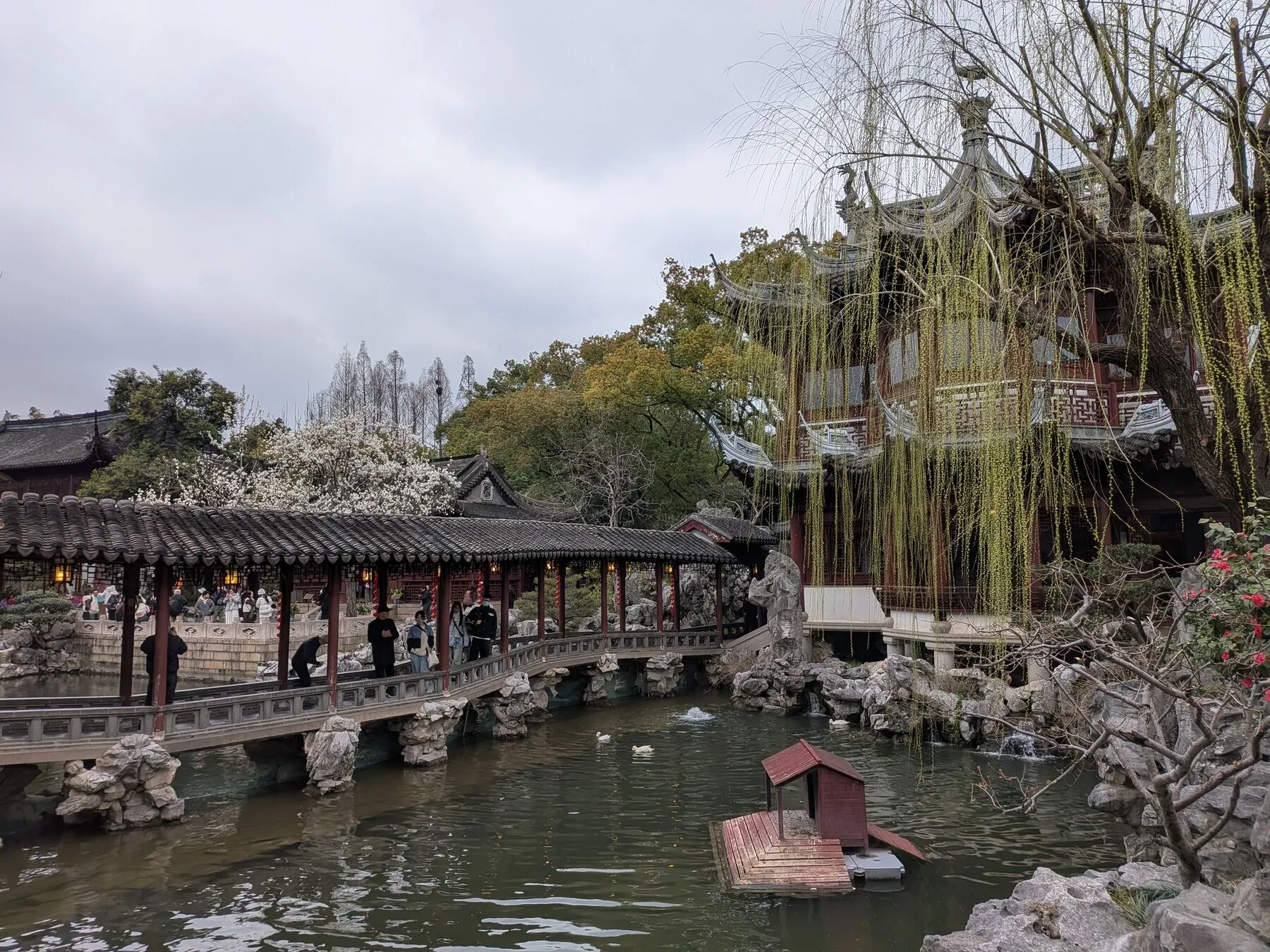 Yuyuan Garden
Next stop: Shanghai Old Street, and later toward City God Temple of Shanghai.
Around Shanghai Old Street, I also noticed various women dressed in what looked to me like geisha-style outfits, posing for photoshoots around the area. It added an extra layer of spectacle to a place that already felt very performative.
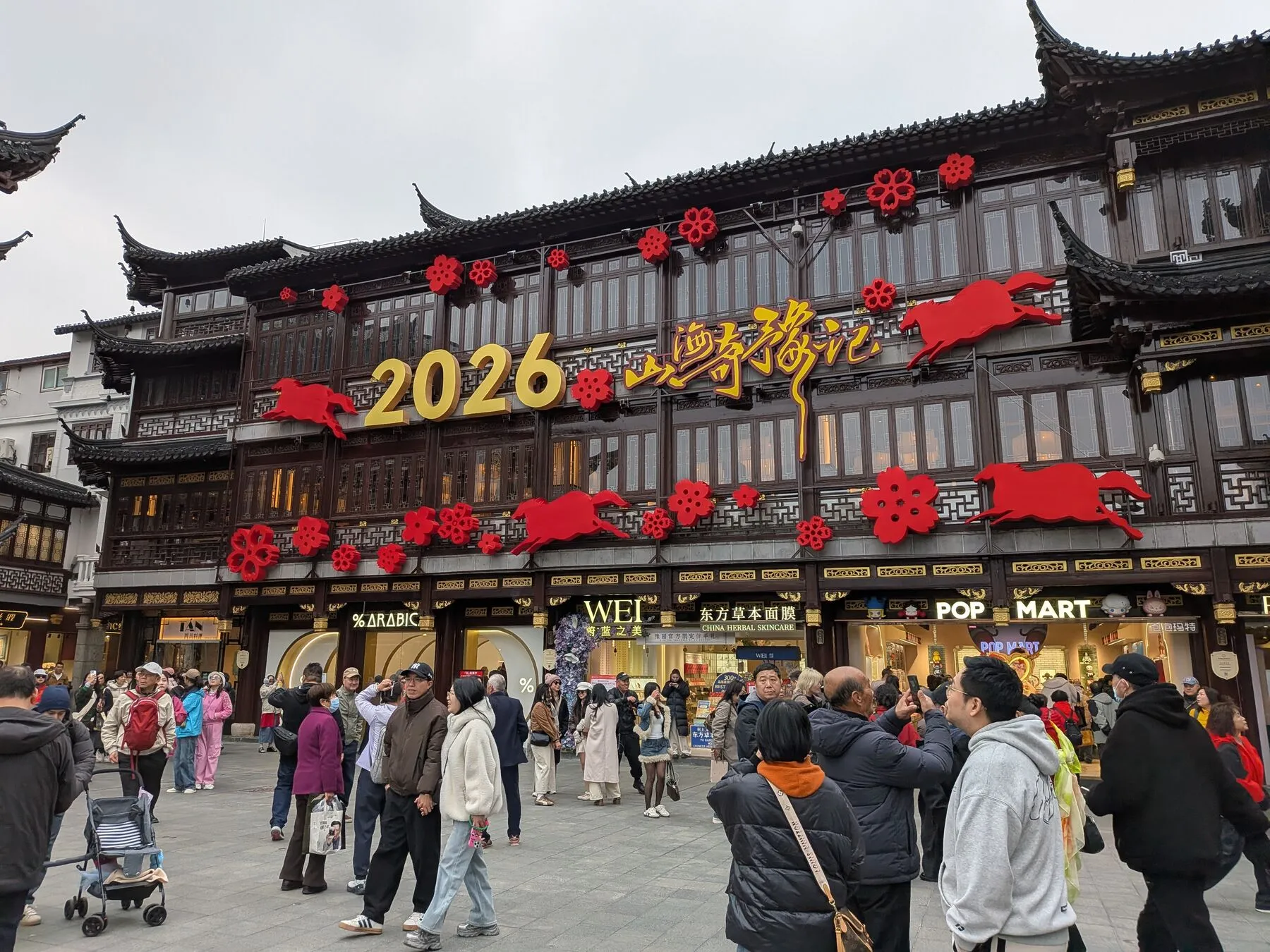
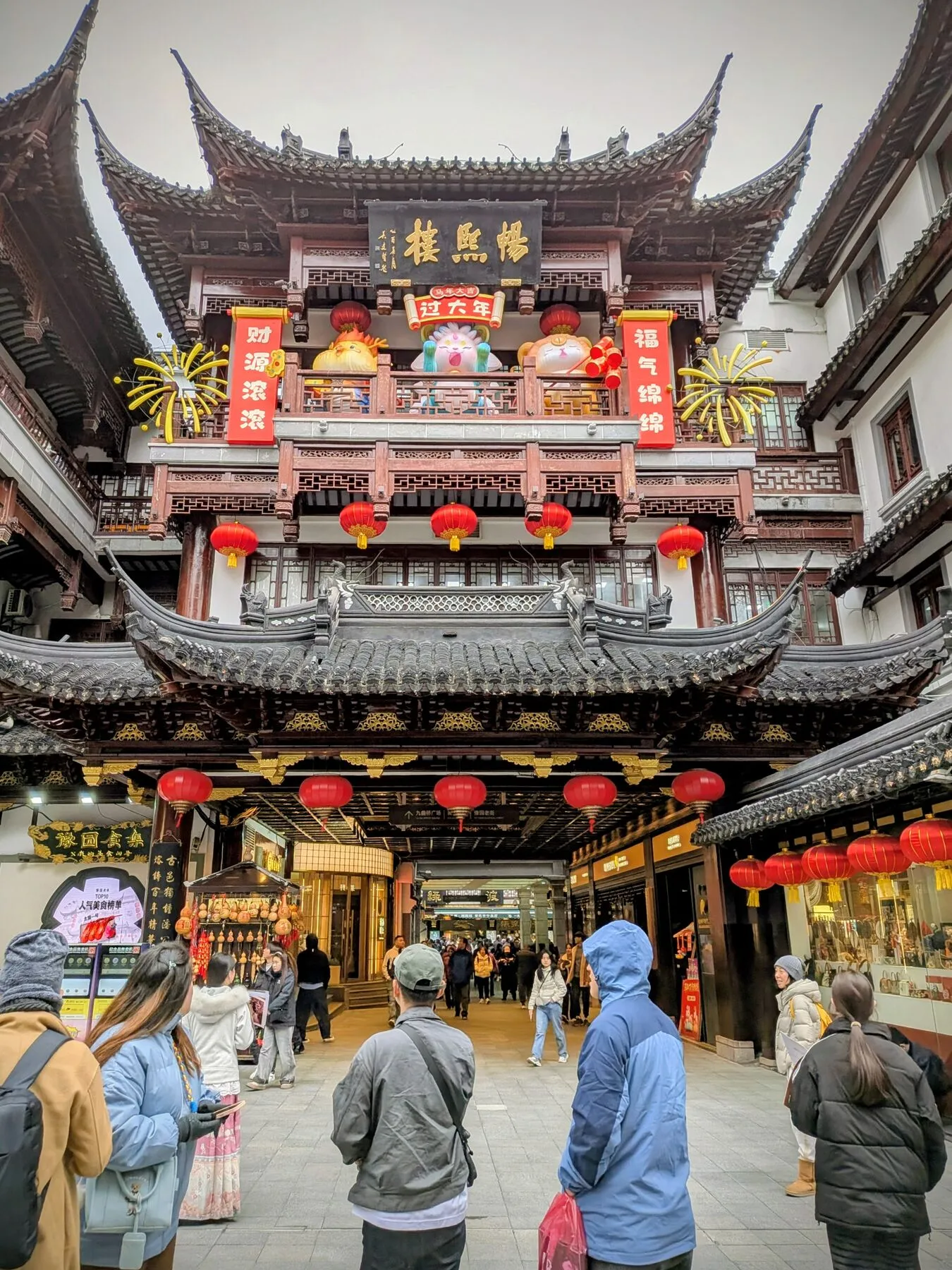
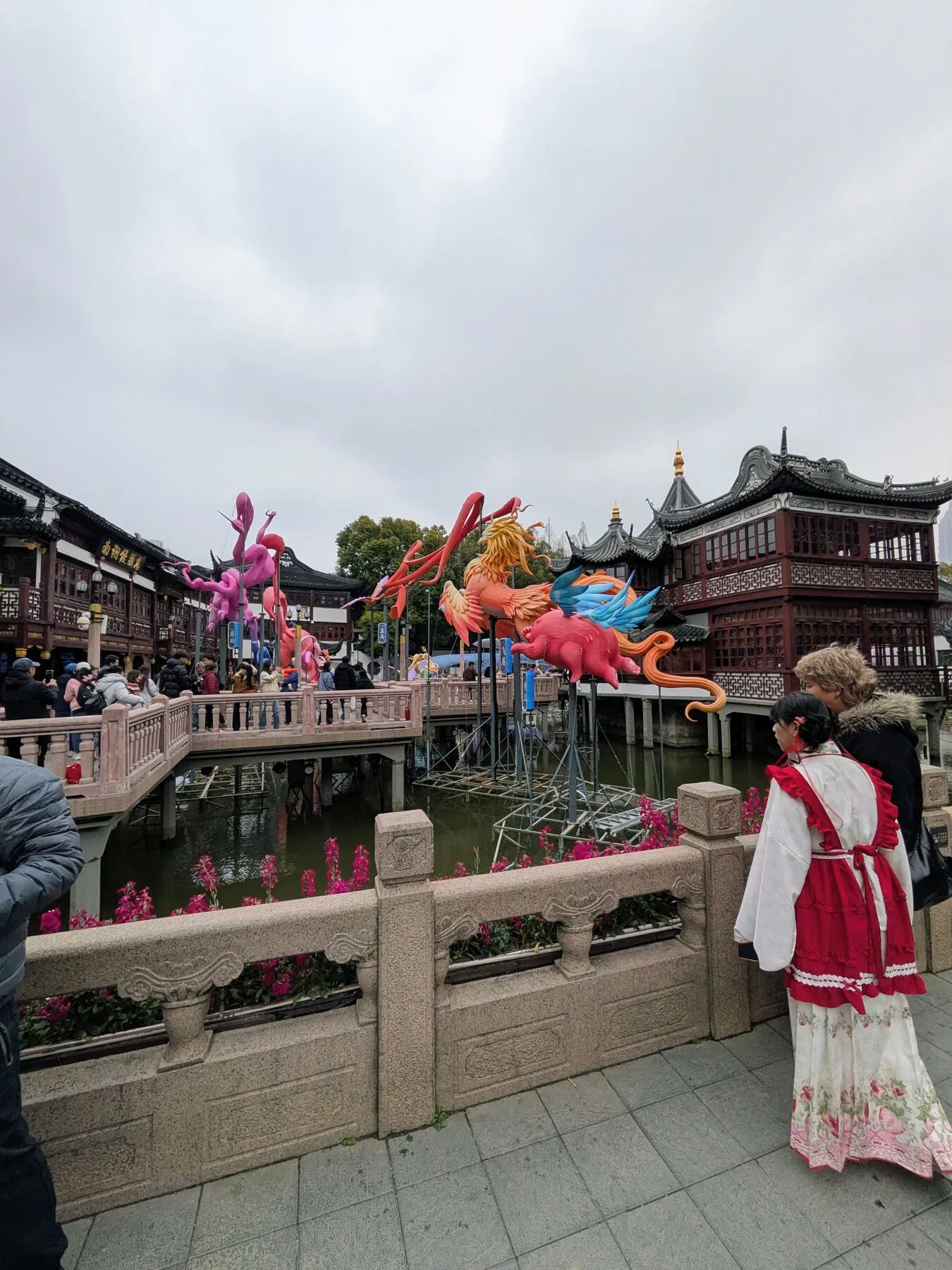 The famous zigzag Jiuqu Bridge
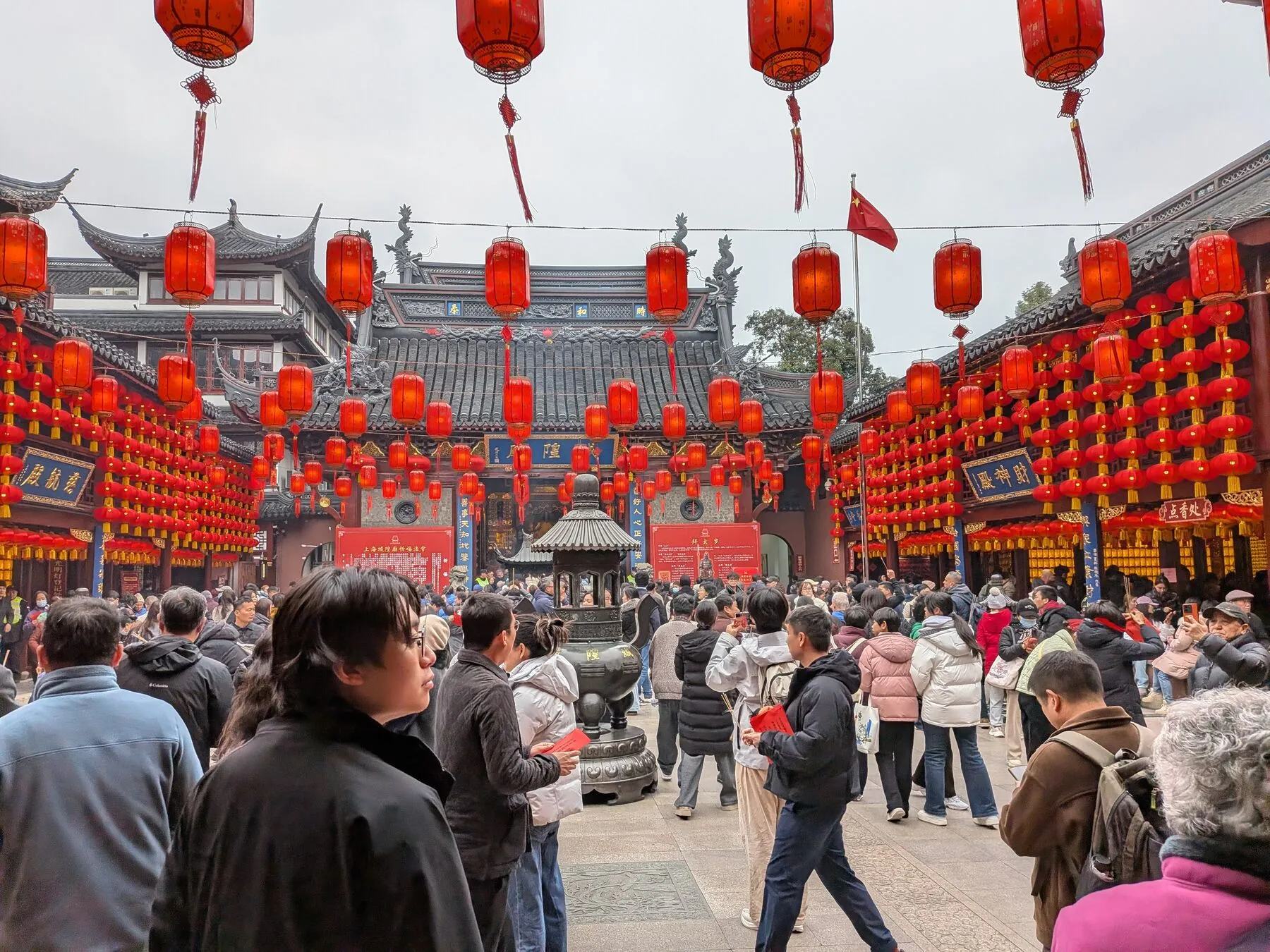
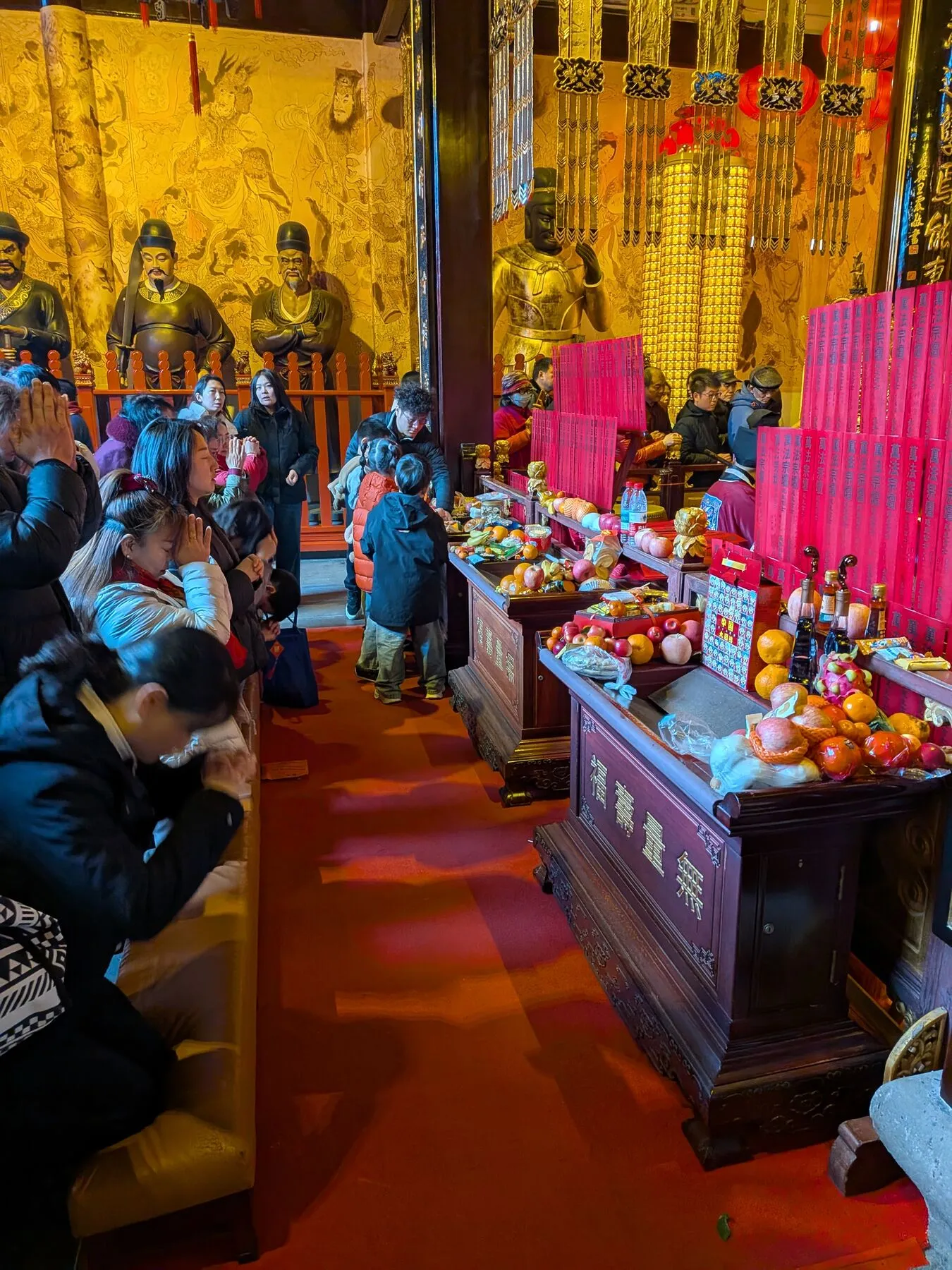
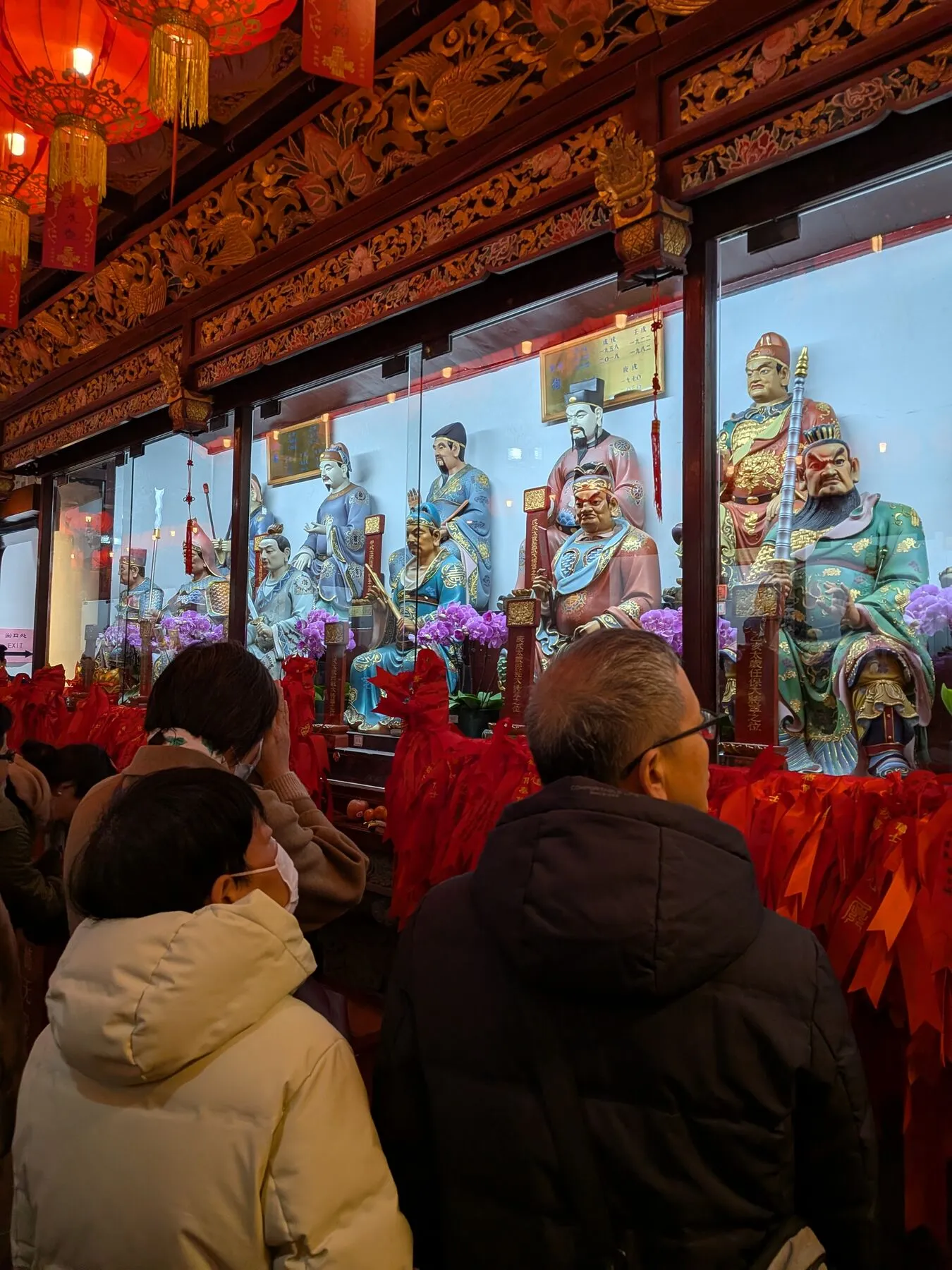 City God Temple of Shanghai
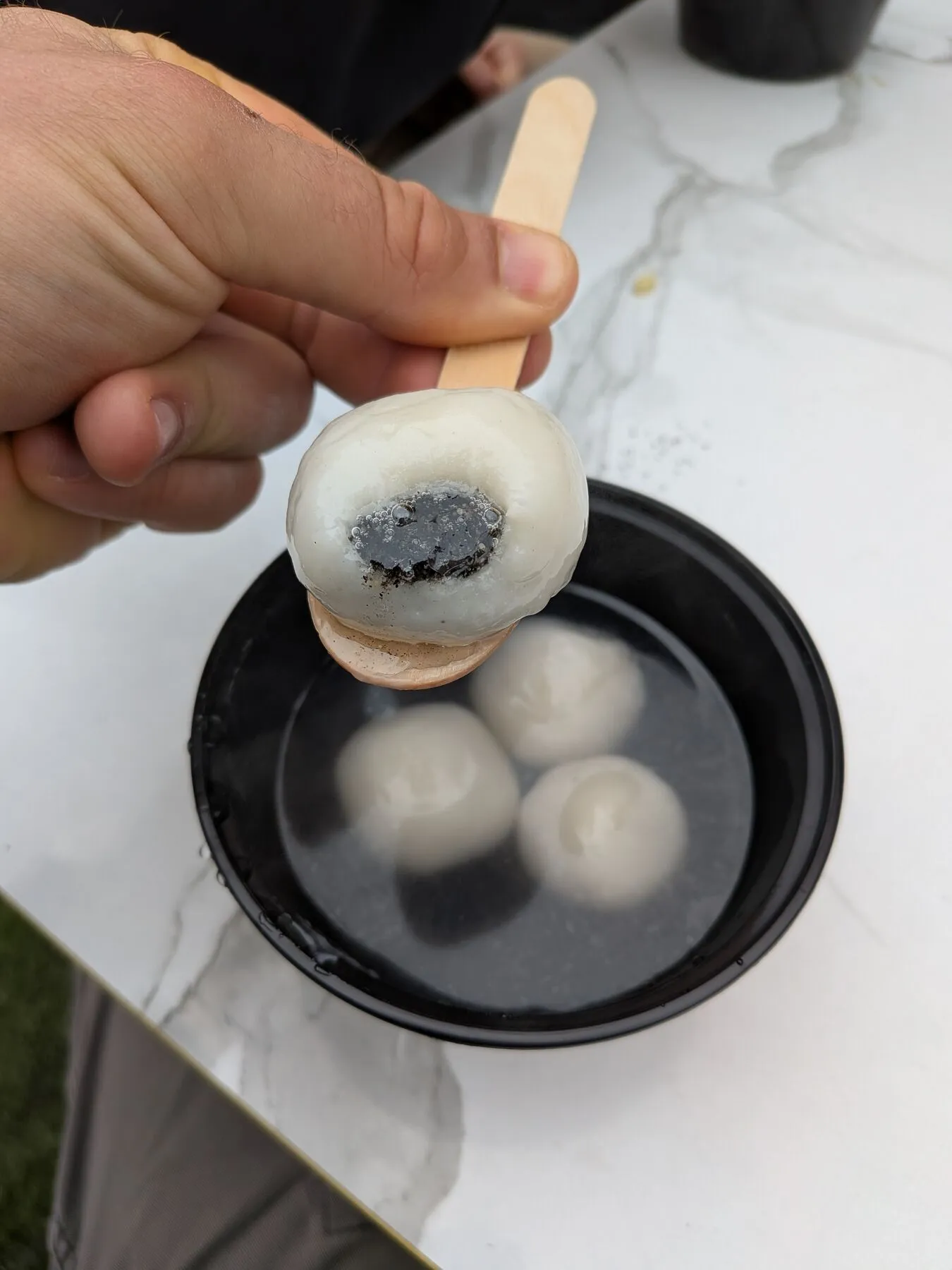 Sesame balls Hao ordered for me in the old street. They were delicious; the black paste inside reminded me of tahini.
At one point I tried some “beef” skewers. Hao told me that although they were advertised as beef, they were probably duck. I am going to skip the internal emotional journey that happened when I first misheard “duck” as “dog.”
I also tried the famous White Rabbit candy, which I didn’t like, but that was another item crossed off the list.
At some point I asked Hao whether he knew a place where I could buy real silk without getting scammed with fake products.
Of course, he did.
He convinced me to ride a bike there, and helped me place an order at a tailor for a custom-made silk scarf.
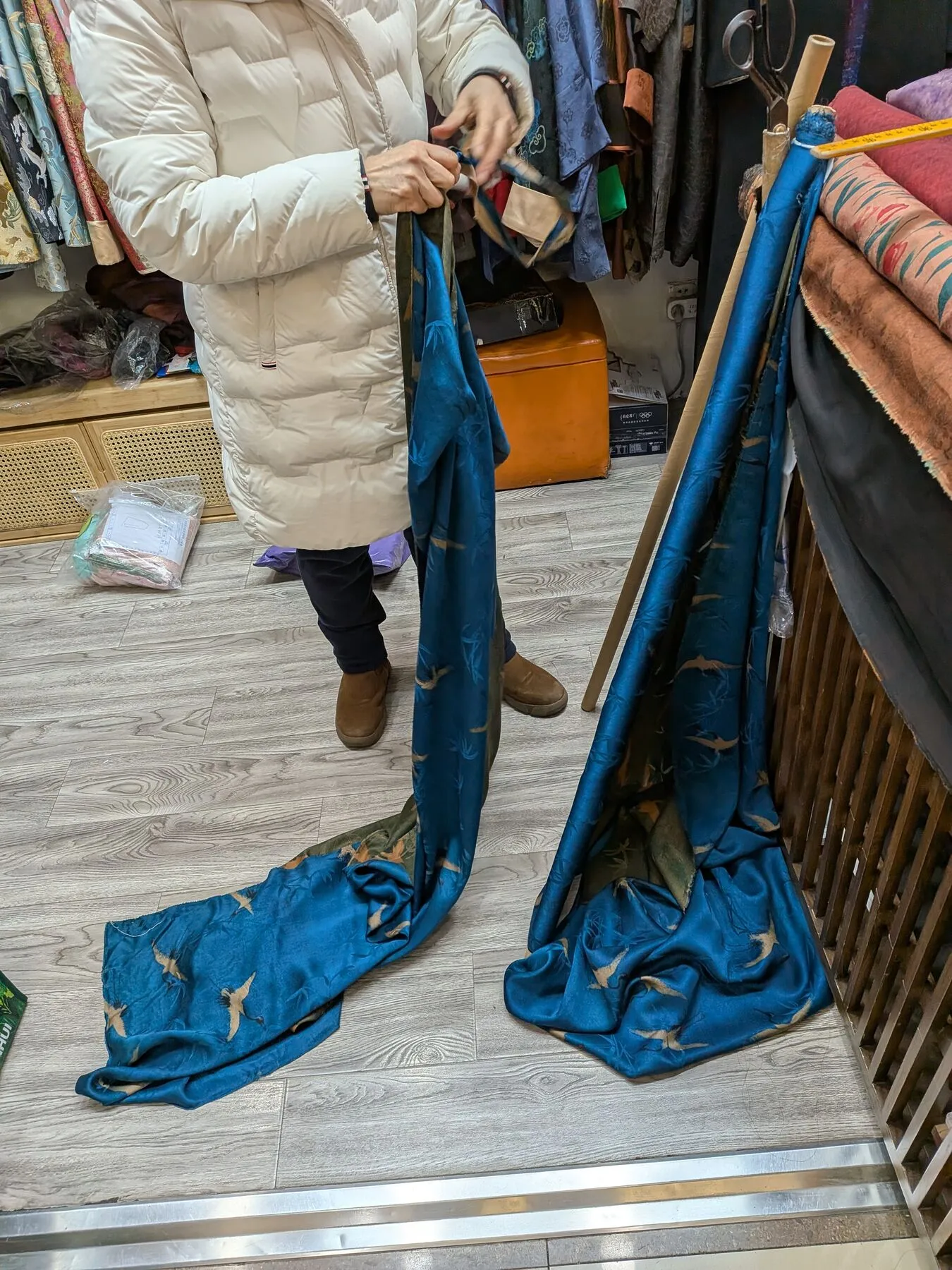
While the scarf was being sewn, we had lunch at a local restaurant Hao found. I told him to order whatever he wanted and added, confidently, “I eat everything.”
I would never imagine that a possible reply to that question should had been “..except from sea cucumbers!”.
There is really no graceful way to process that information halfway through chewing. Still, to my surprise, they were excellent.
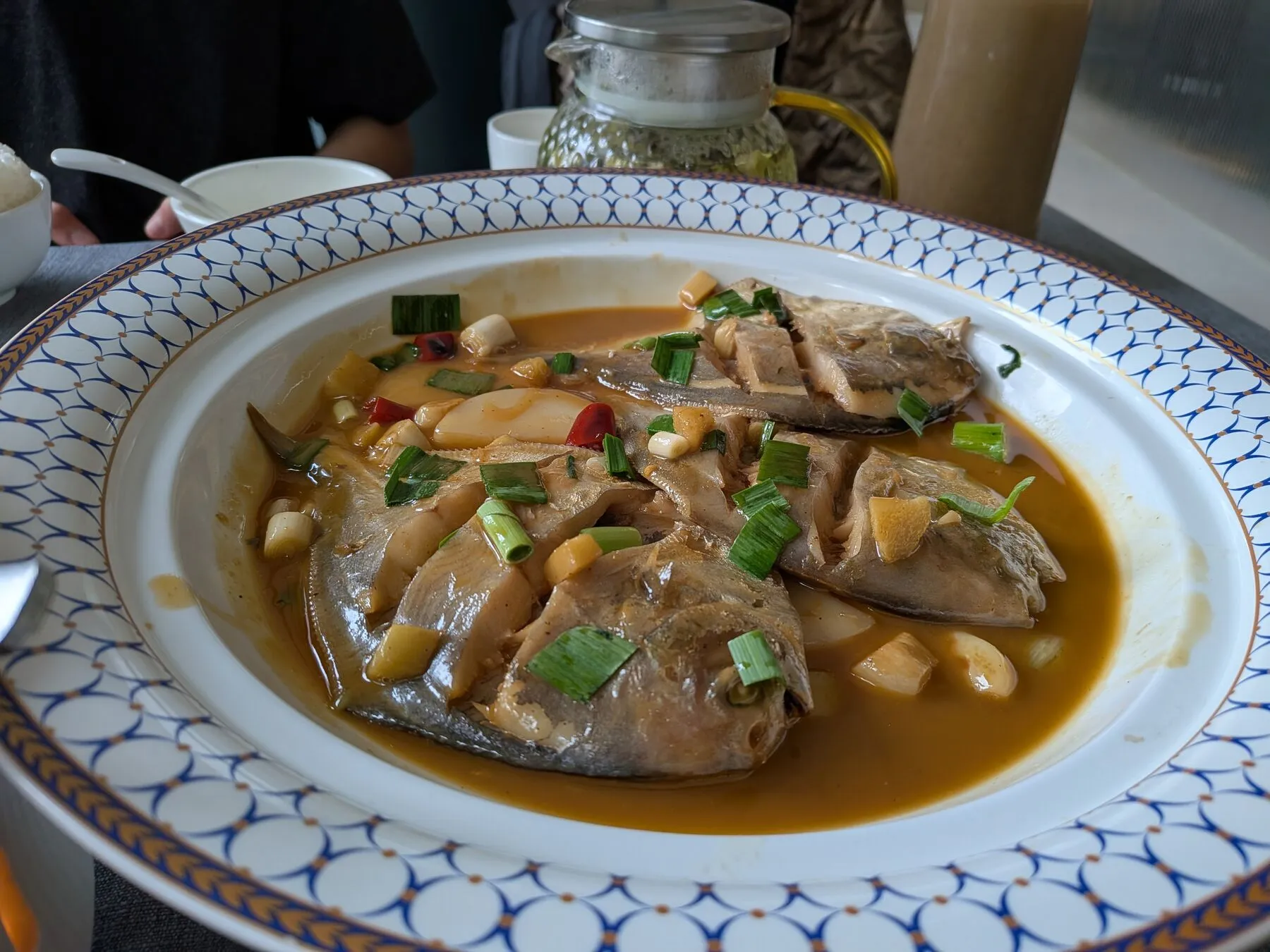
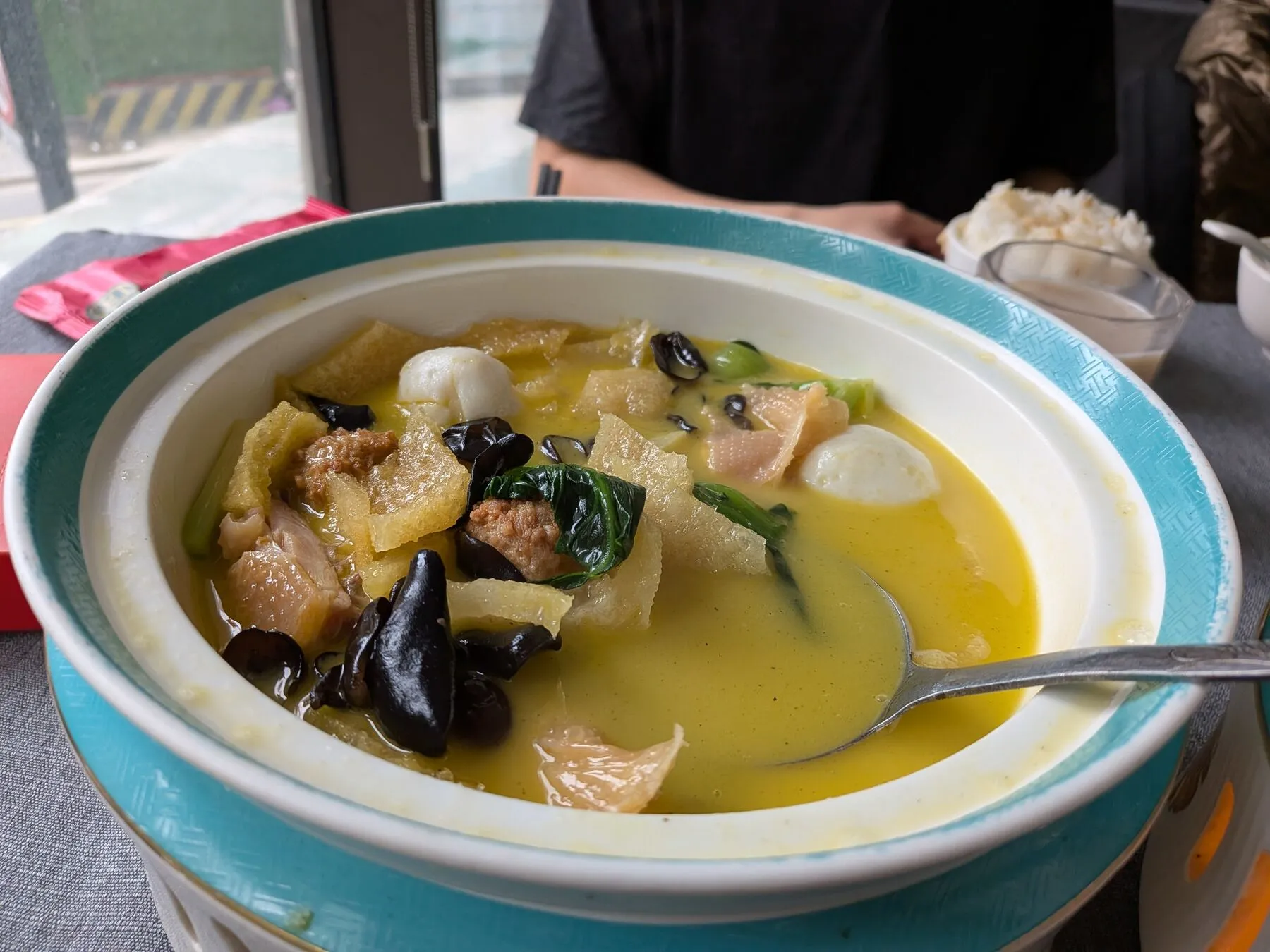
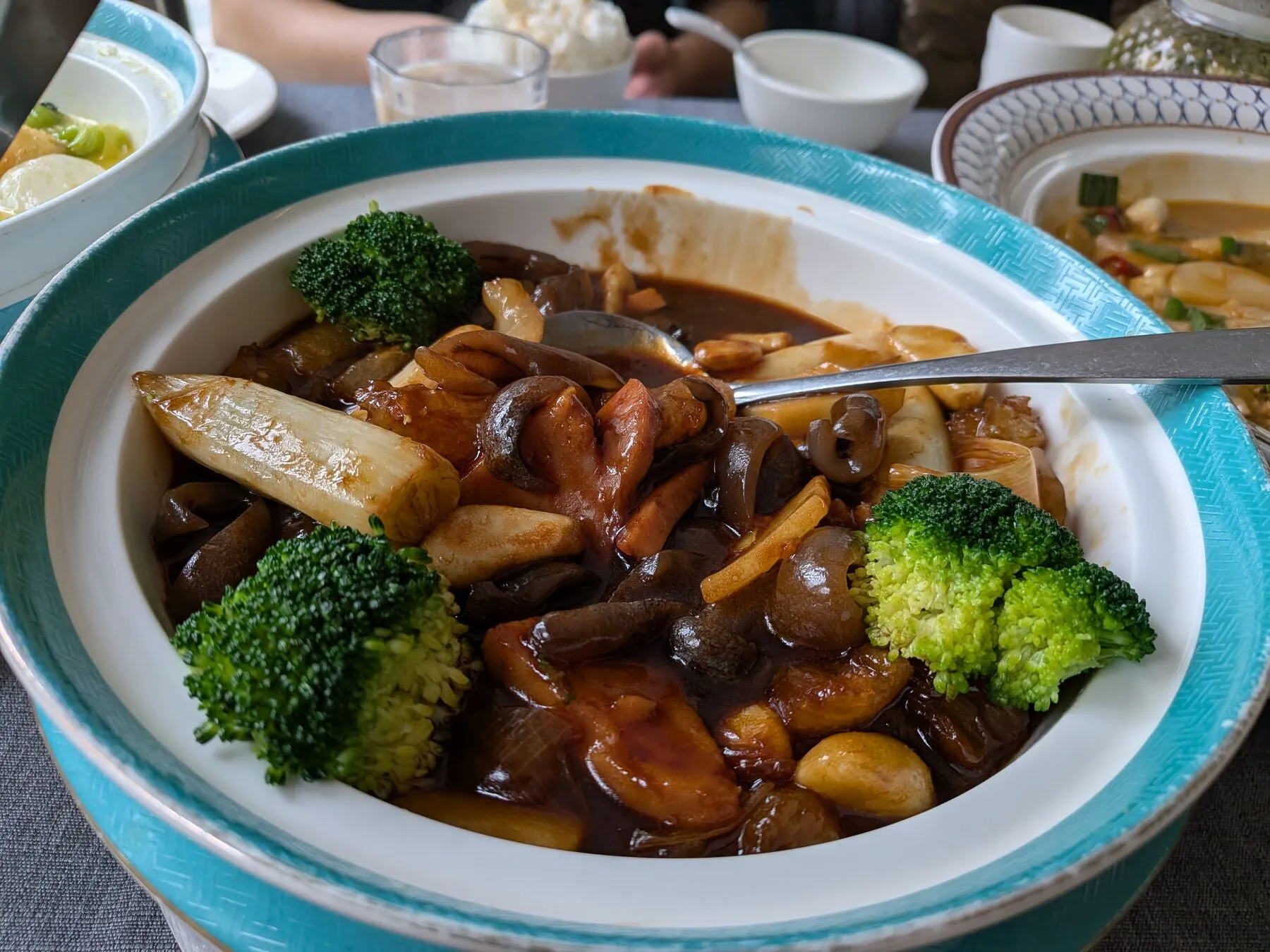 The unexpectedly delicious sea cucumbers
After collecting the scarf, we headed to the Shanghai History Museum, then later to Jing’an Temple.
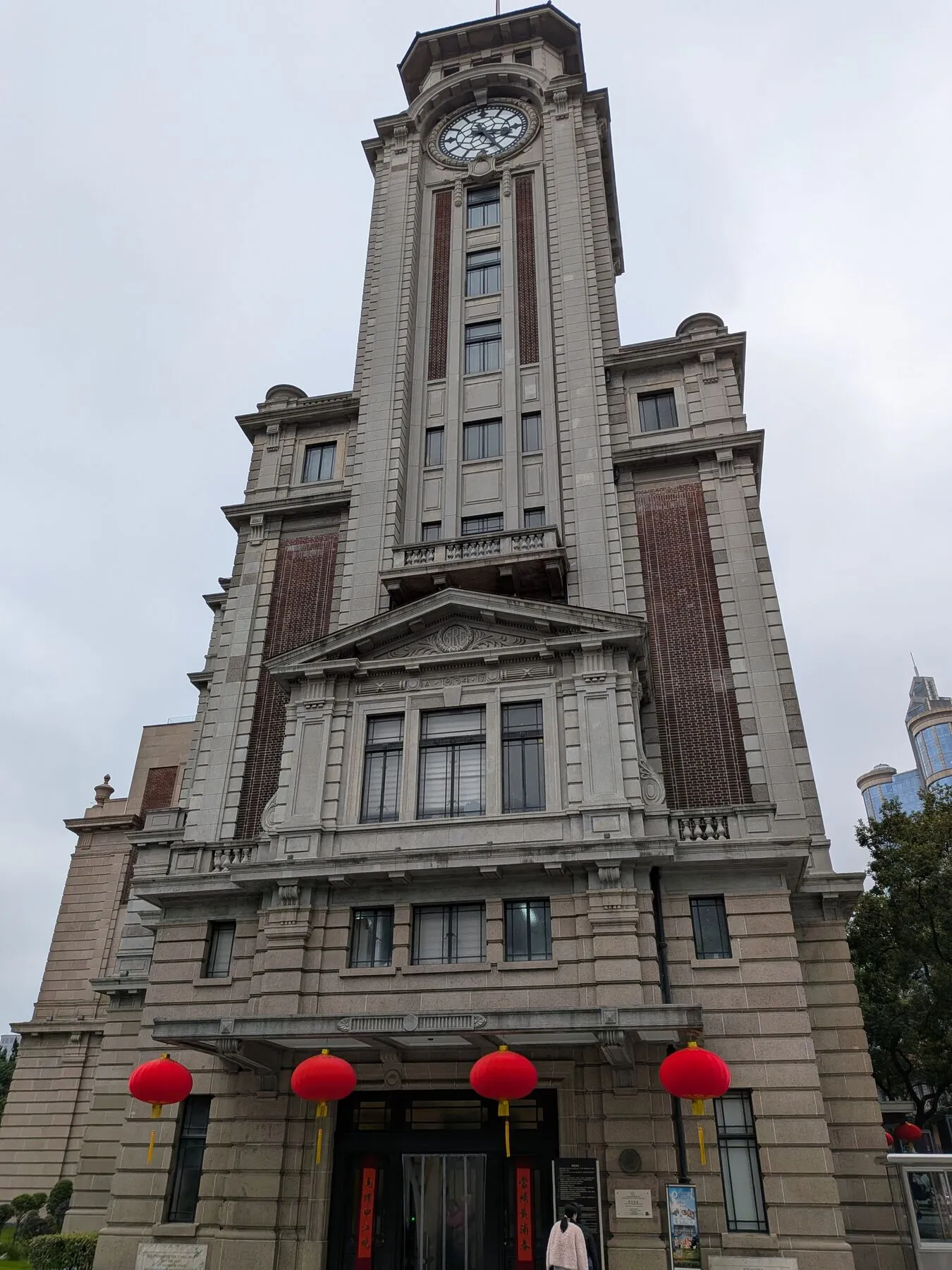 Shanghai History Museum
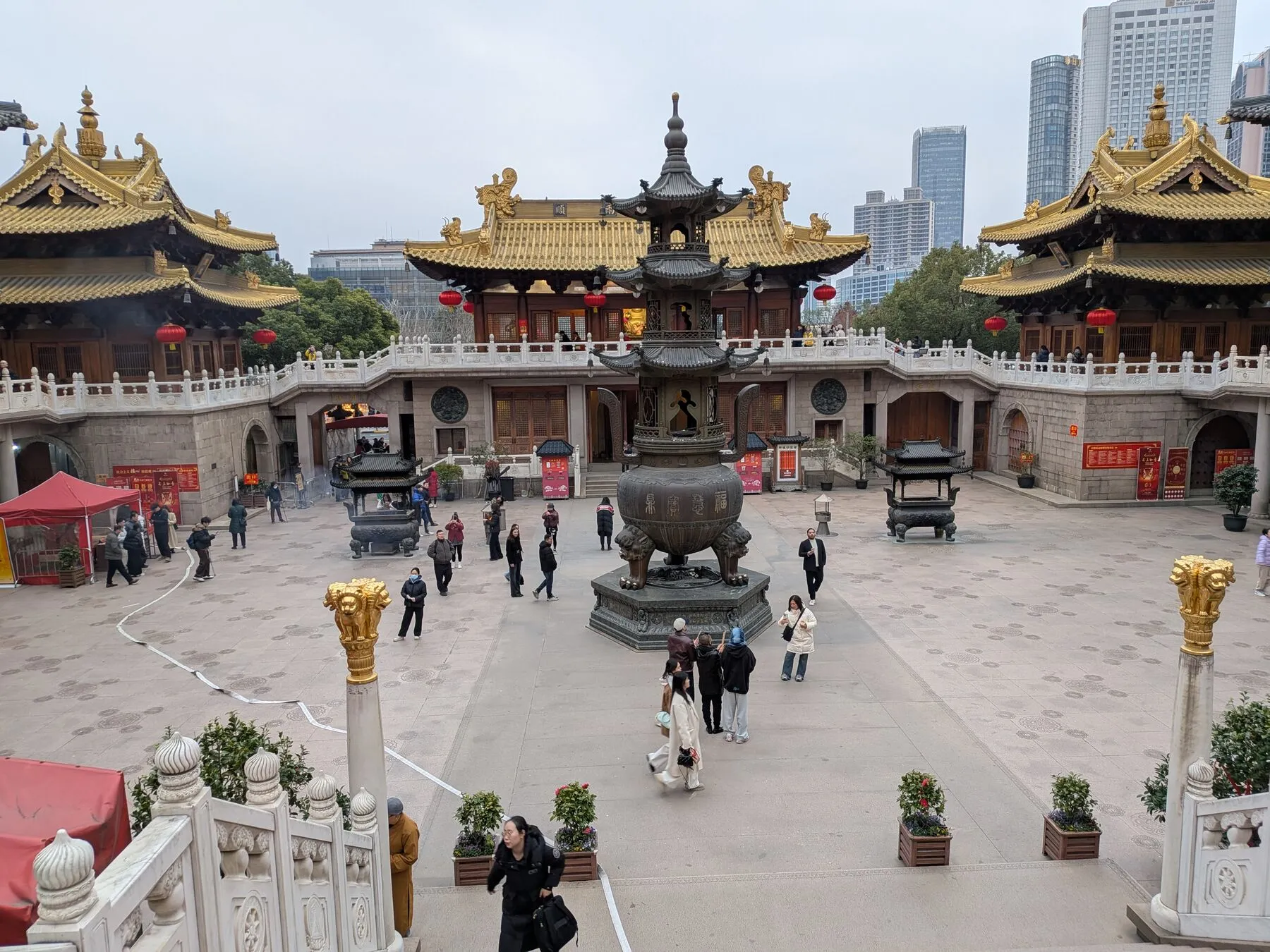
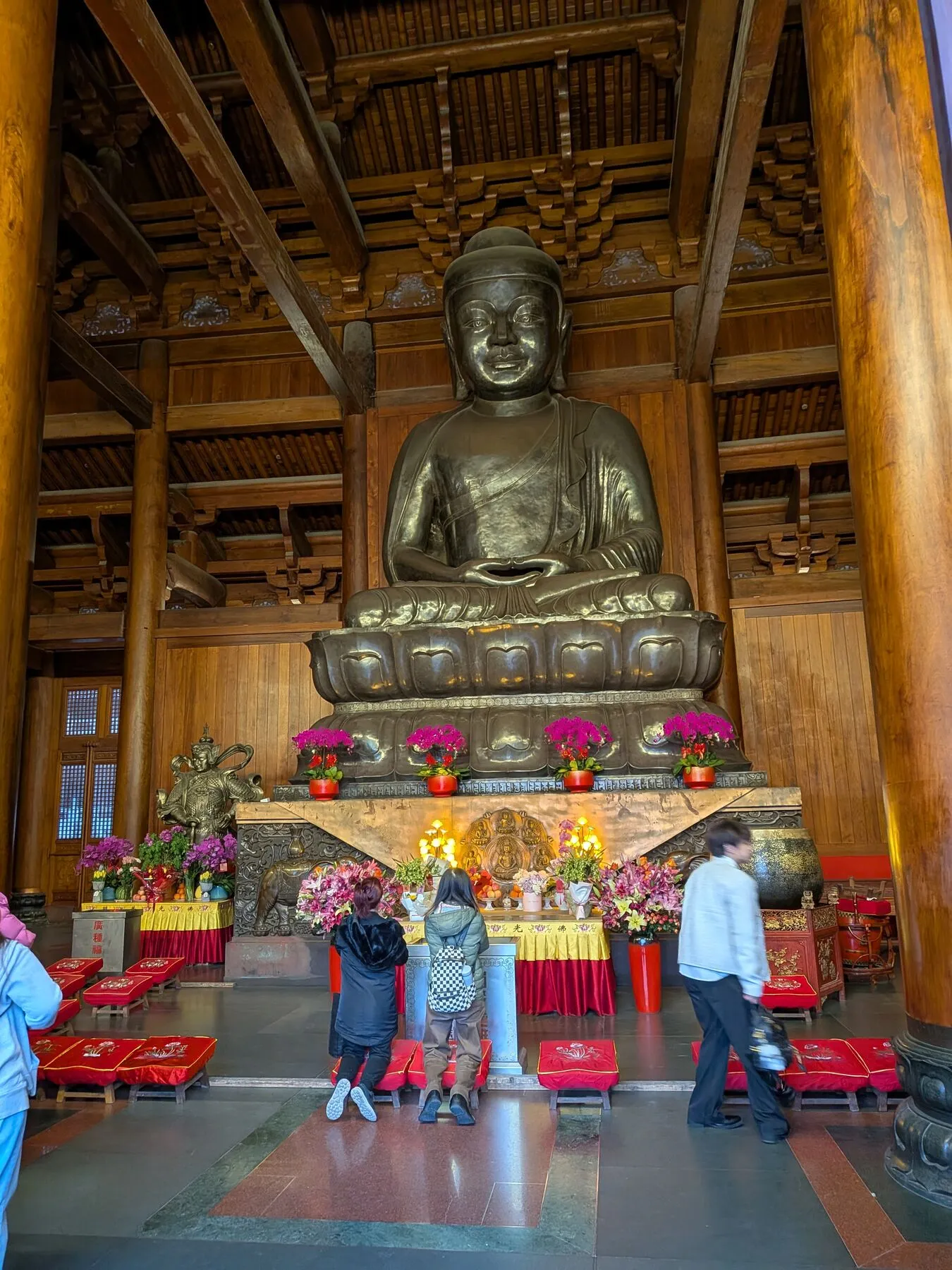
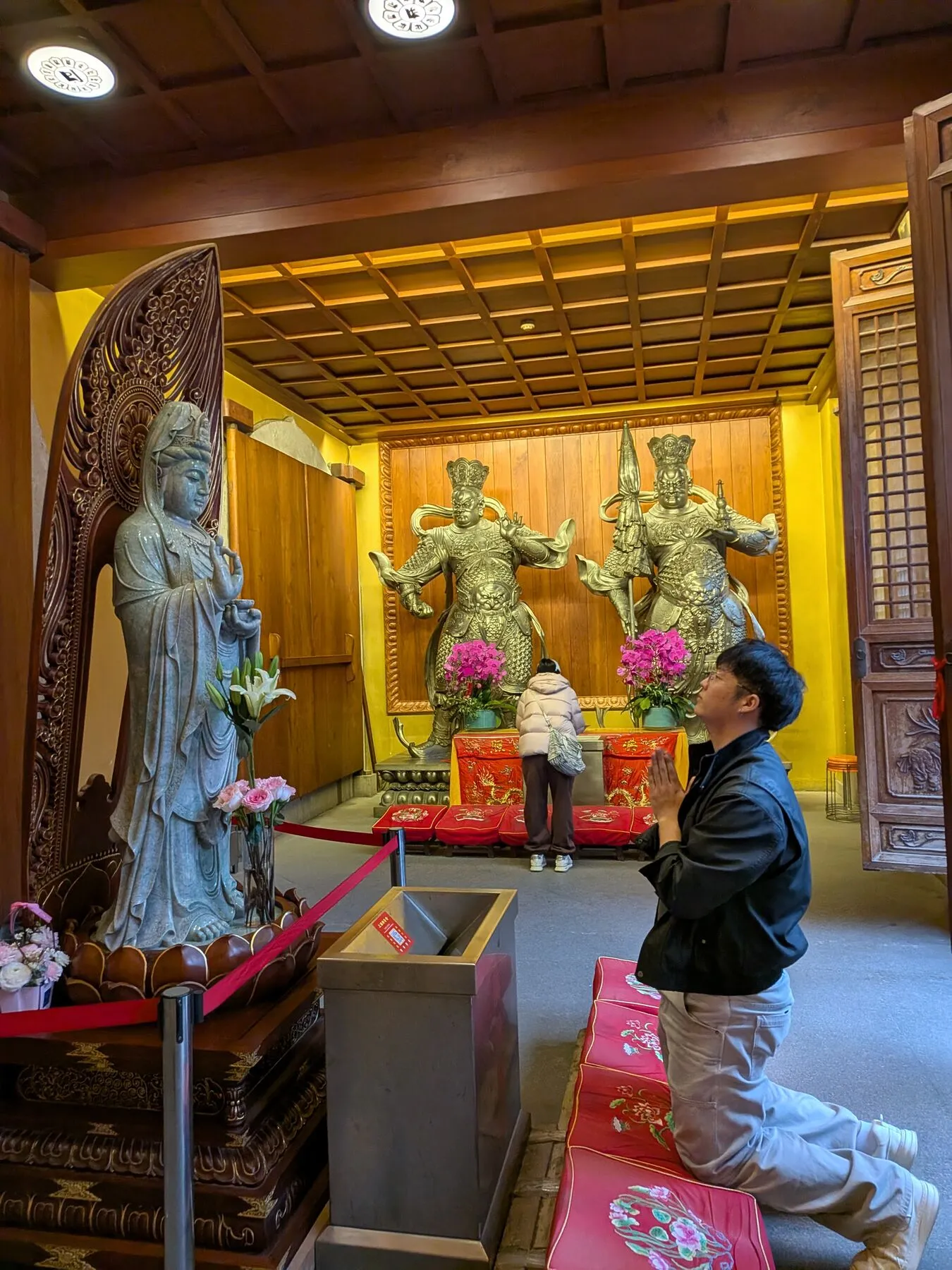
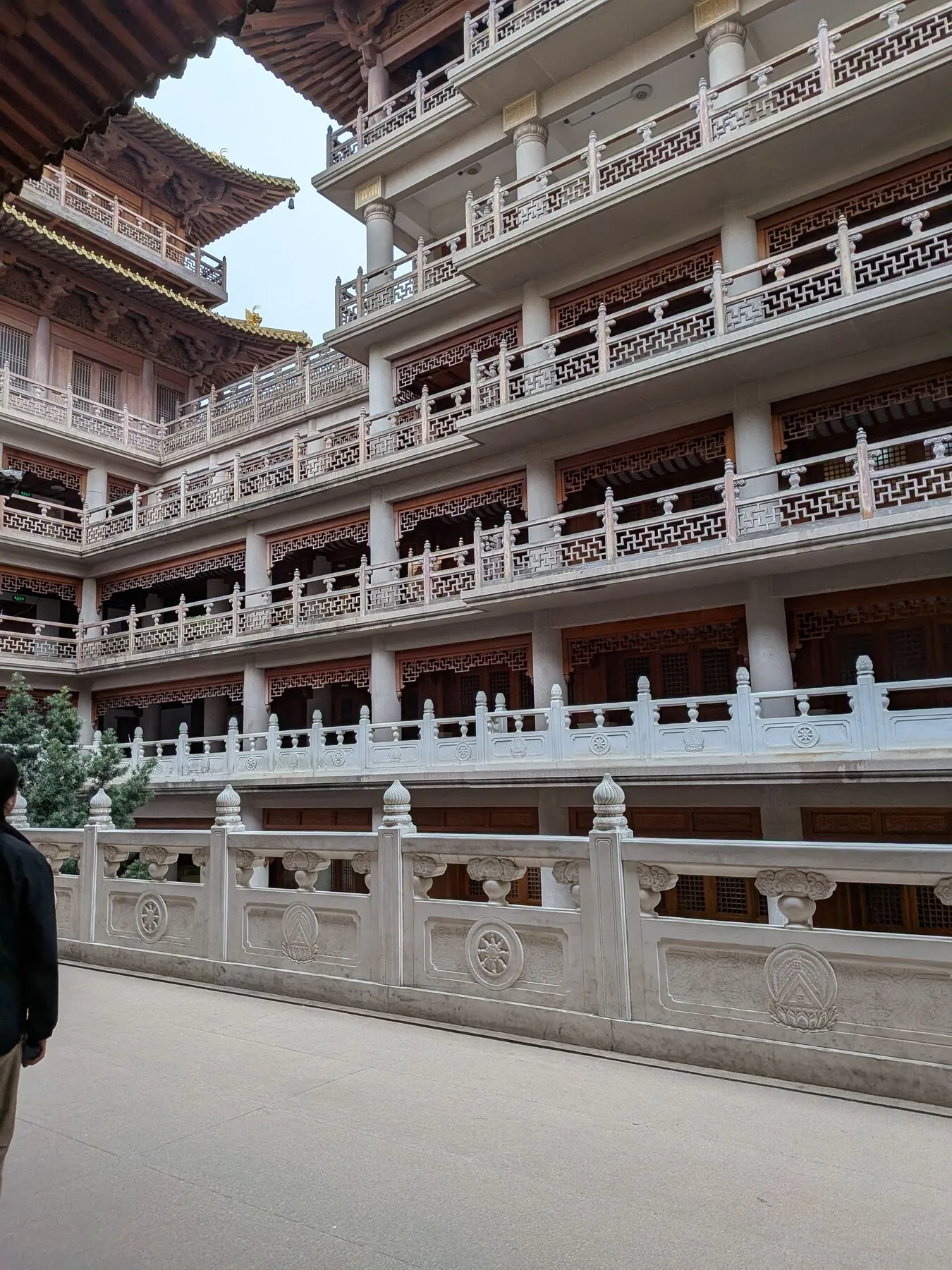 Jing’an Temple
From there we headed to the French Concession and admired Wukang Mansion.
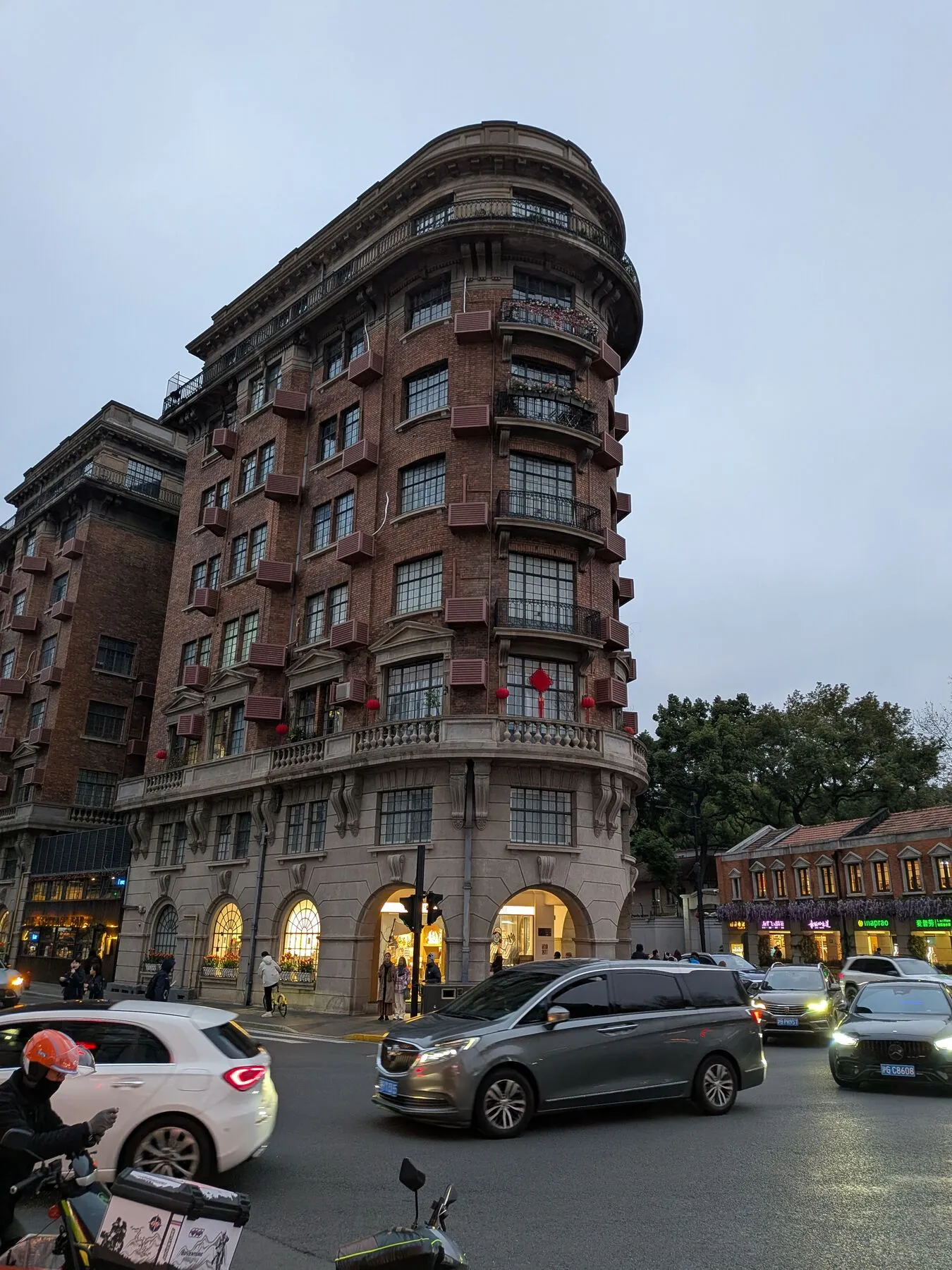 Wukang Mansion
Eventually, hunger returned, as it always did in Shanghai. Hao found a Cantonese restaurant in a mall on Nanjing Road, and we collapsed there for dinner.
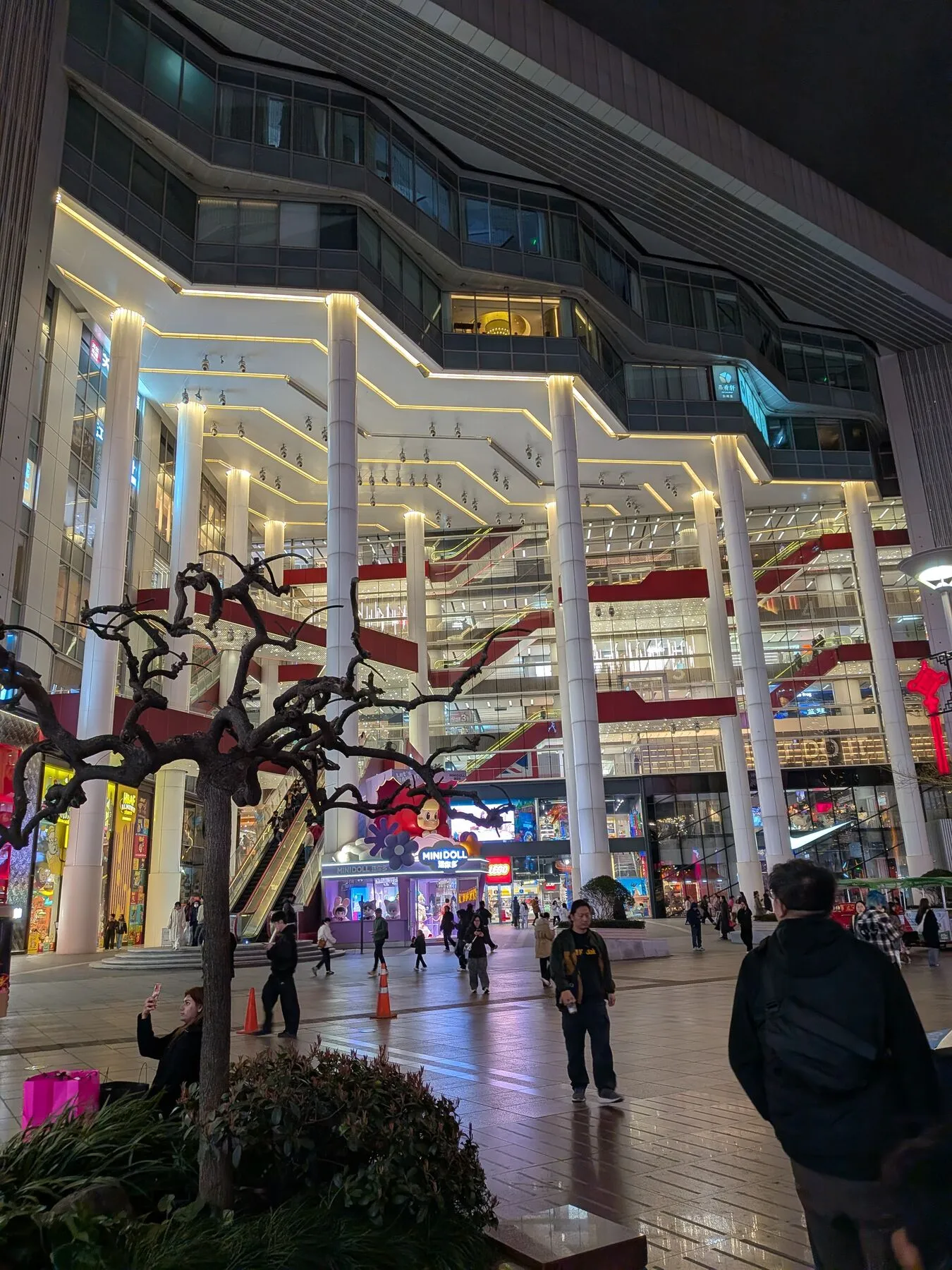 The mall hosting the cantonese restaurant on the 4th floor
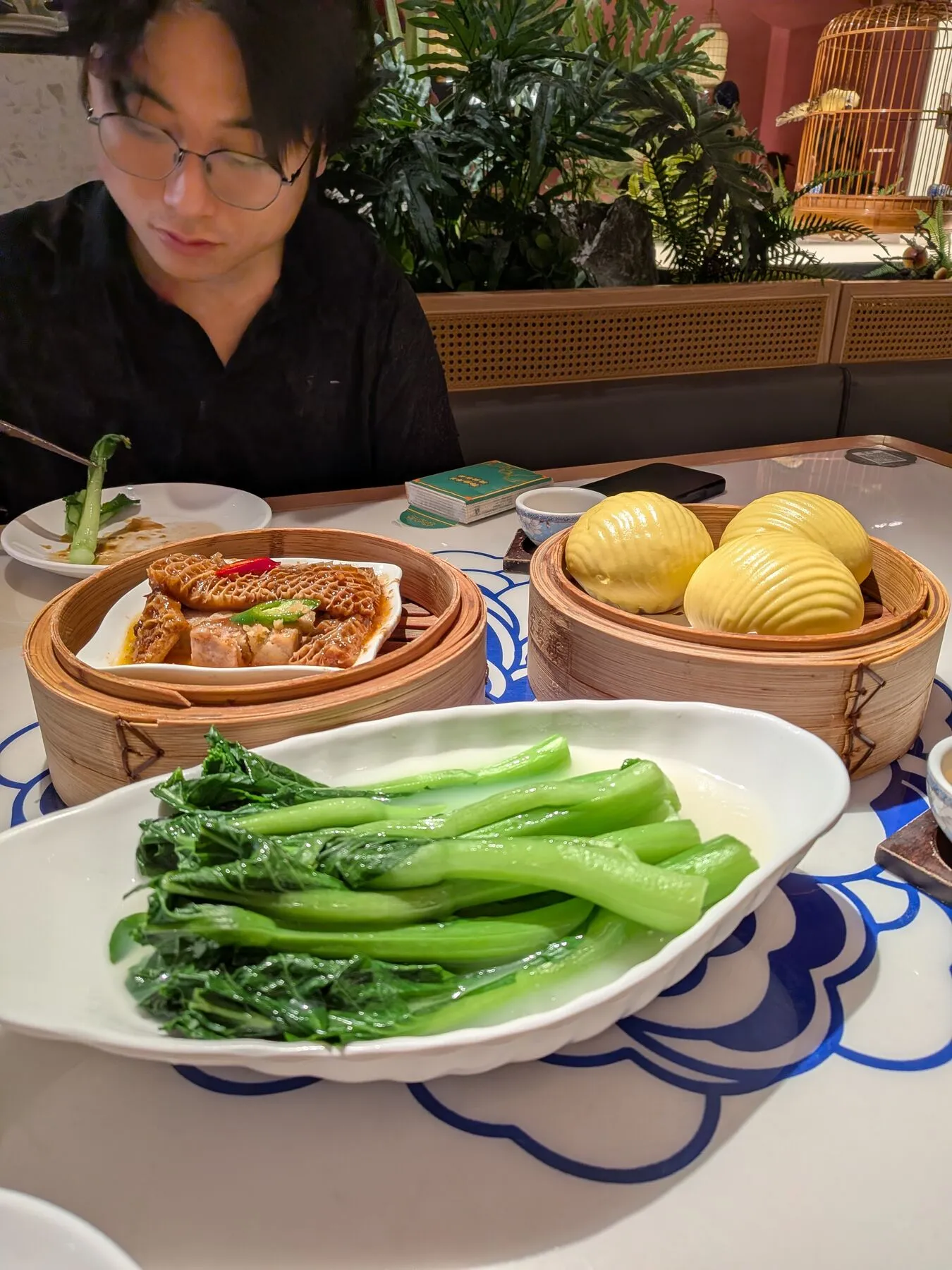
We had steamed pork stomach, green vegetables, tea, and buns filled with egg yolk and sugar. On paper, this may not sound like a guaranteed success to a Western reader. In reality, it was excellent. Those buns were absurdly good.
On the way back to the hostel, we made two more stops.
First: a small old Shanghai vanishing cream shop.
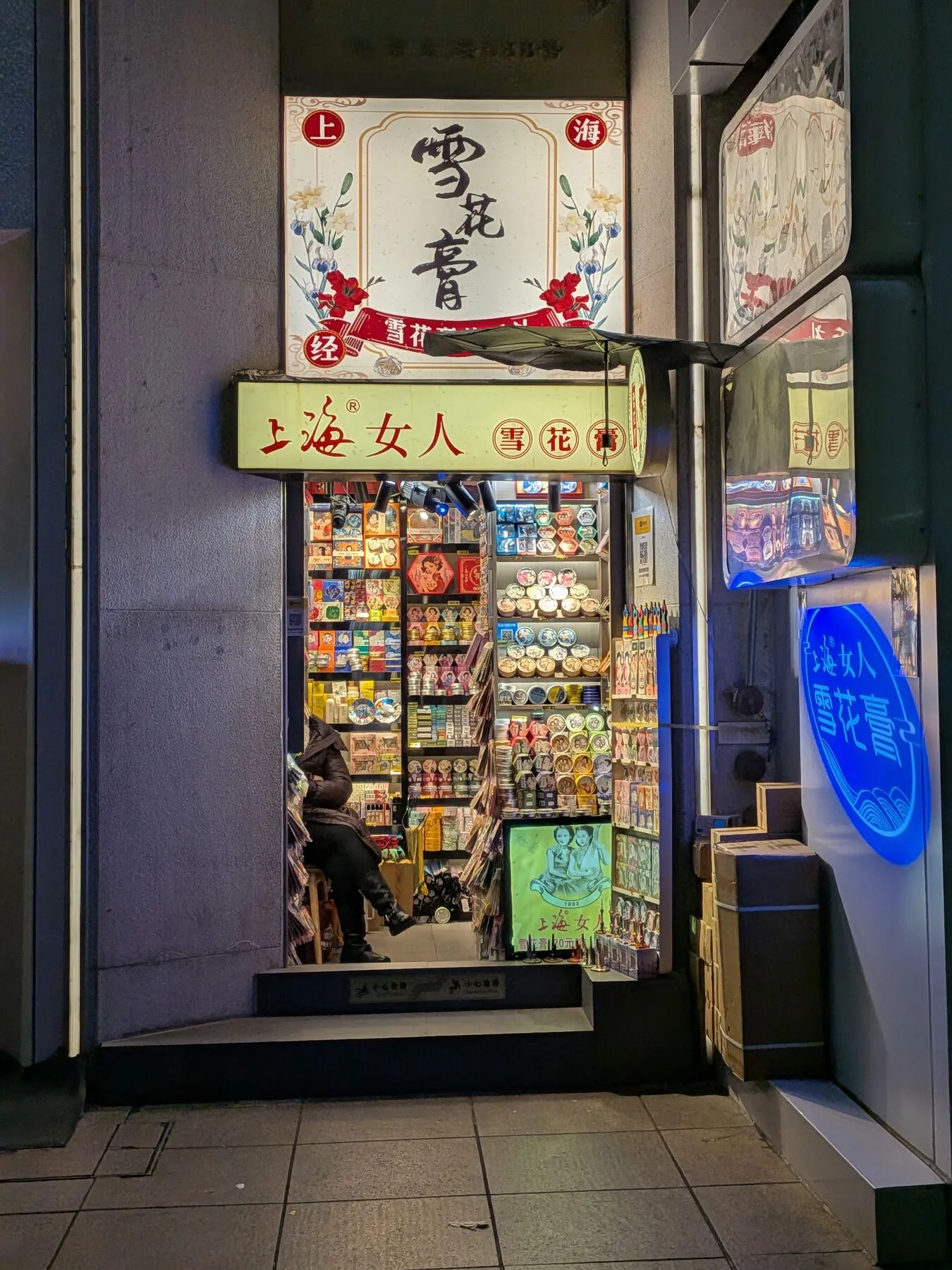
Then came Hao’s next suggestion:
“You should try stinky tofu. People either love it or hate it.”
I was up to the challenge.
I went to a street vendor, ordered some, took one bite, and immediately discovered which side of the divide I was on.
I threw it away after the first bite. To my surprise, since there was no rubbish bin nearby, Hao casually pointed to the side of the road and explained that someone would eventually collect it.
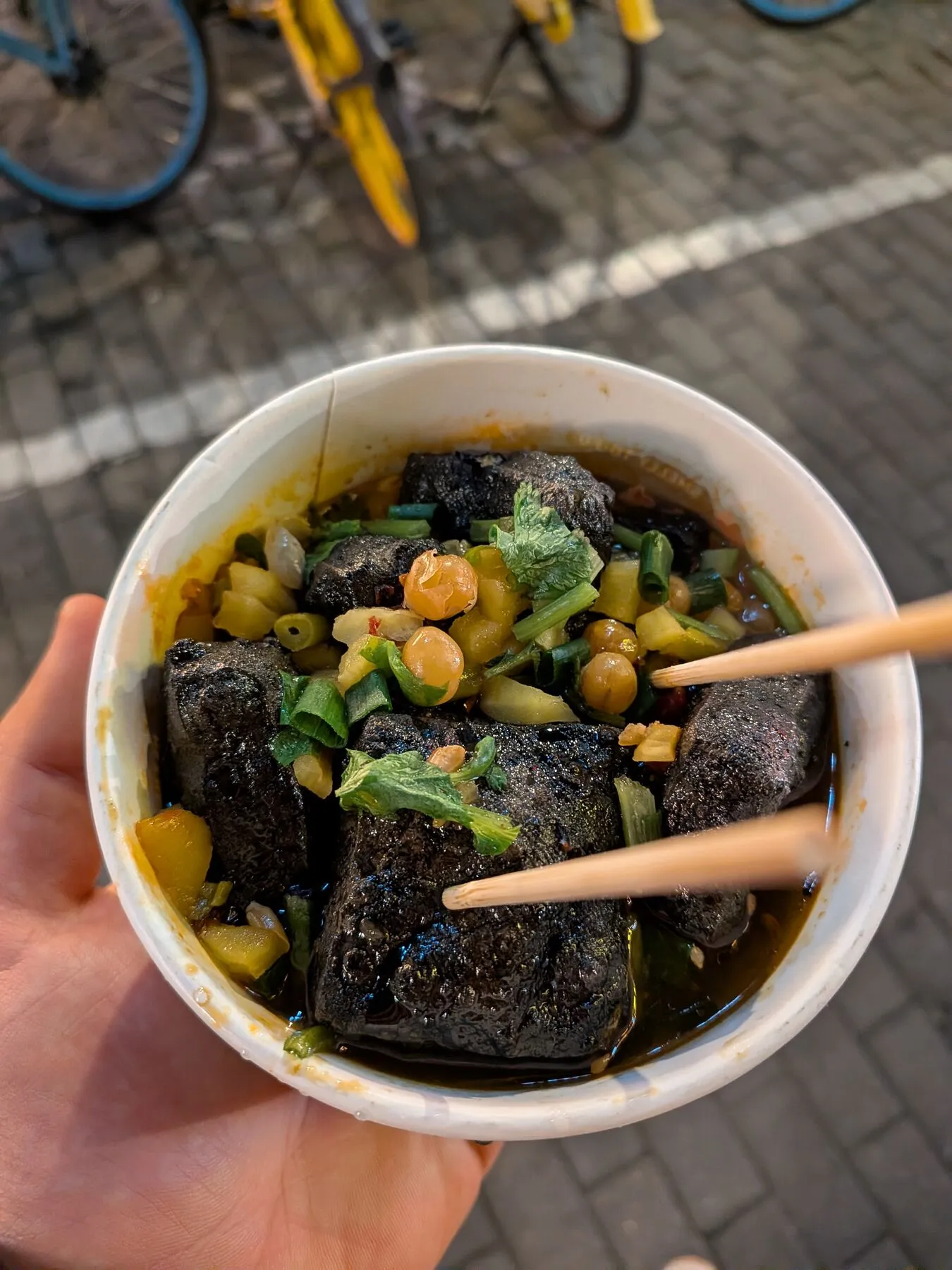 Stinky tofu, moments before immediate rejection
Exhausted but happy, I returned to my room, where Rodrigo had already left and nobody had replaced him. For one glorious night, my coffin had become a private suite.
Thank you for everything, Hao.
Wednesday: Zhujiajiao, my only proper rip-off, and a very good recovery dinner
That was it: the first day trip.
Thankfully, it was an easy one, since it was accessible by metro only. I took Line 2 to Hongqiao Railway Station and then switched to Line 17 for Zhujiajiao.
Zhujiajiao is an ancient water town full of canals, bridges, and old streets. Entering the town itself is free, but visiting the attractions comes with a small fee.
At the tourist center I bought a general admission ticket for all major sights for 80 RMB. I never did find the watercolor gallery, but to be fair I also didn’t conduct a particularly serious search.
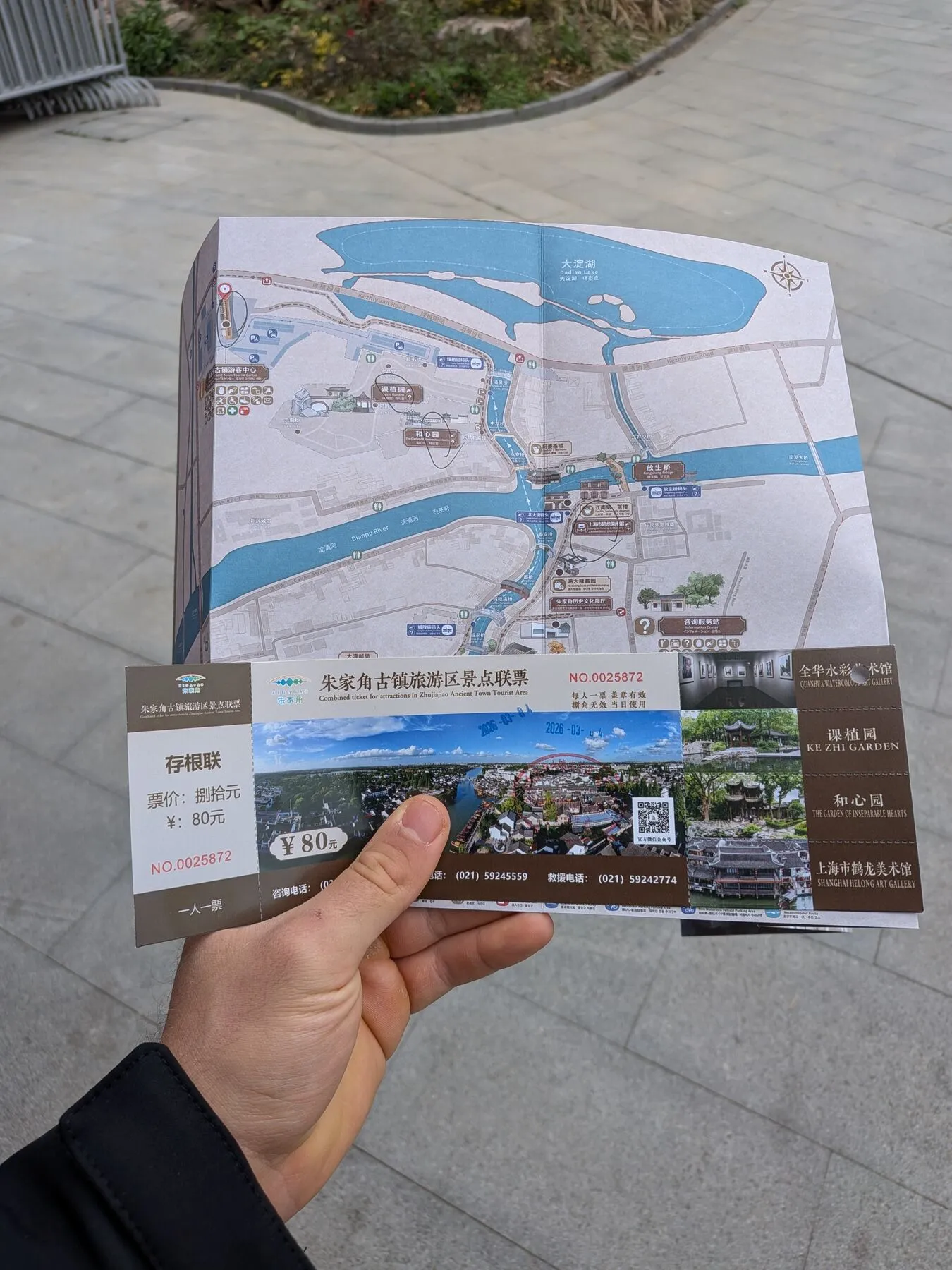 General admission ticket
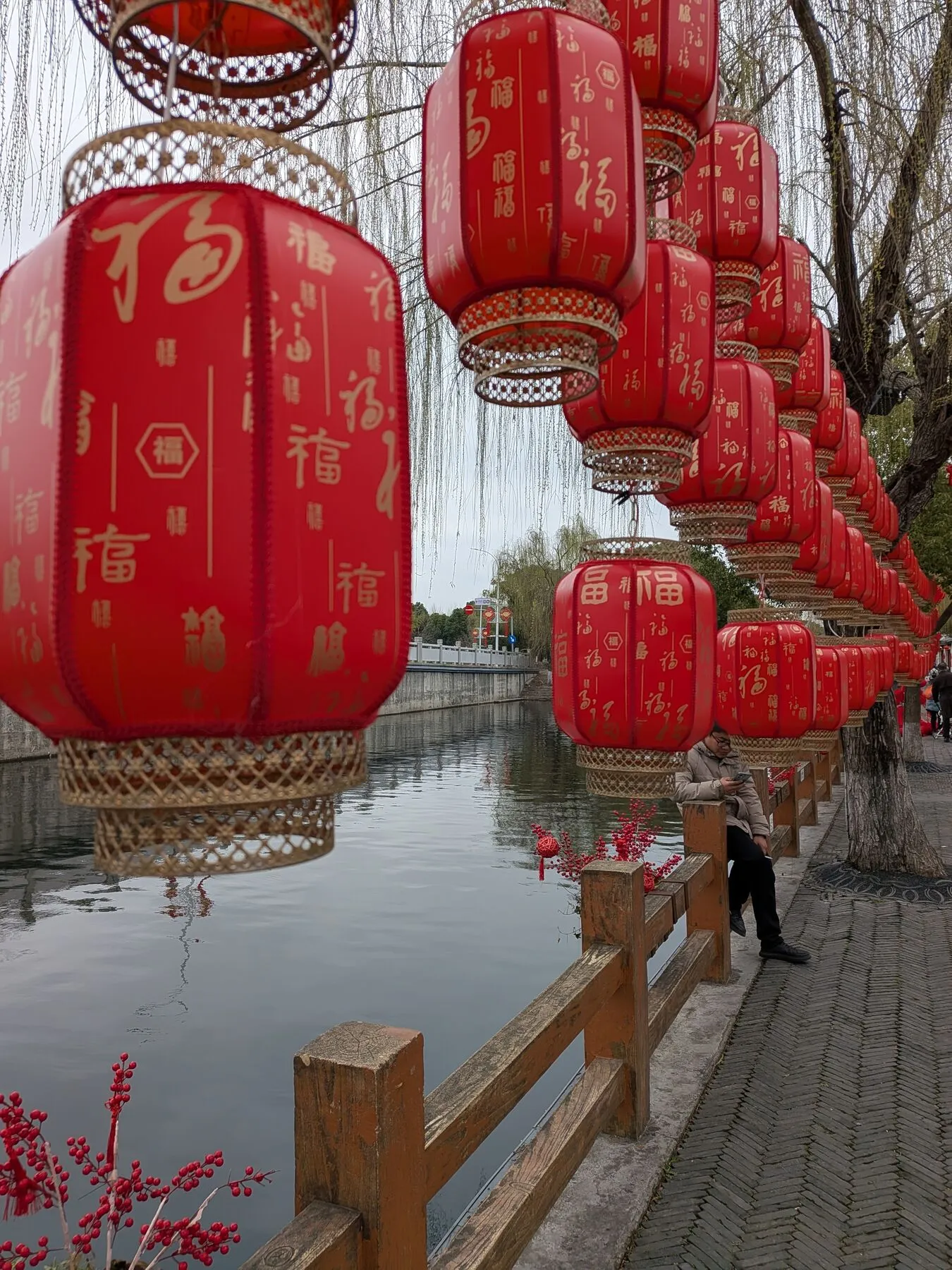 Ancient town riverside
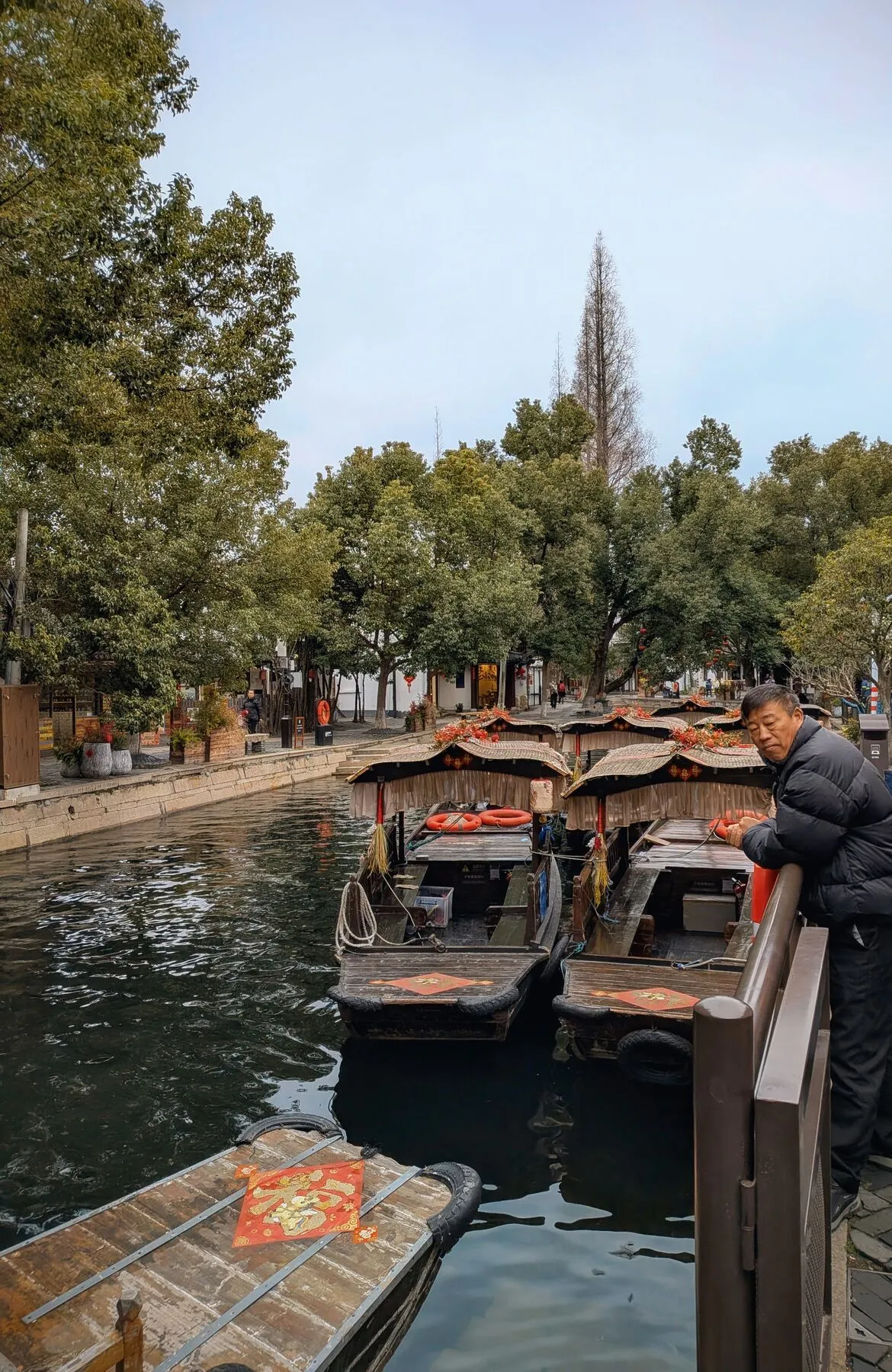 A local boatman
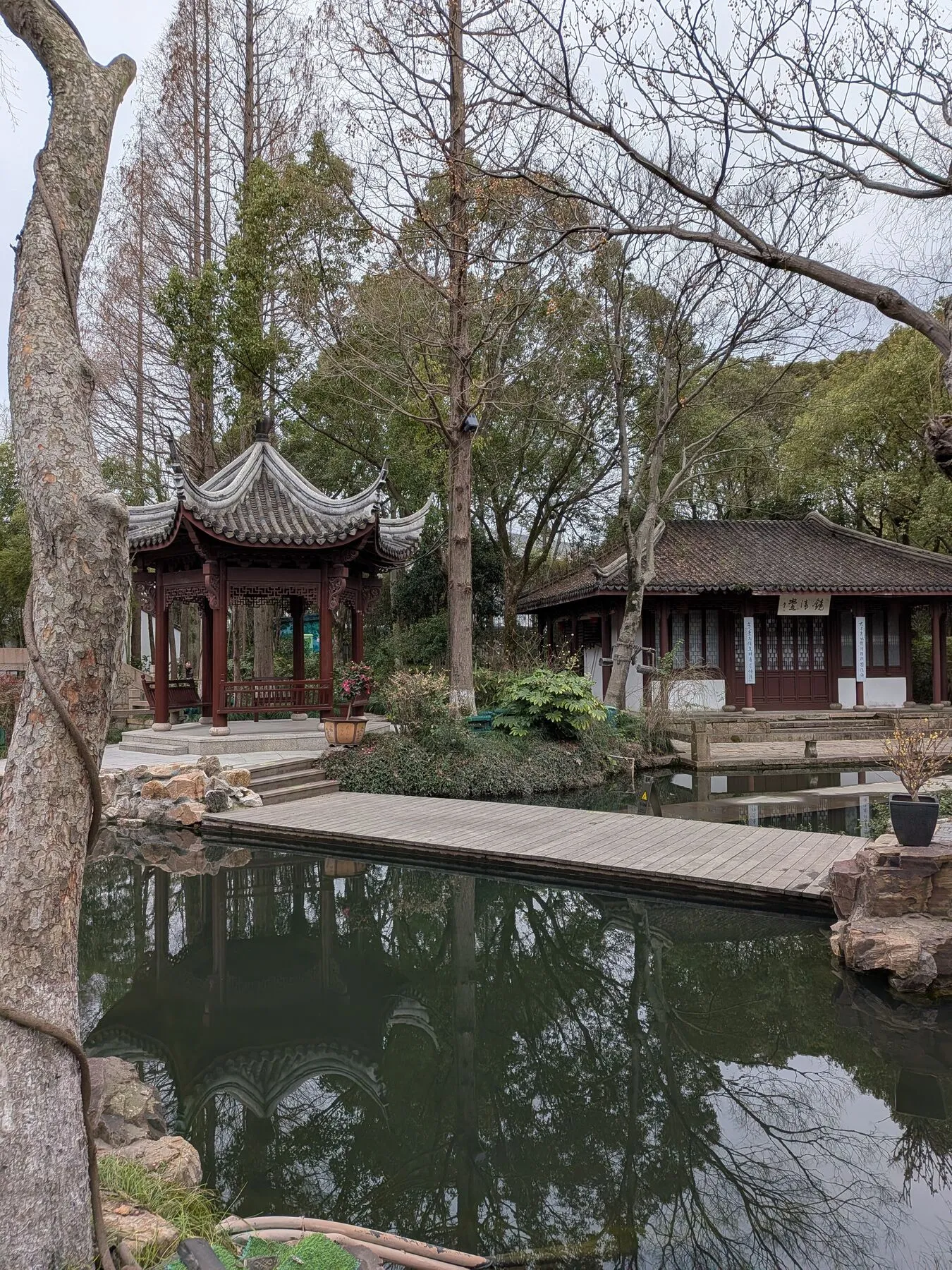 Ke Zhi Garden
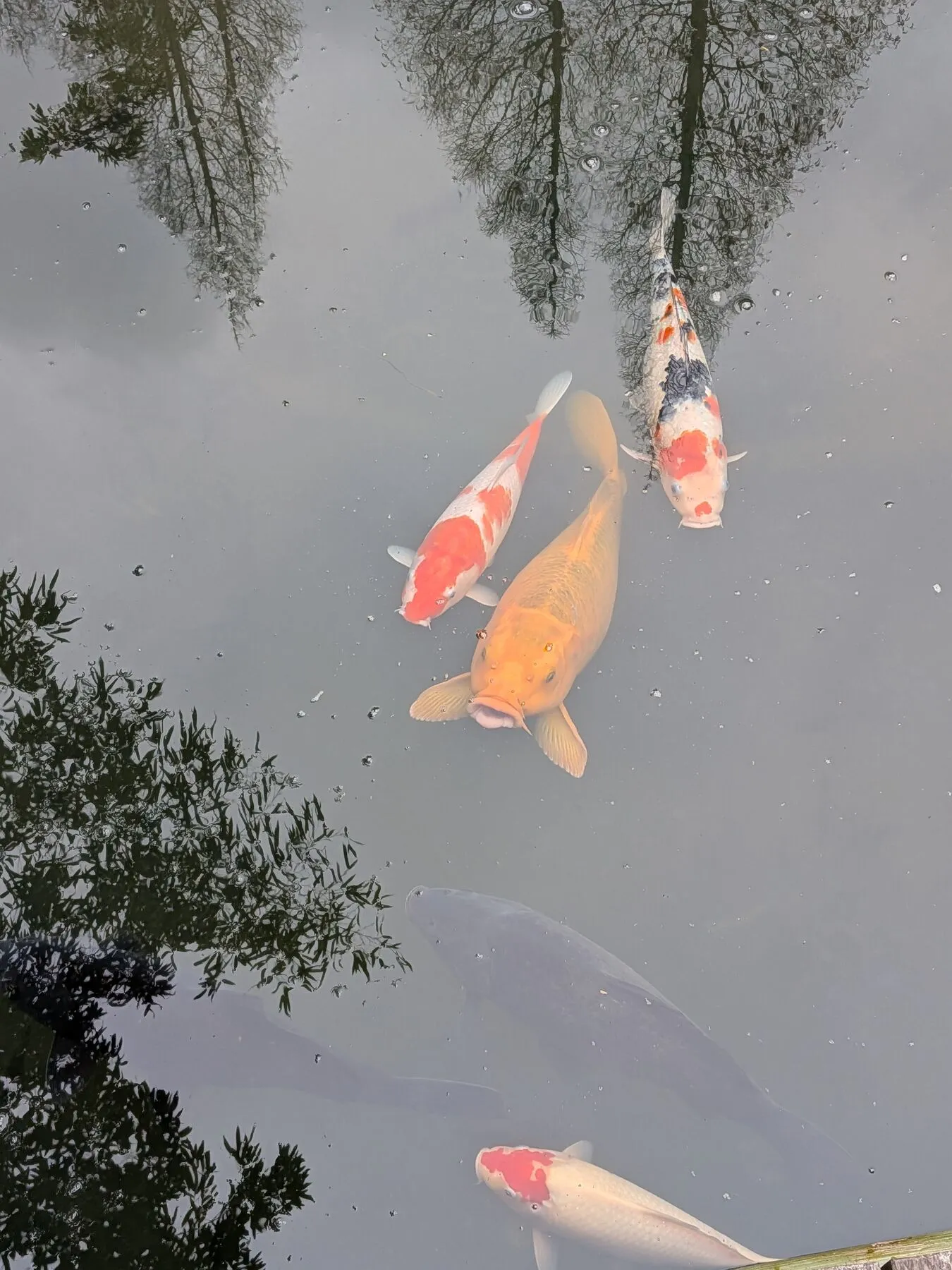 Feeding Koi fish in Ke Zhi Garden
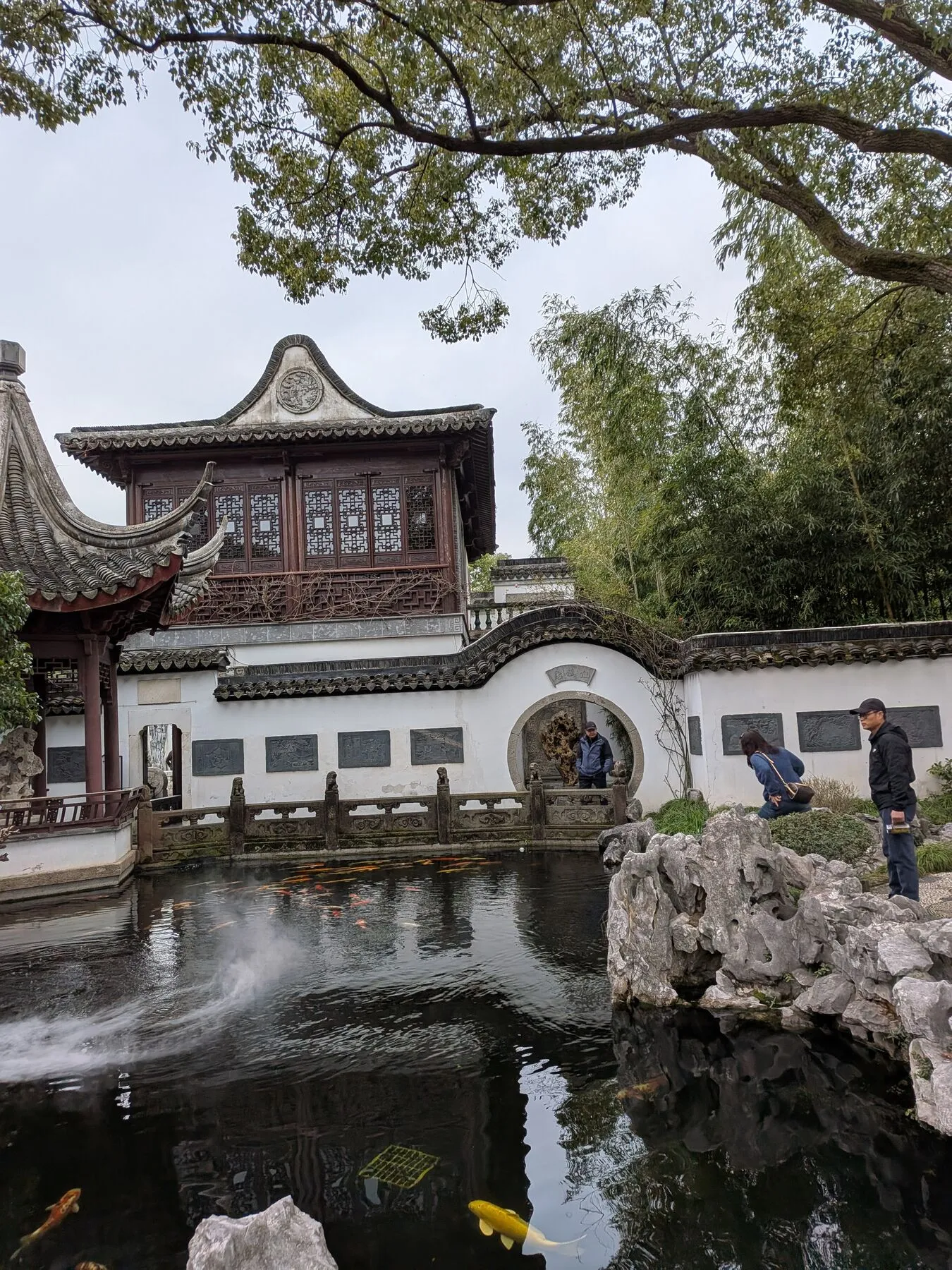 The House of Inseparable Hearts
After the first attractions and a walk through the old streets and the rest points of interest indicated on my map, I treated myself to a local pork-filled rice snack. The pork was good. The rice had absorbed so much pork fat that I never quite made peace with it.
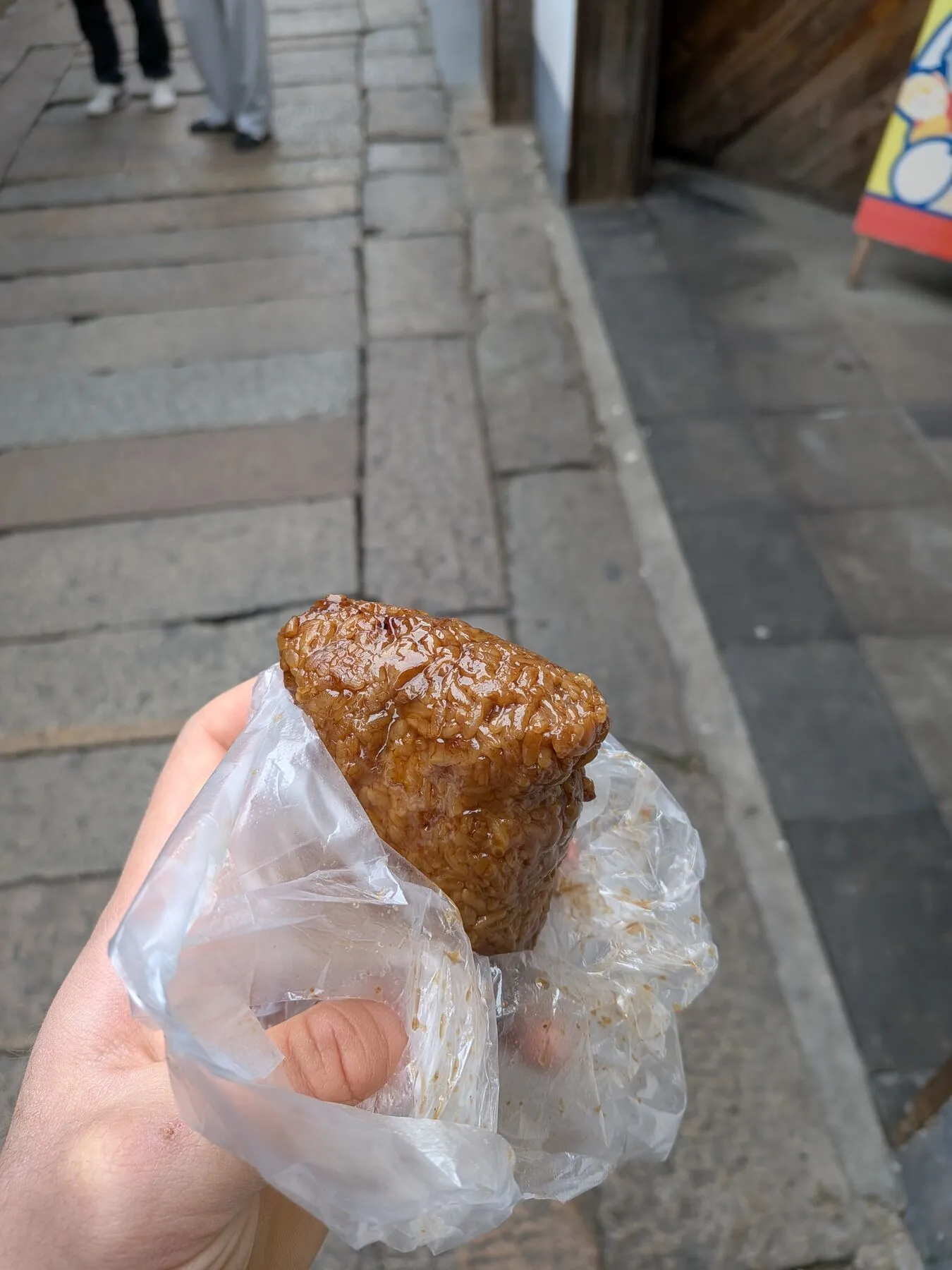 Pork-filled rice snack
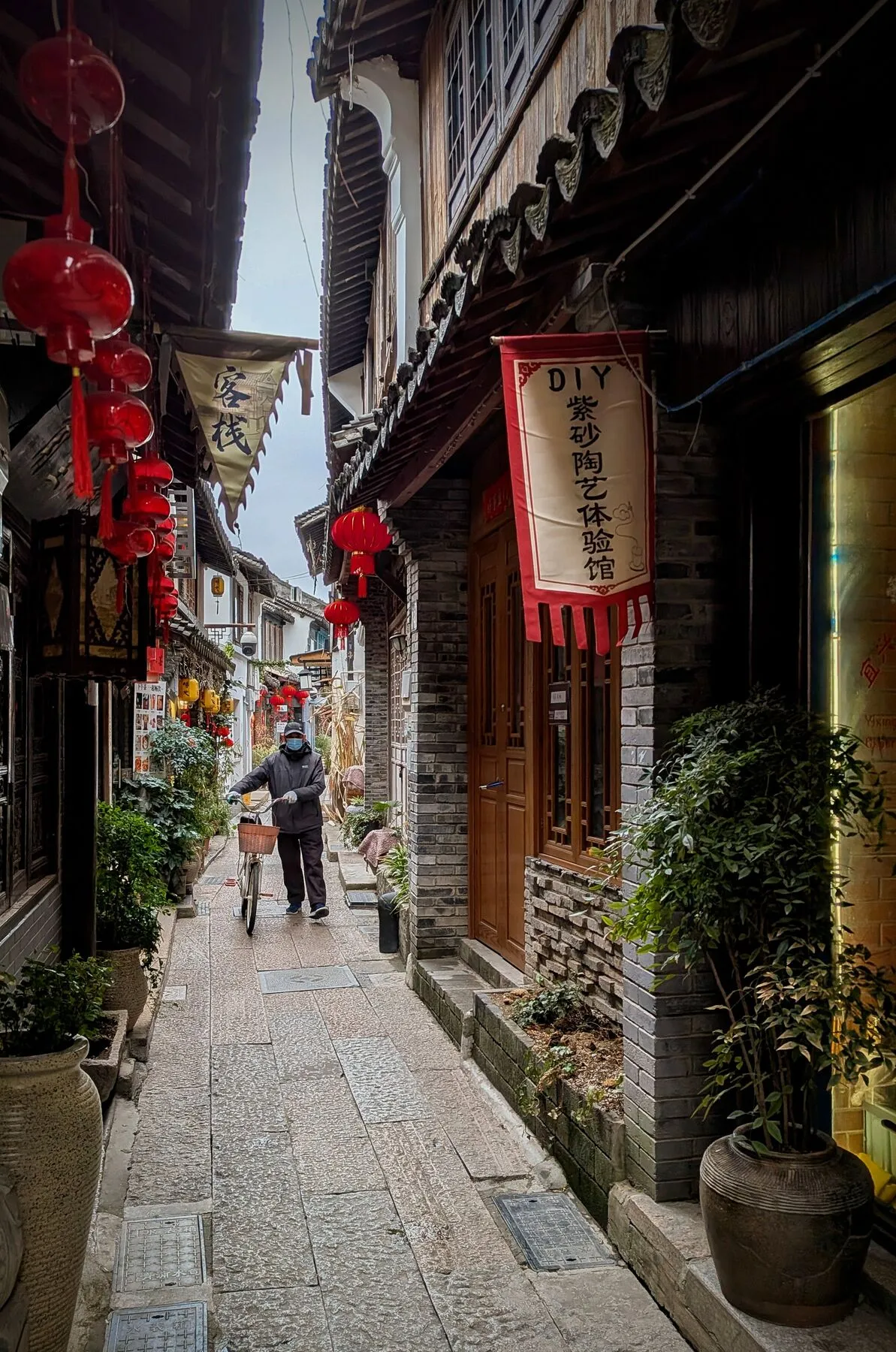 Local biker in the old town
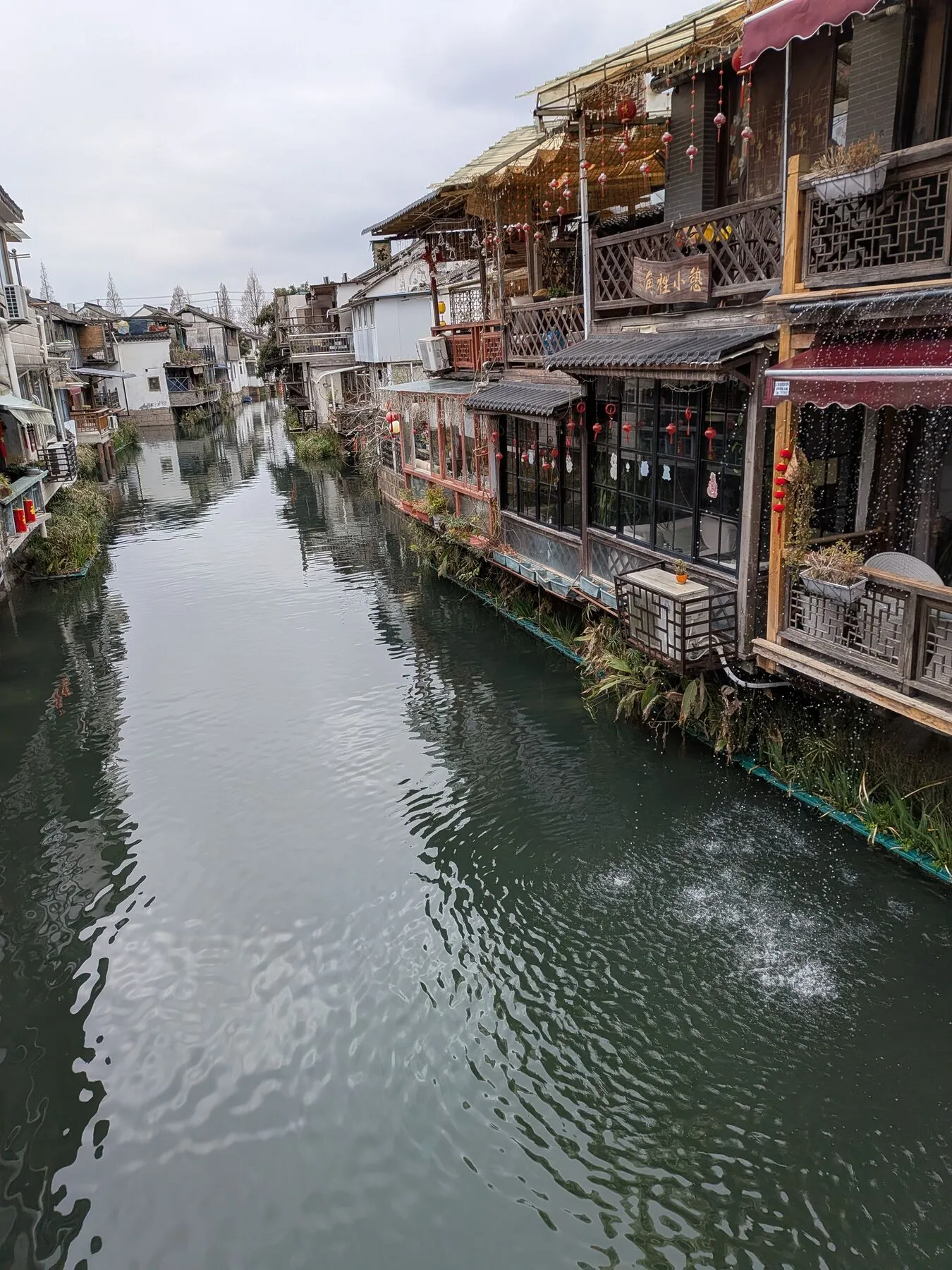 View from the Fangsheng bridge
This was also the first and only time I got ripped off during the trip.
I saw several stores selling a local orange-looking pie that seemed interesting. After tasting a few sample bites, I ordered one piece to eat on the go. The seller kept insisting it was good for the throat and common cold, and somehow, before I had fully processed what was happening, she had packed four of them into a bag.
I was too awkward to insist she remove the extras.
After all, everything in China had been cheap so far. How bad could it be?
The equivalent of 18€ for four pies, apparently. And to make things worse, no orders are being made in China of four items, since number four is considered an unlucky number.
An expensive lesson in being less polite.
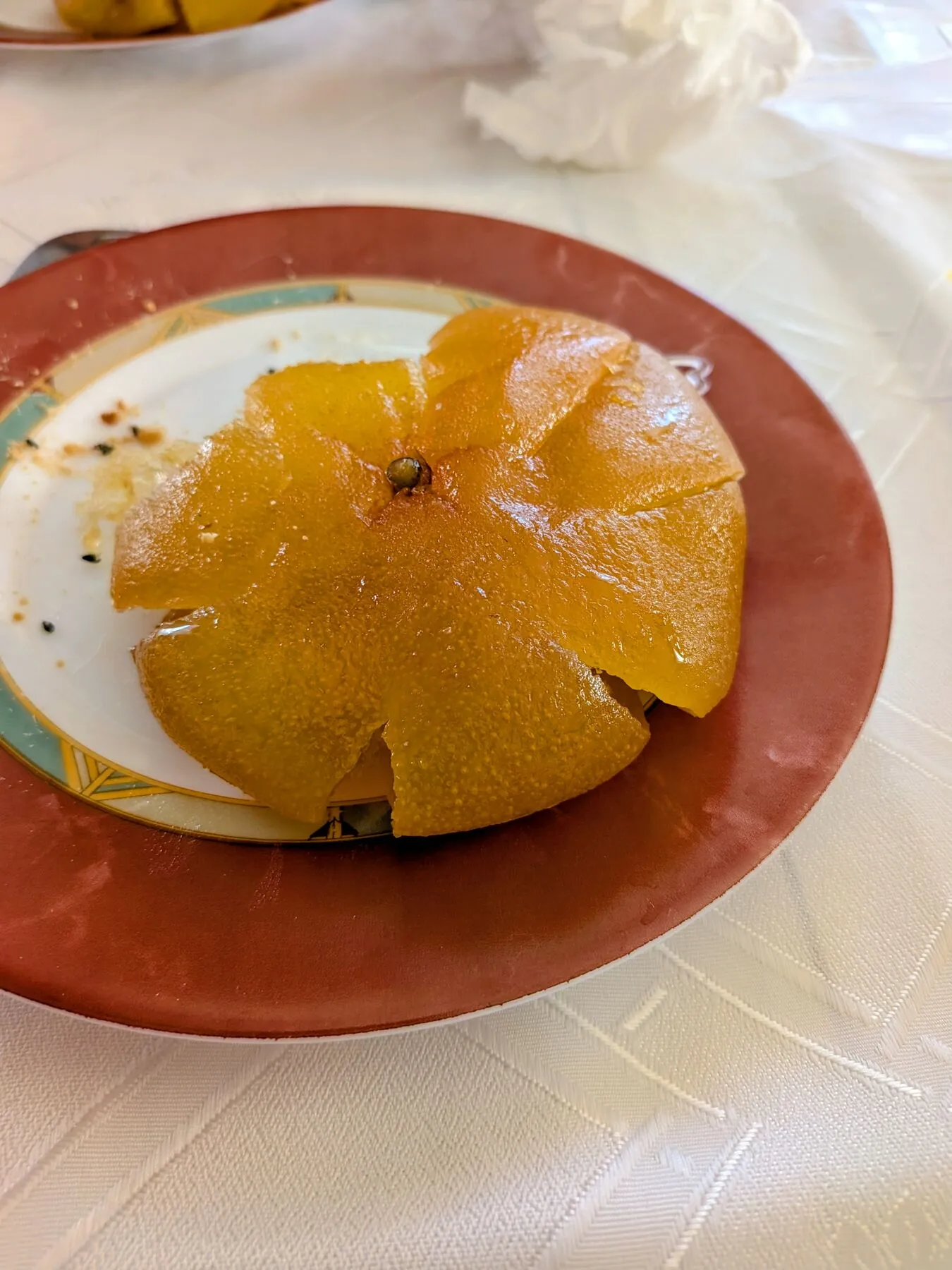 Trying the orange pies back home. Family members loved them
After returning to Shanghai, I still had enough energy to visit Tianzifang, a very touristy and crowded maze of streets full of shops. I didn’t stay long.
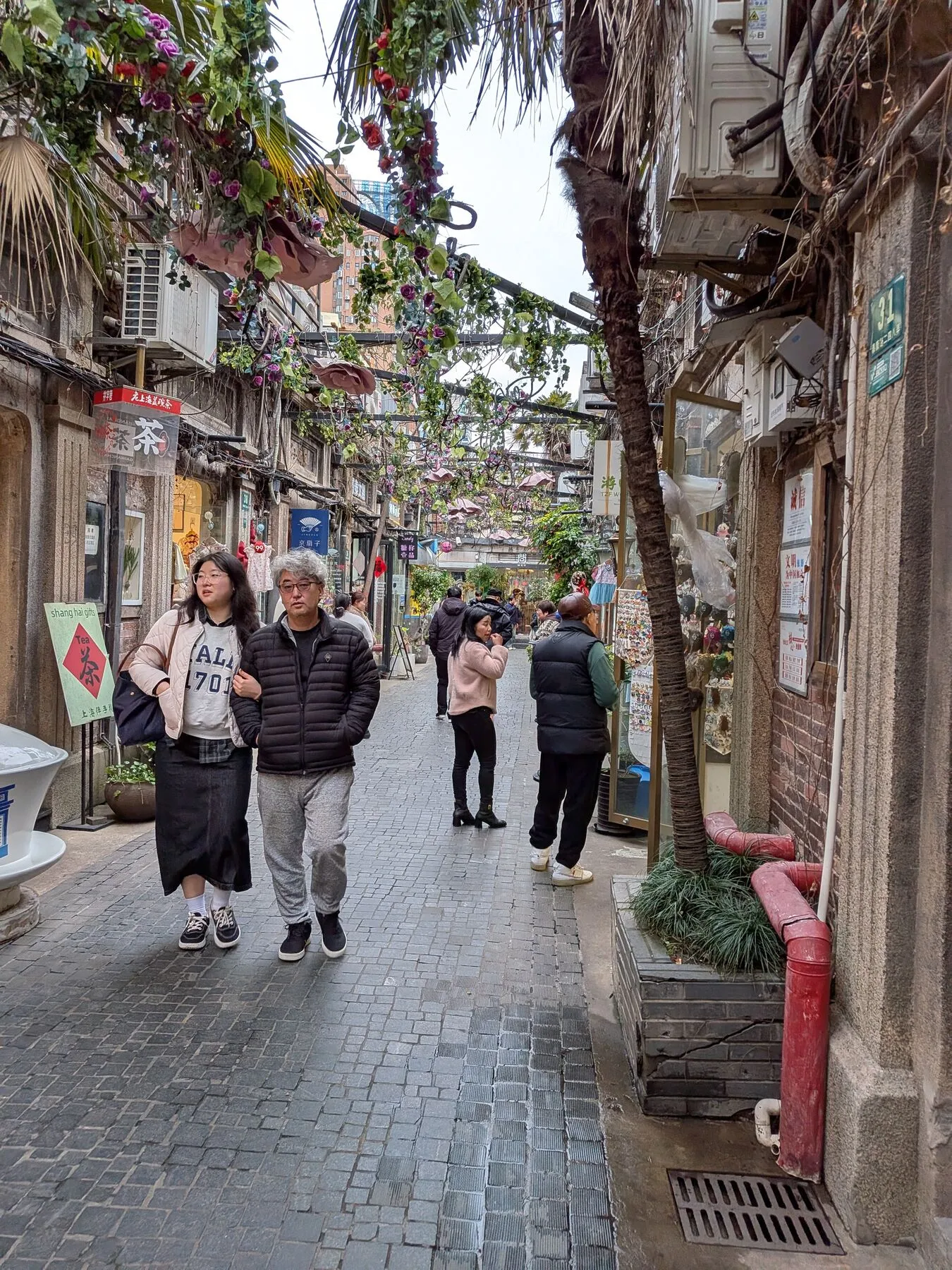 Tianzifang
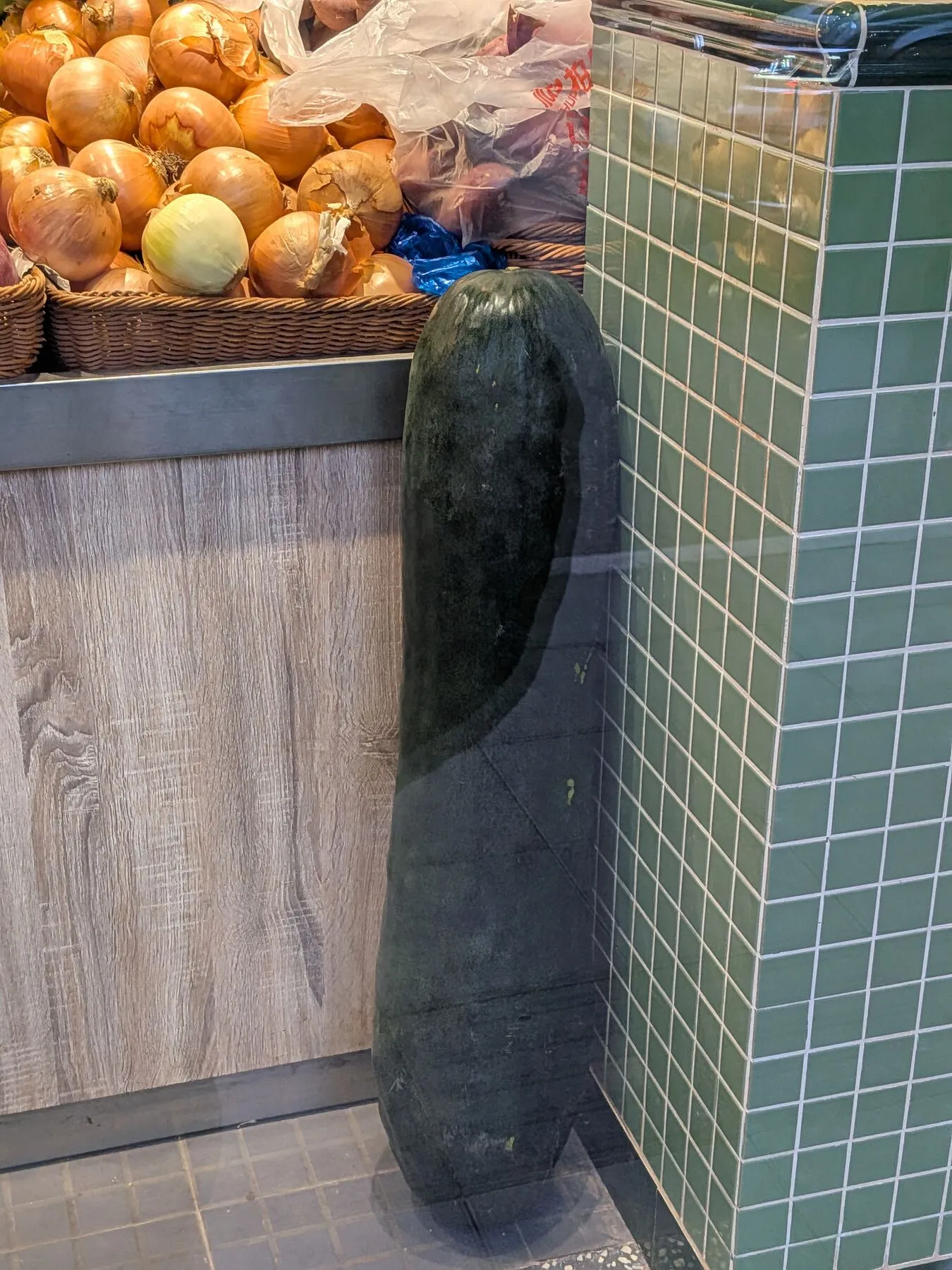 A giant cucumber I spotted in a grocery shop in Tianzifang
Now that Hao was no longer there to save me from poor decisions, I had to choose dinner on my own. So I headed back toward Ningbo Road, which had already proven itself a reliable zone for serious eating.
First I tried a place that looked old, famous, and very local, based on the queues, the roasted ducks hanging in the window, and the tiny entrance.
I ended up having the best dish of the whole trip there.
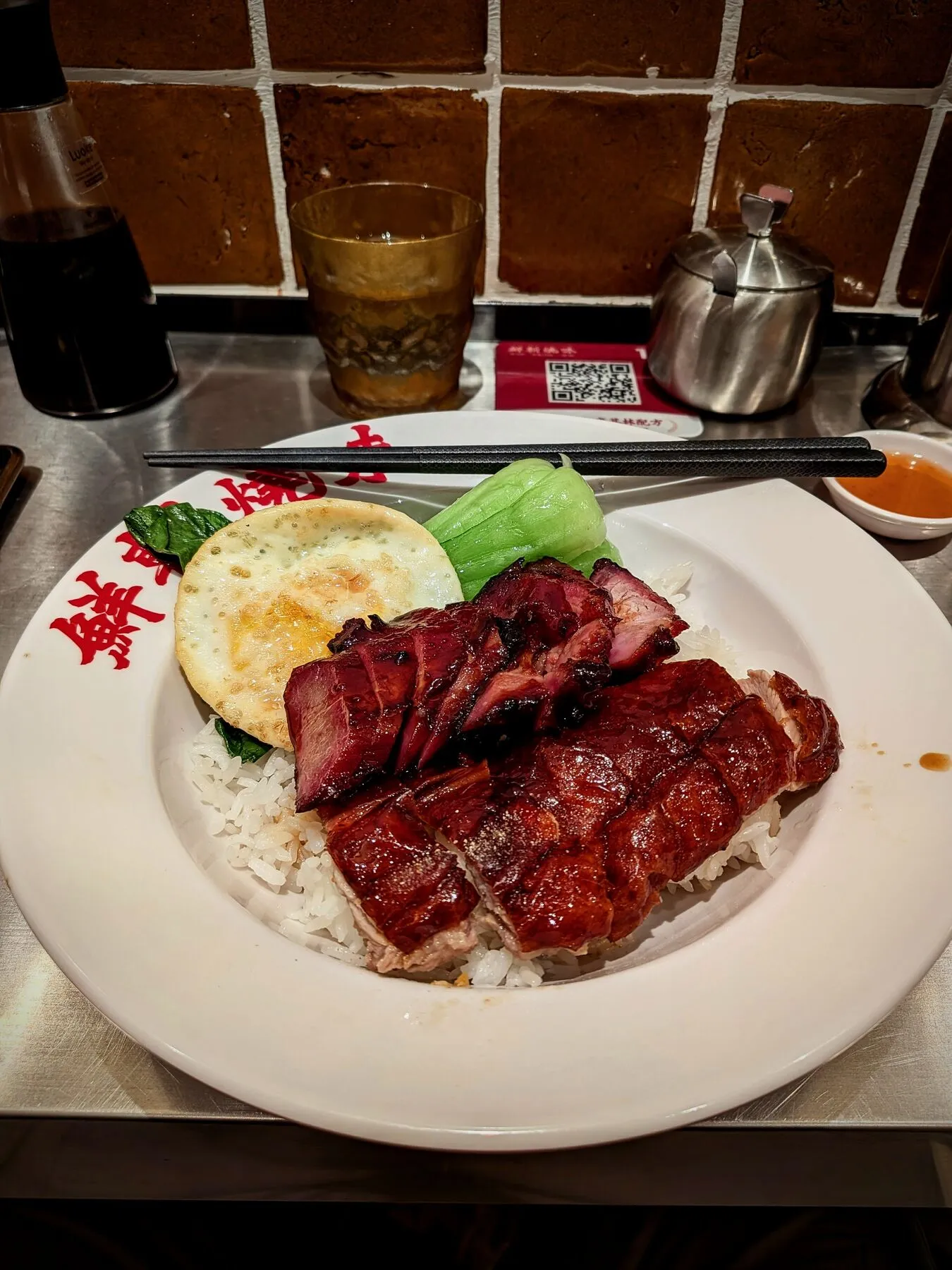 Roasted duck with the usual local vegetable, along with rice and an egg
Then I crossed the street to a noodle place packed with locals. I ordered noodles with meat and vegetables plus three mutton skewers. The noodles were excellent. People were smoking inside, which was not ideal, but the atmosphere was so local and alive that it somehow added to the experience rather than ruined it.
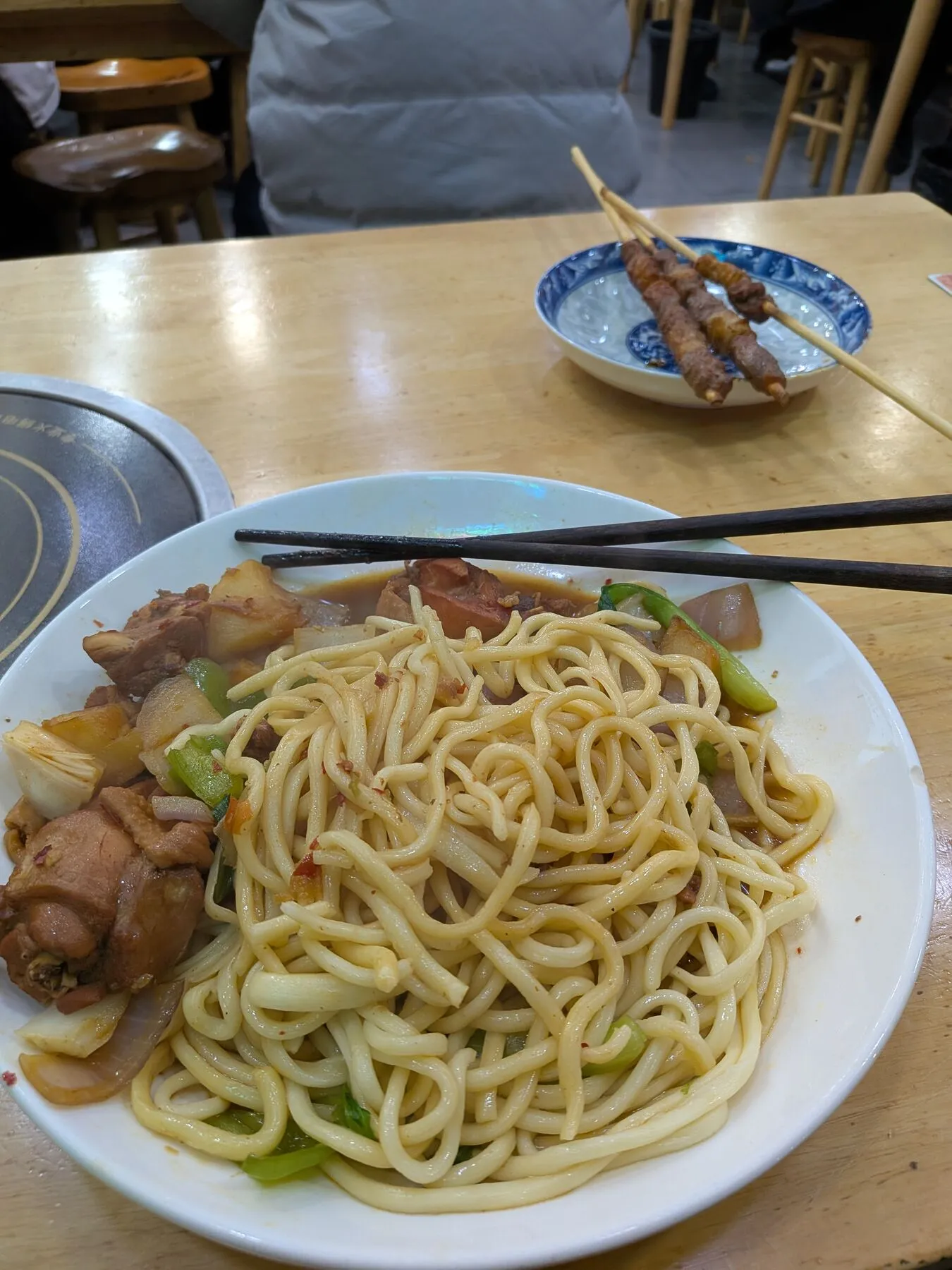 Noodles and mutton skewers
At the end of the evening, I was desperately craving dessert. While wandering around Nanjing Road once again, I found a place opposite the Shanghai Fashion Store serving three kinds of mochi.
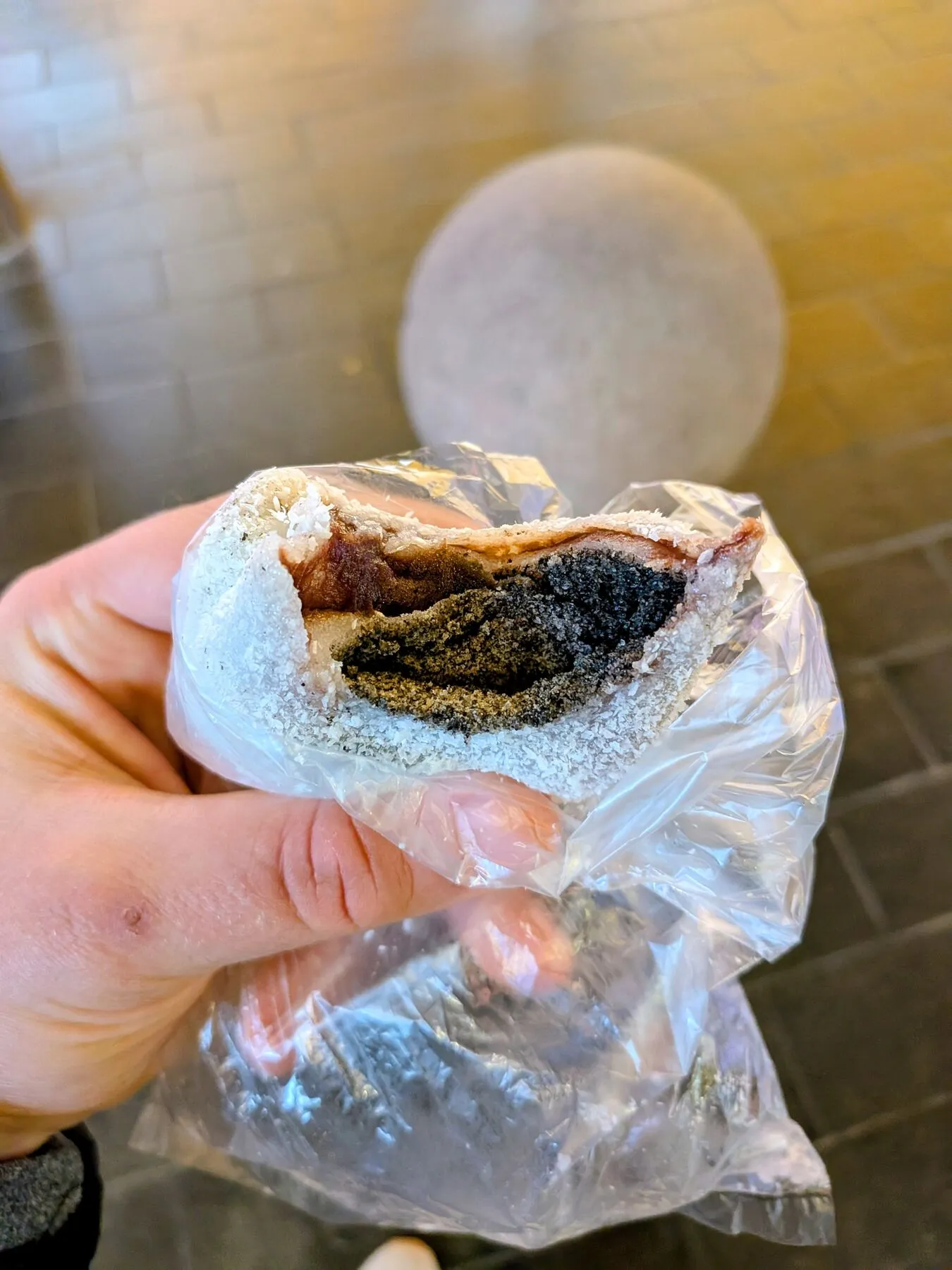 Coated in coconut and filled with that tahini-like black sesame paste
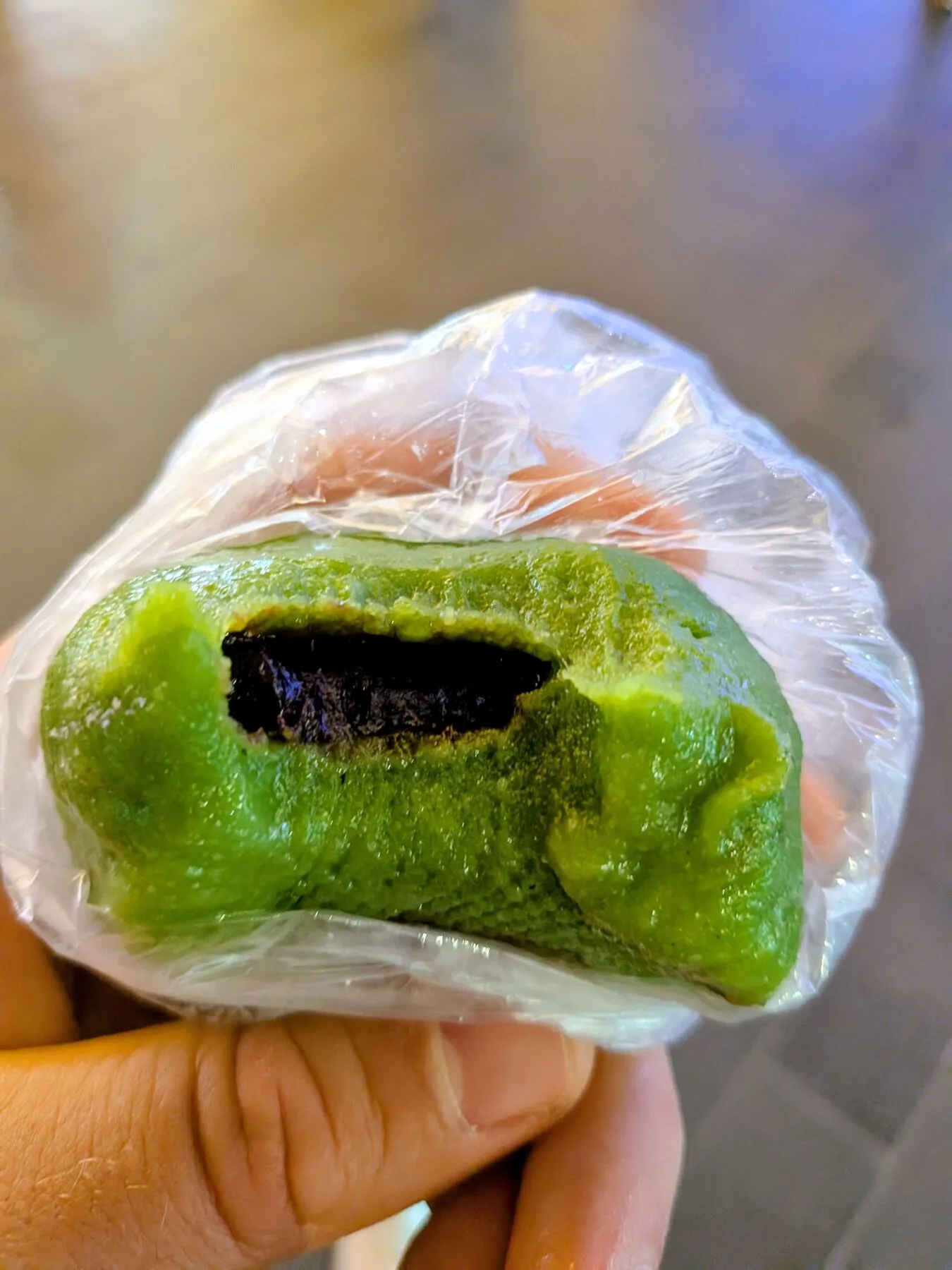 Tasted vaguely plant-like, maybe bamboo-like, and had bean paste inside
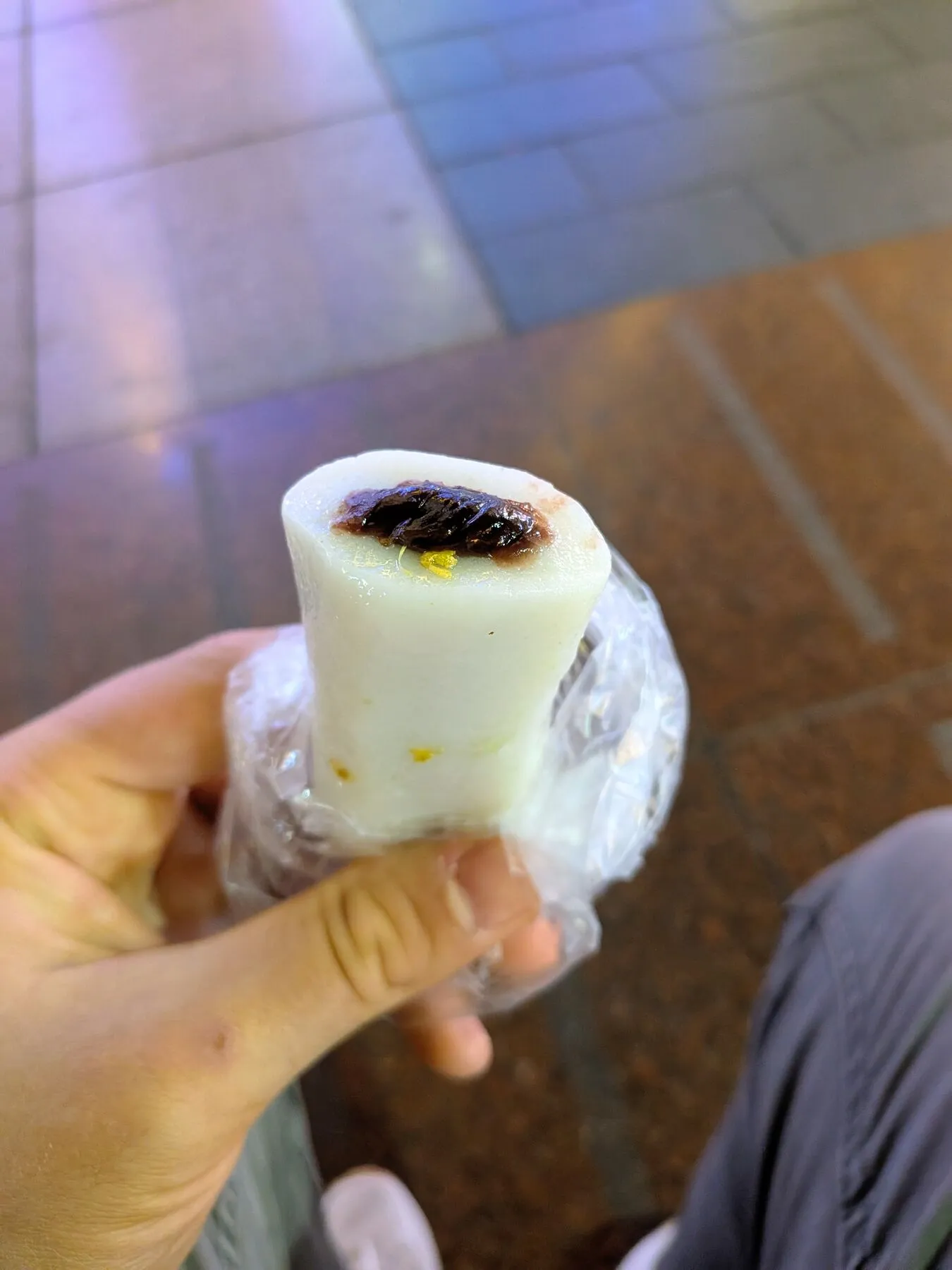 Stickier and again filled with some variation of bean paste
Beans are taken very seriously as dessert material in China.
None of them were particularly sweet, so my dessert needs were only halfway satisfied, but I was happy to have tried something new.
And then it was time for sleep.
Thursday: Hangzhou, tea villages, fake magic, and absolute food violence
Thursday was the highlight of the trip and also the most demanding day.
I woke up at 5:00 a.m. to catch the first metro to Hongqiao Railway Station.
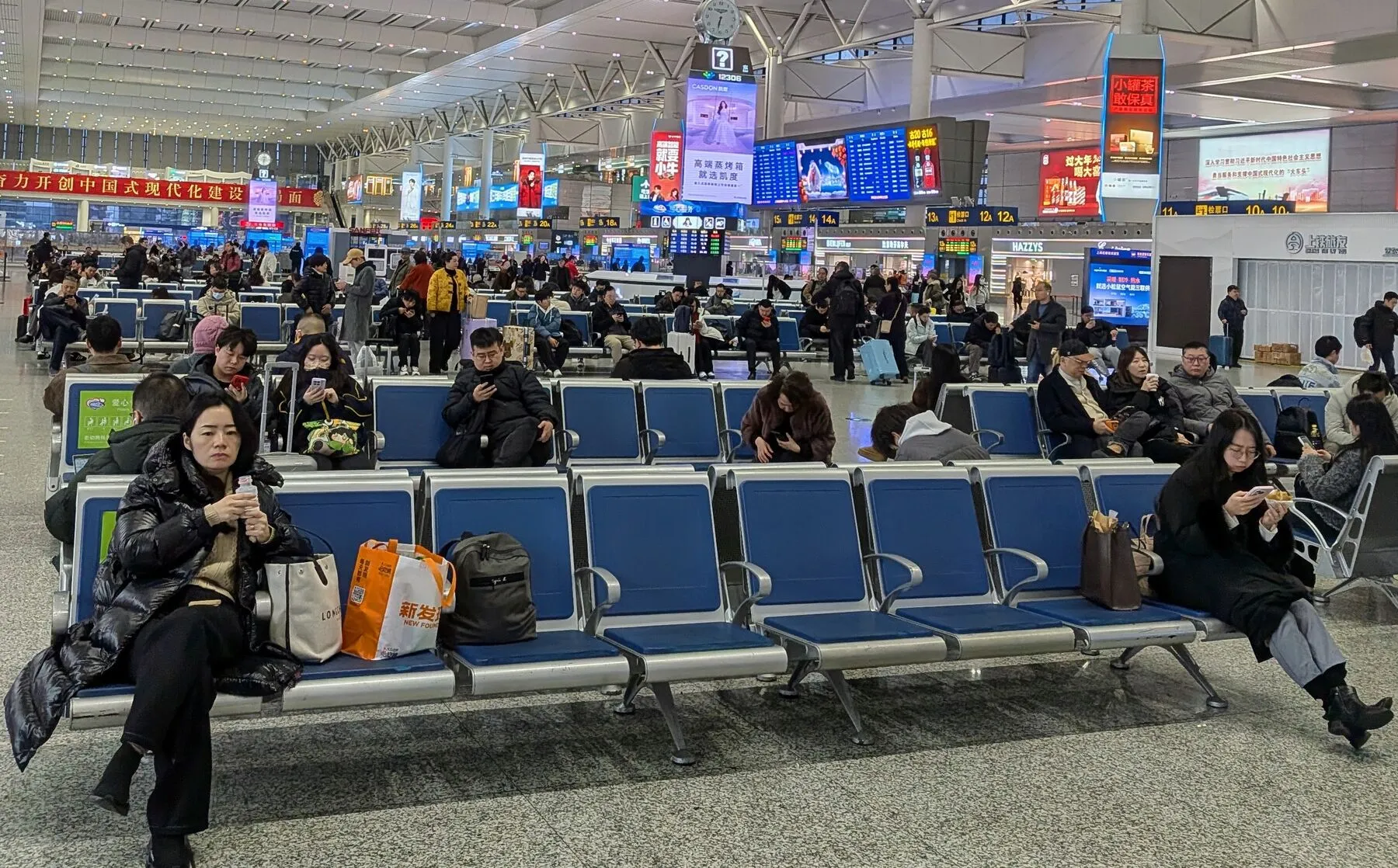 Early morning at Hongqiao Railway Station
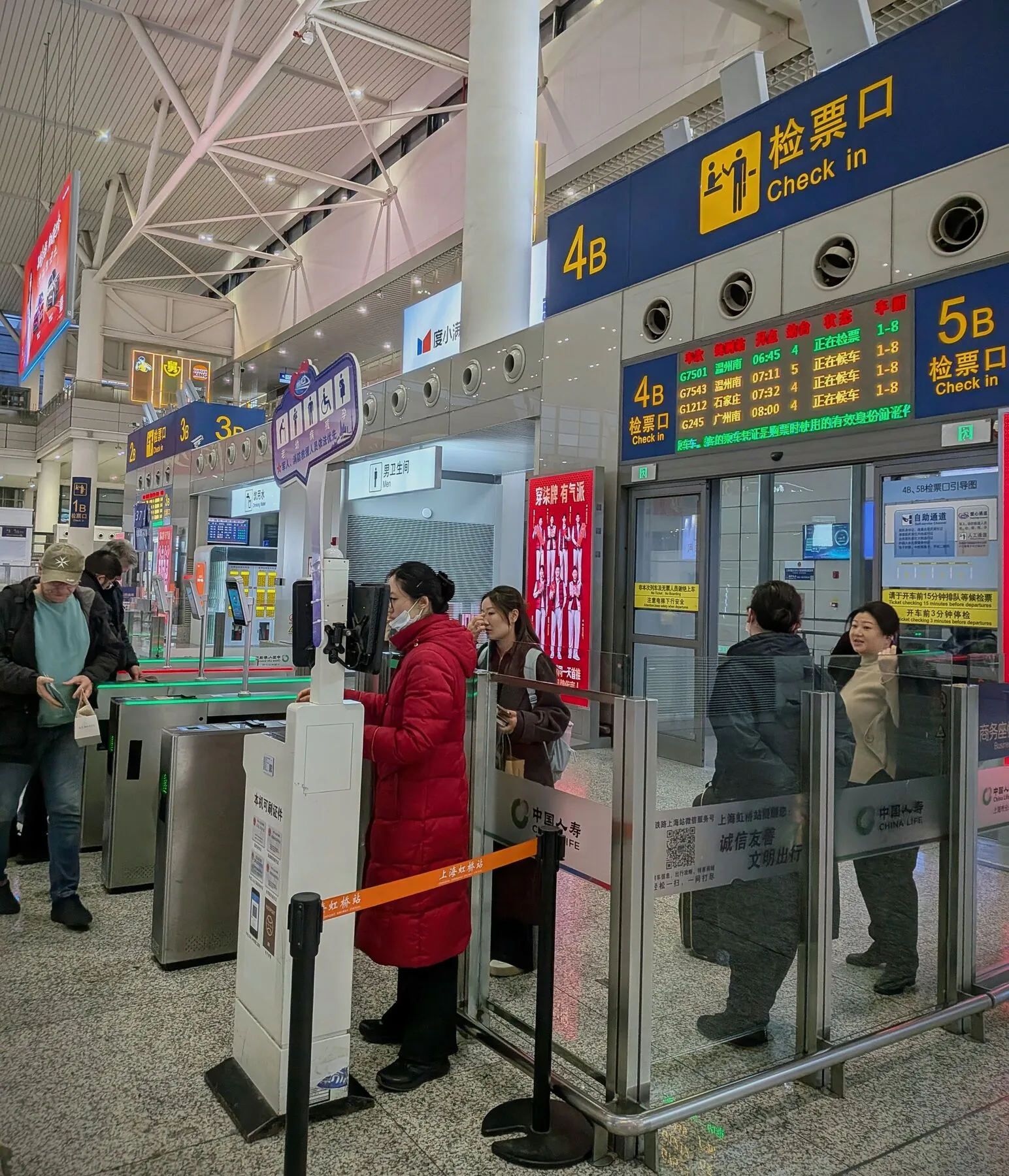 As long as you have a booked ticket, you just swipe your passport on the scanner
I had booked my train to Hangzhou well in advance through Trip.com. Even two weeks before the travel date, options were already selling out, so booking early had definitely been the right move.
Hangzhou is one of the most important ancient capitals in China, located at approximately 150km from the Shanghai city center.
Once I arrived at Hangzhou East Railway Station, I took the metro toward the city and headed for West Lake, the UNESCO-listed landmark that had been high on my list from the beginning.
It is worth noting that entering the metro there was more of a hassle than expected. I tried both WeChat and Alipay, even after switching the city in Alipay from Shanghai to Hangzhou, but neither seemed to work properly. I requested a transport card through Alipay and, after a 10-minute wait during which I even selected the urgent option, the card was finally issued… and still never managed to top it up with my Visa debit card.
So, in the interest of not wasting the entire morning, I bought a physical 3 RMB ticket instead, which turned out to be much easier anyway.
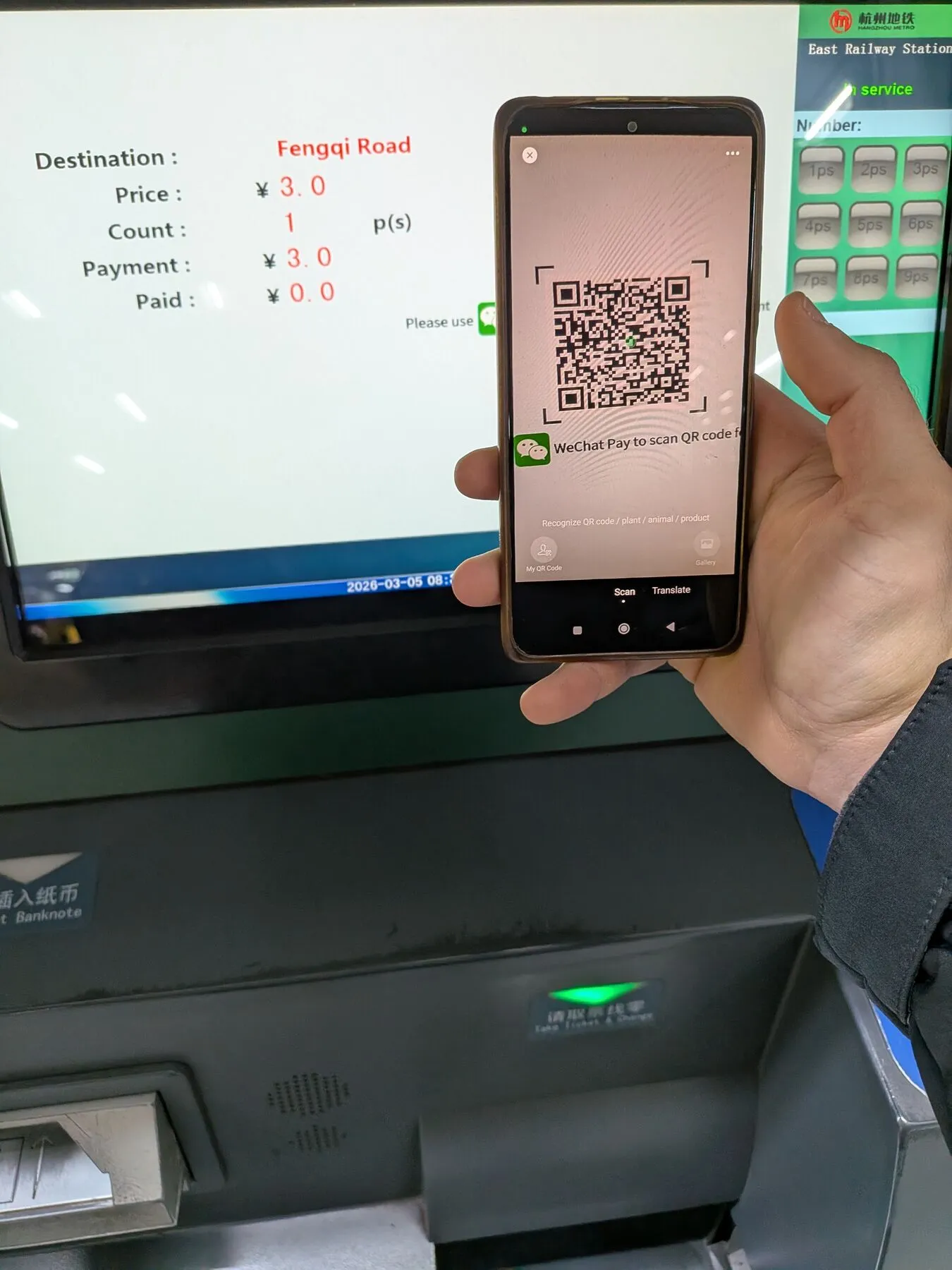
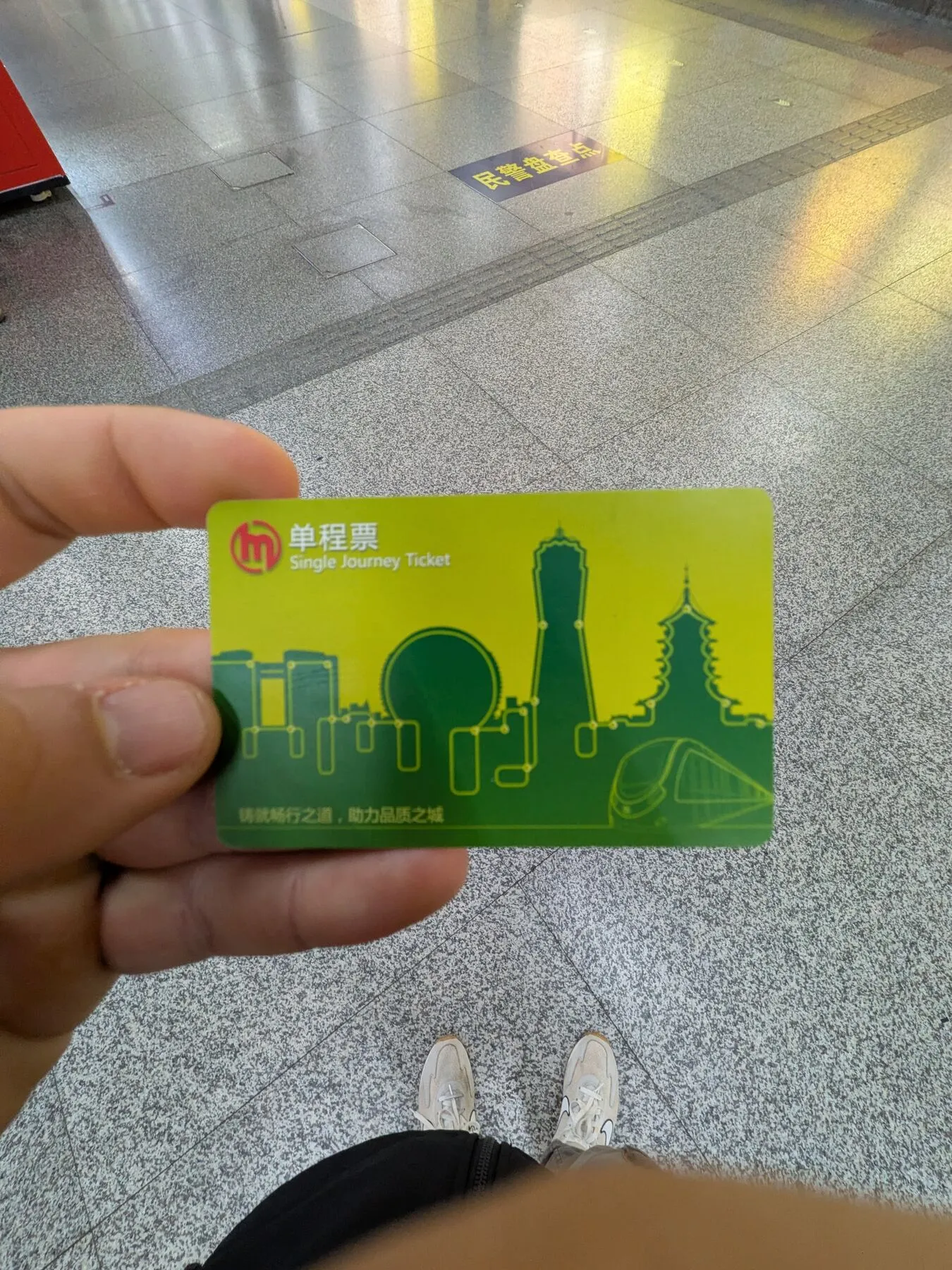
When I arrived at the exit gates, I made a complete fool of myself by trying to tap the paper ticket instead of inserting it into the slot. I blocked the queue behind me for several seconds while my brain tried to catch up with reality. Nobody rushed me. Nobody shouted. Everyone just waited patiently for the foreigner to reboot.
At West Lake, locals were already deep into their morning routines: exercising, stretching, dancing, just existing in a way that made the whole place feel very alive.
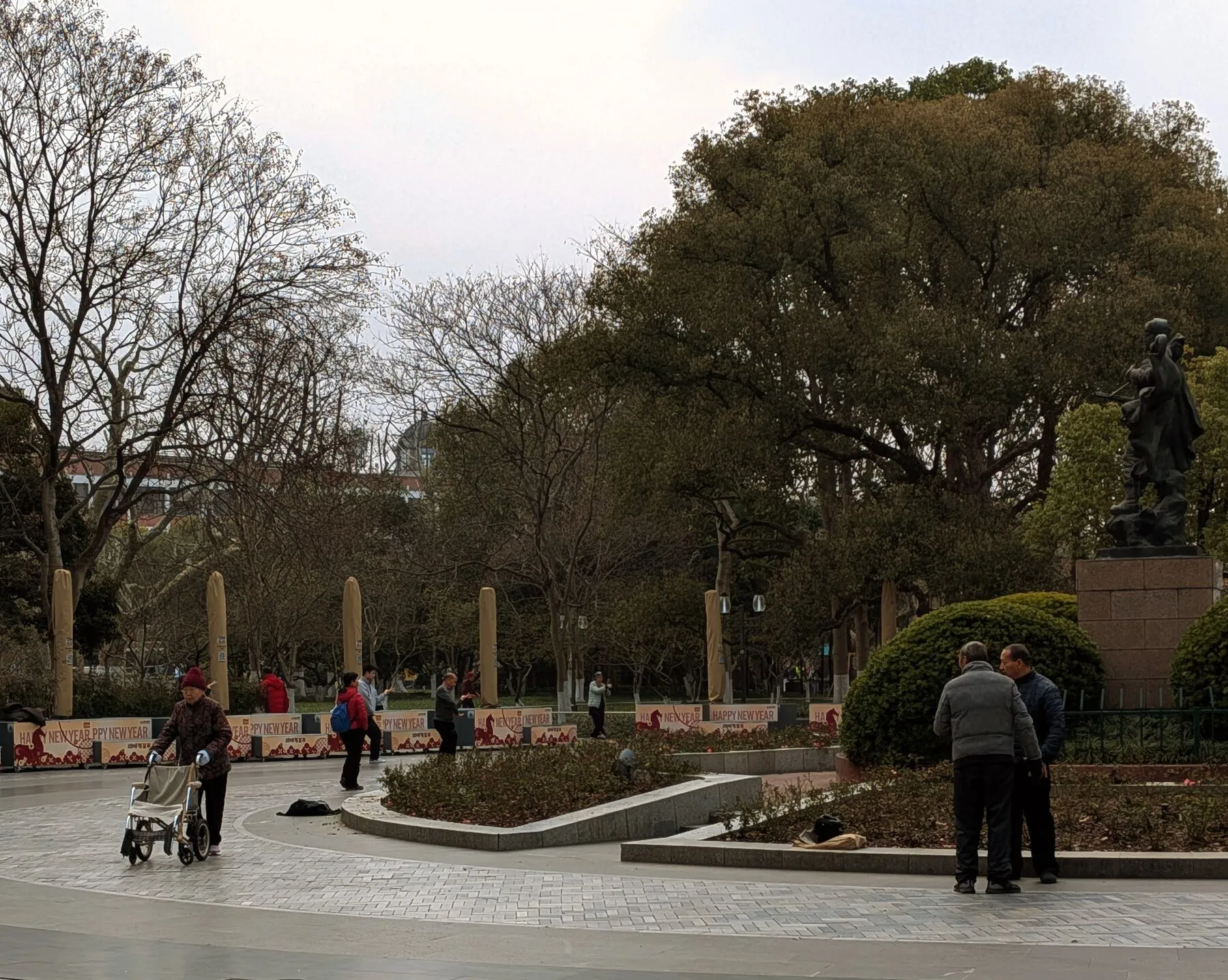
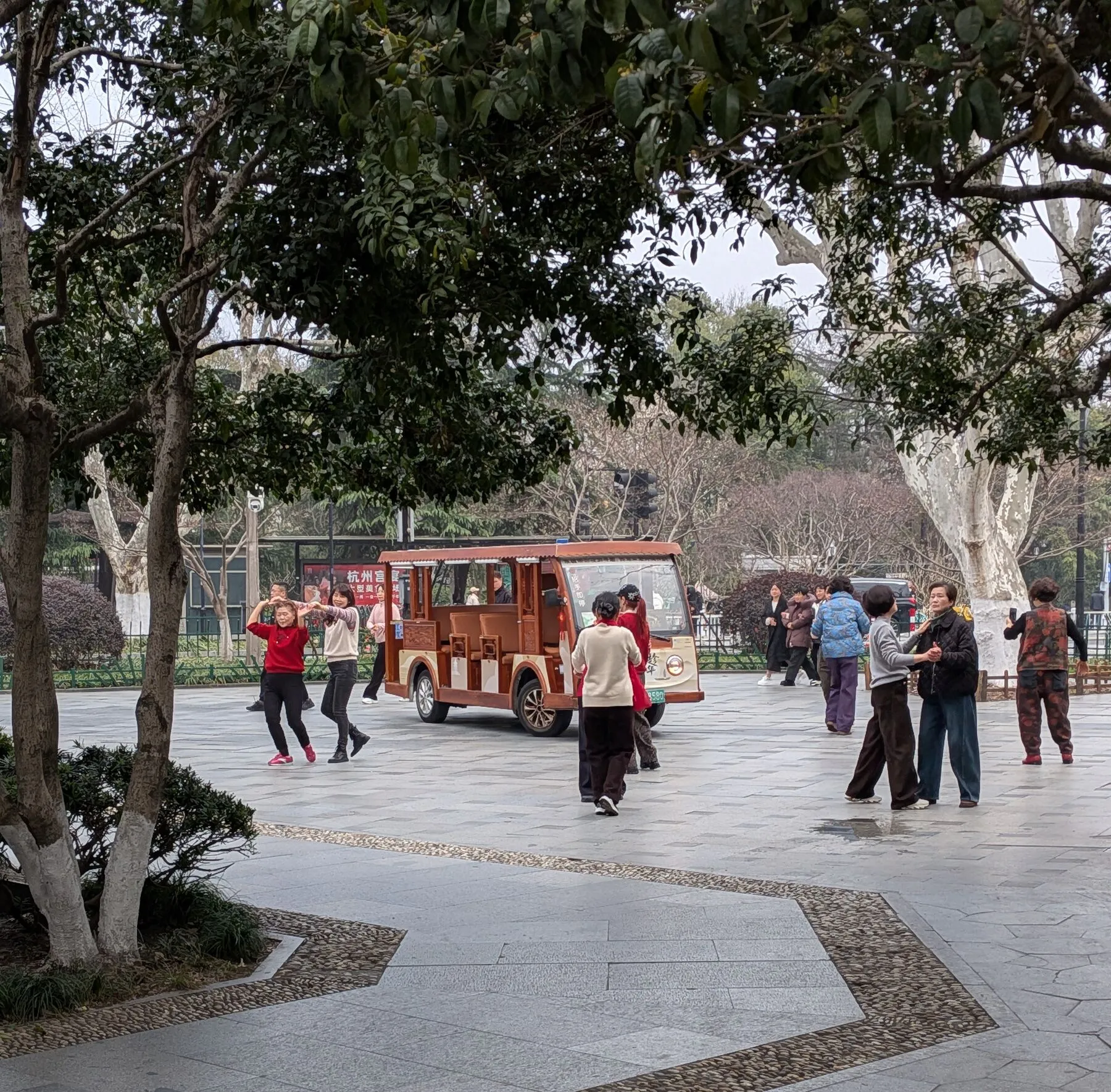
I walked along the lake, crossed the Bai Causeway toward the Gushan island area, and kept going toward the China National Tea Museum.
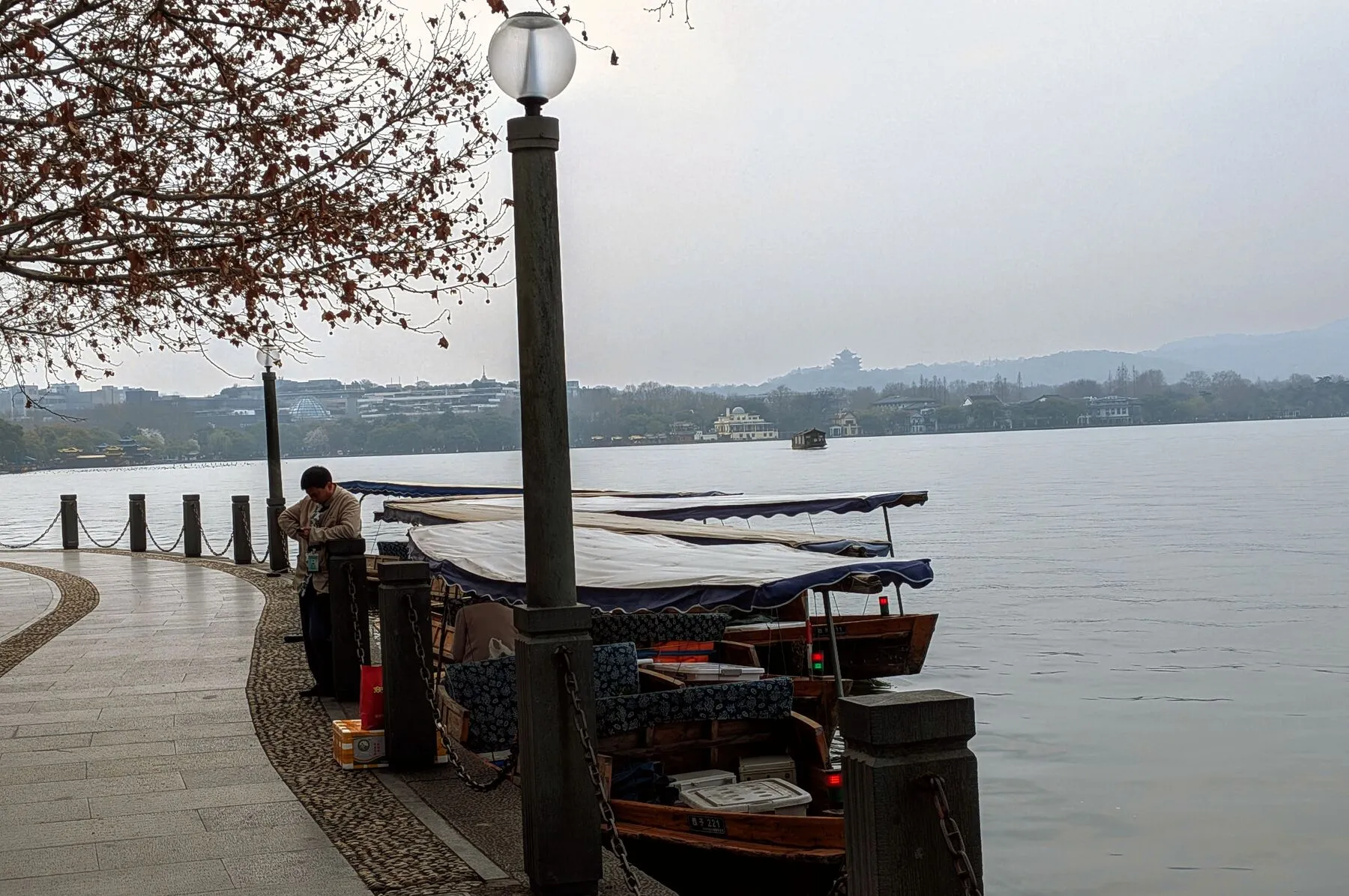
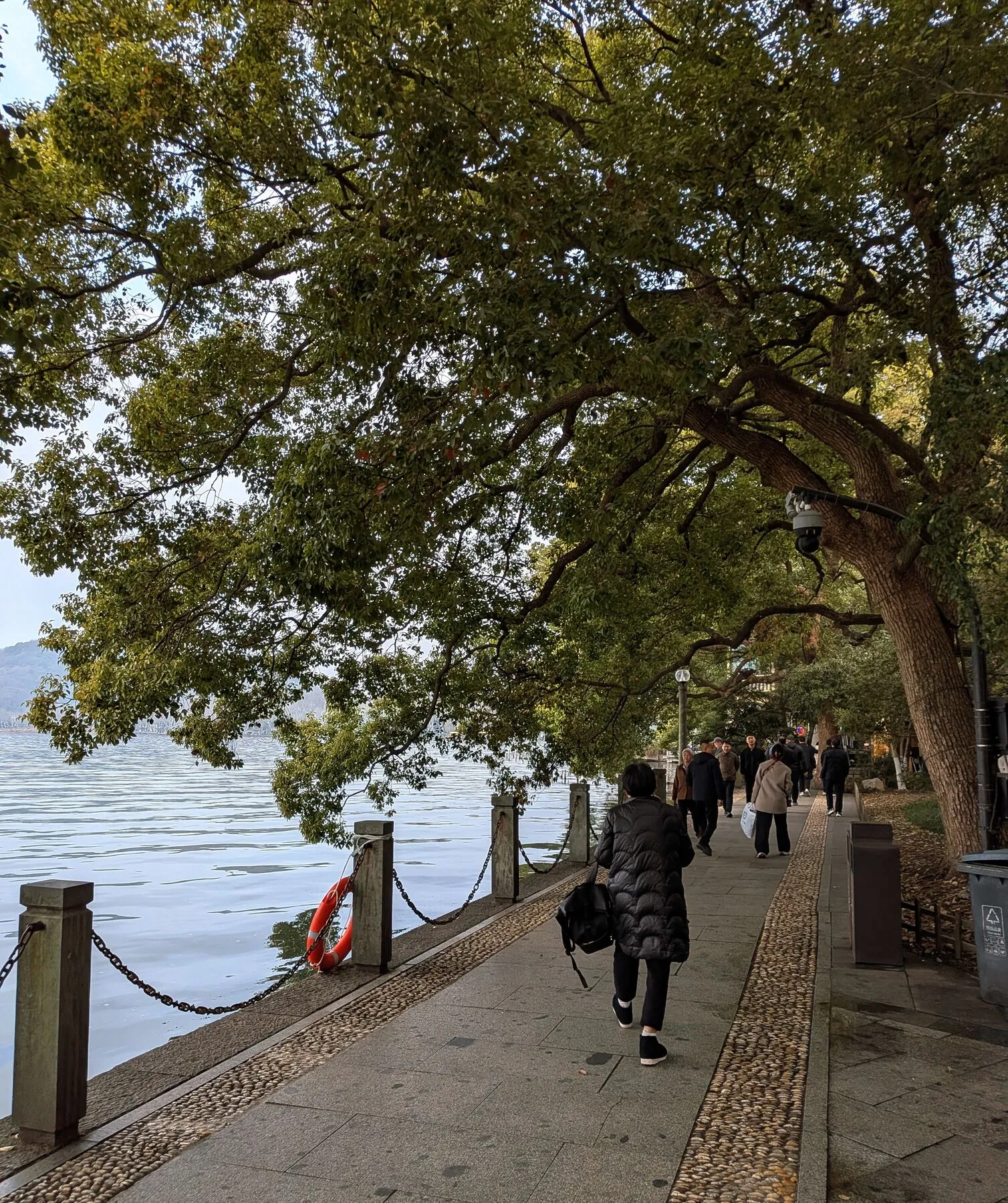
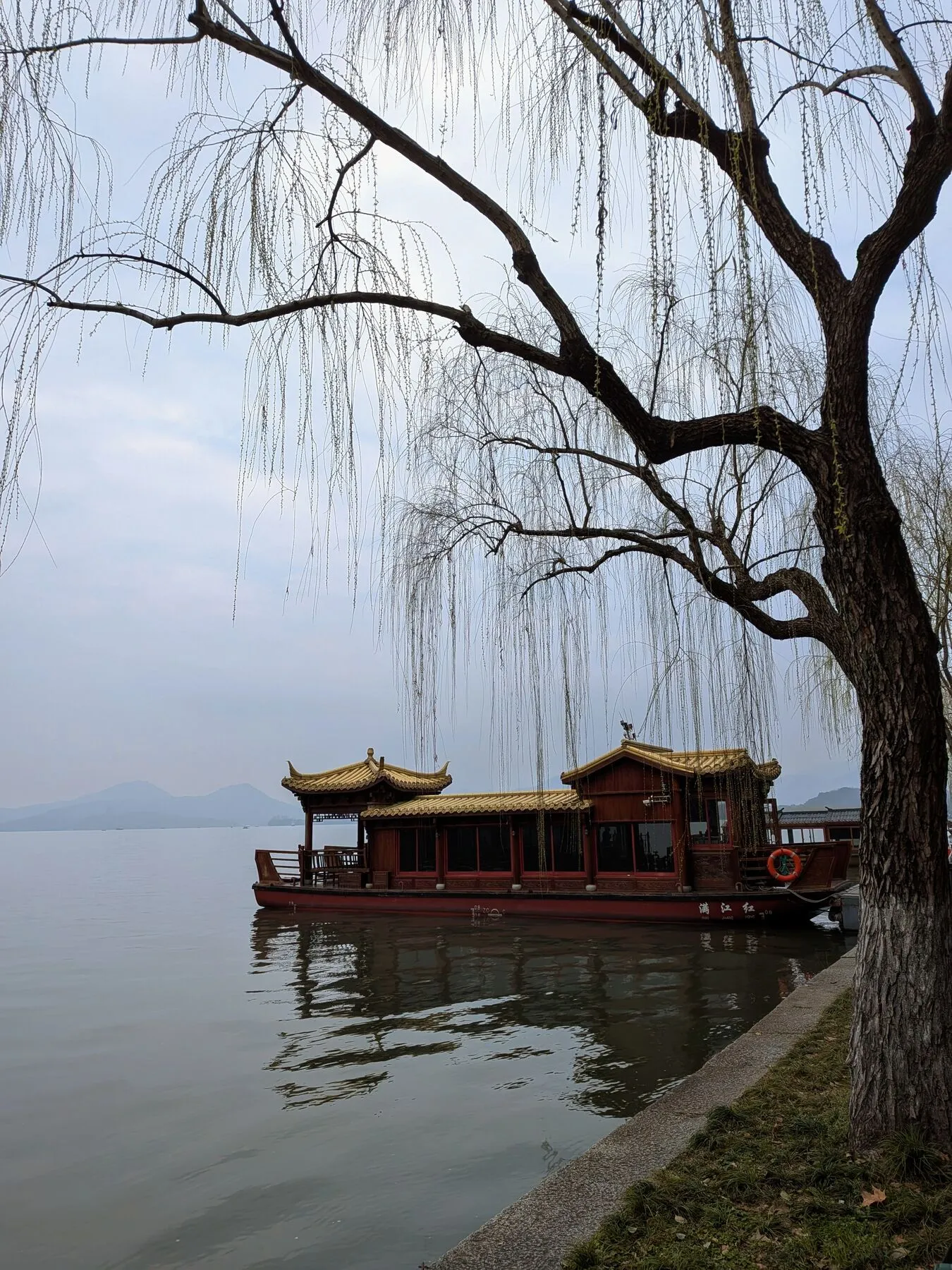
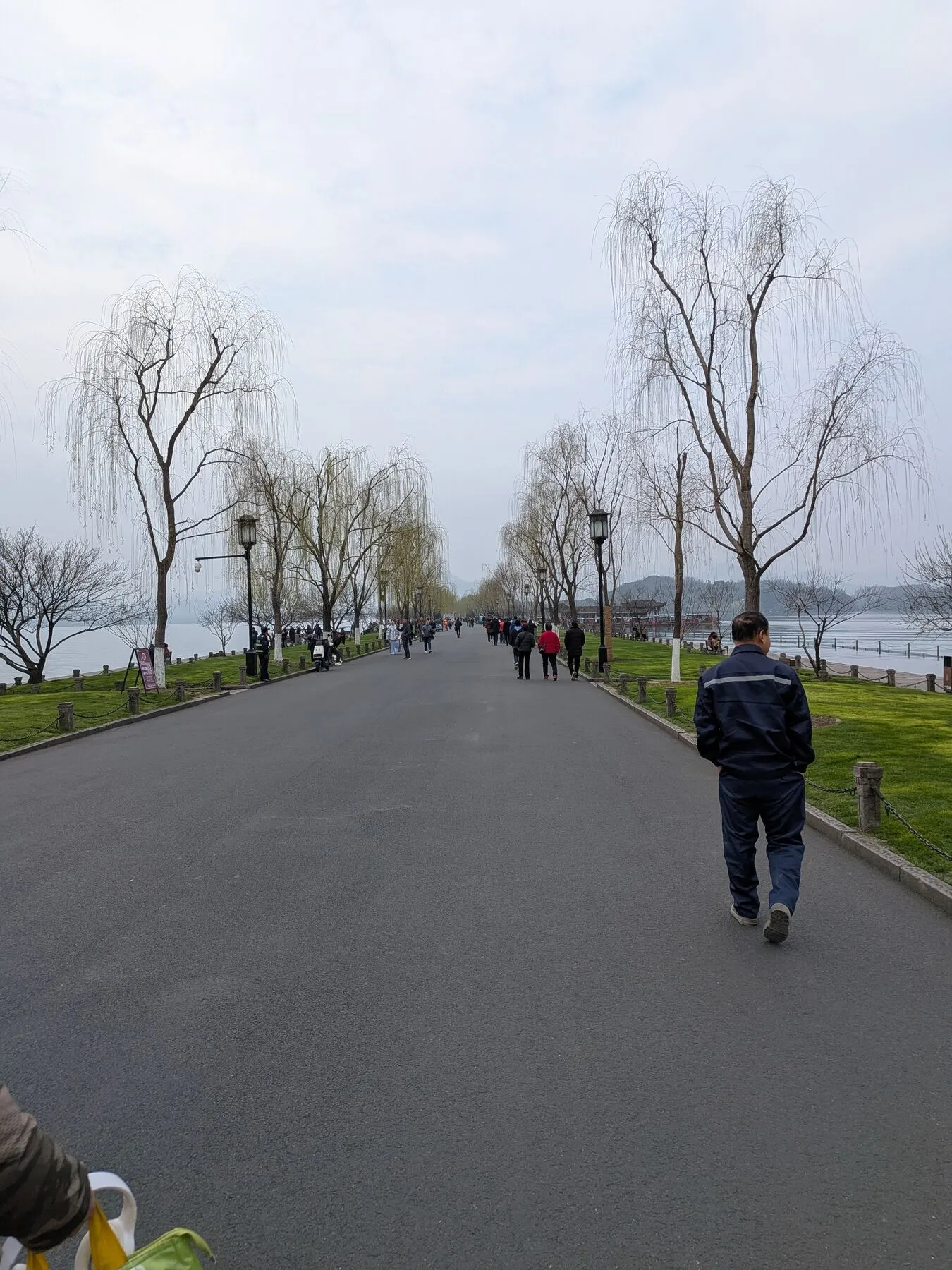
Before the museum, I stopped at Green Tea Restaurant. Both the place and the dishes were delightful.
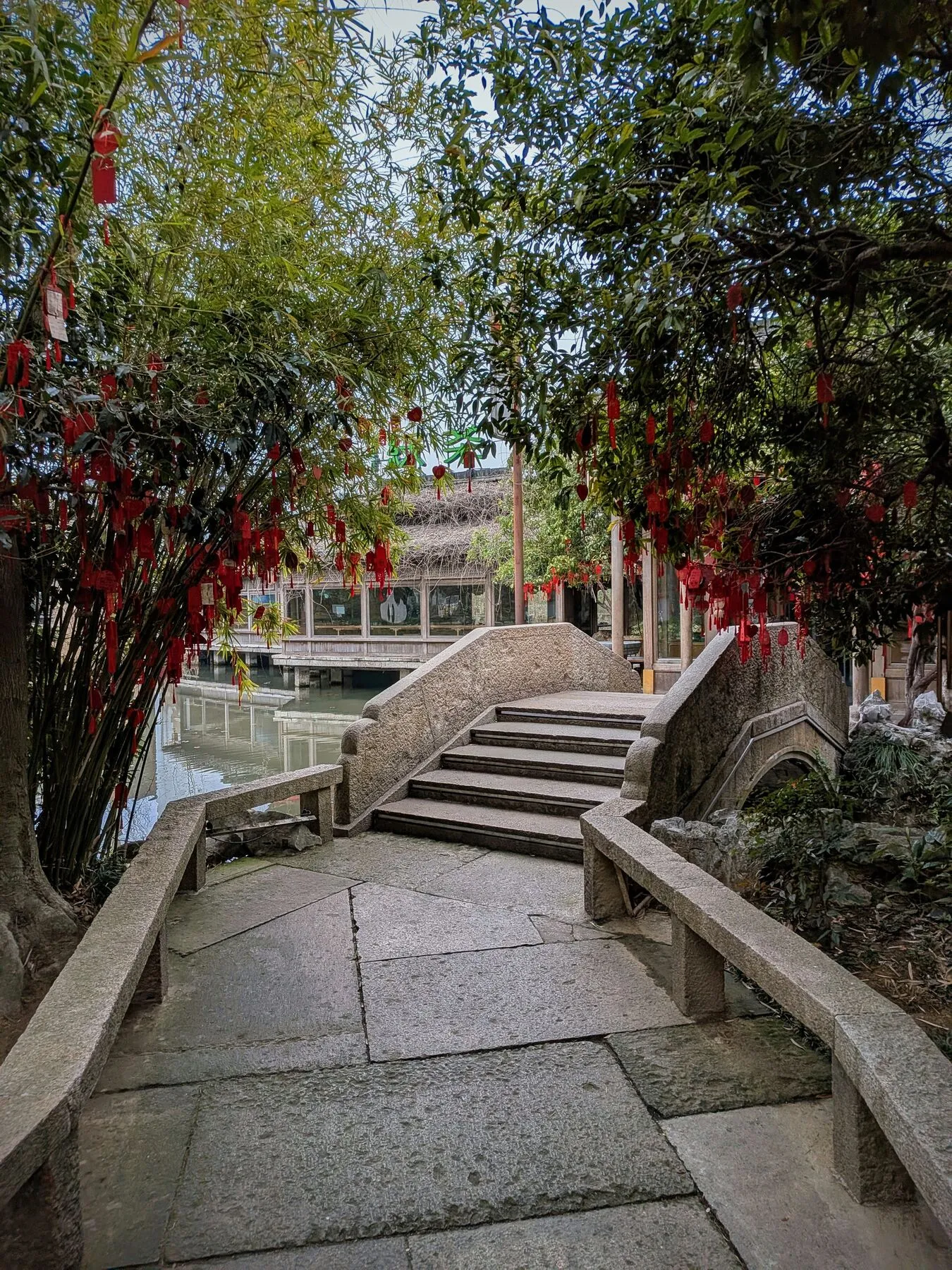 Green Tea Restaurant entrance
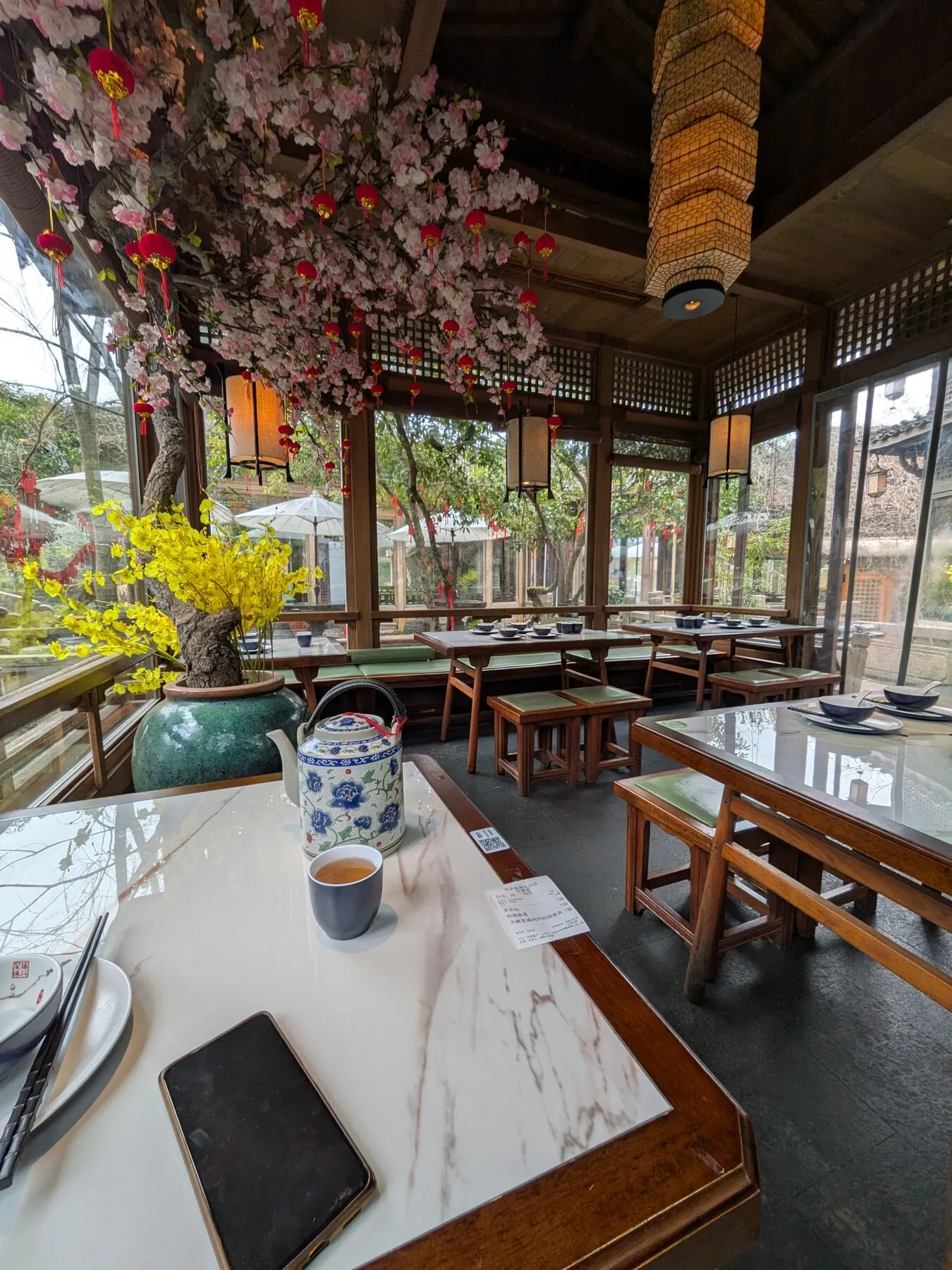 Green Tea Restaurant interior
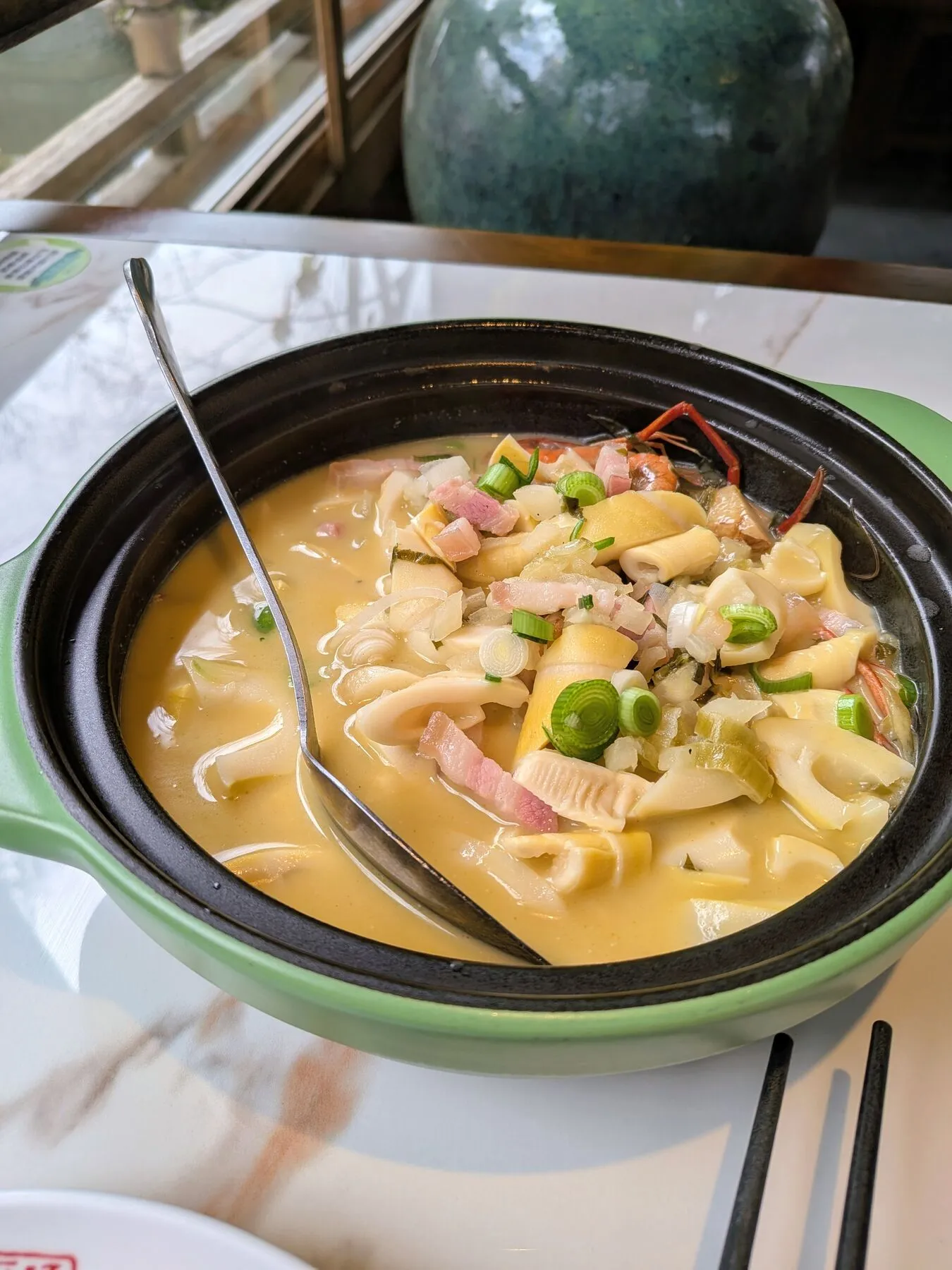 Soup with bamboo, pork-looking pieces, shrimp, and vegetables
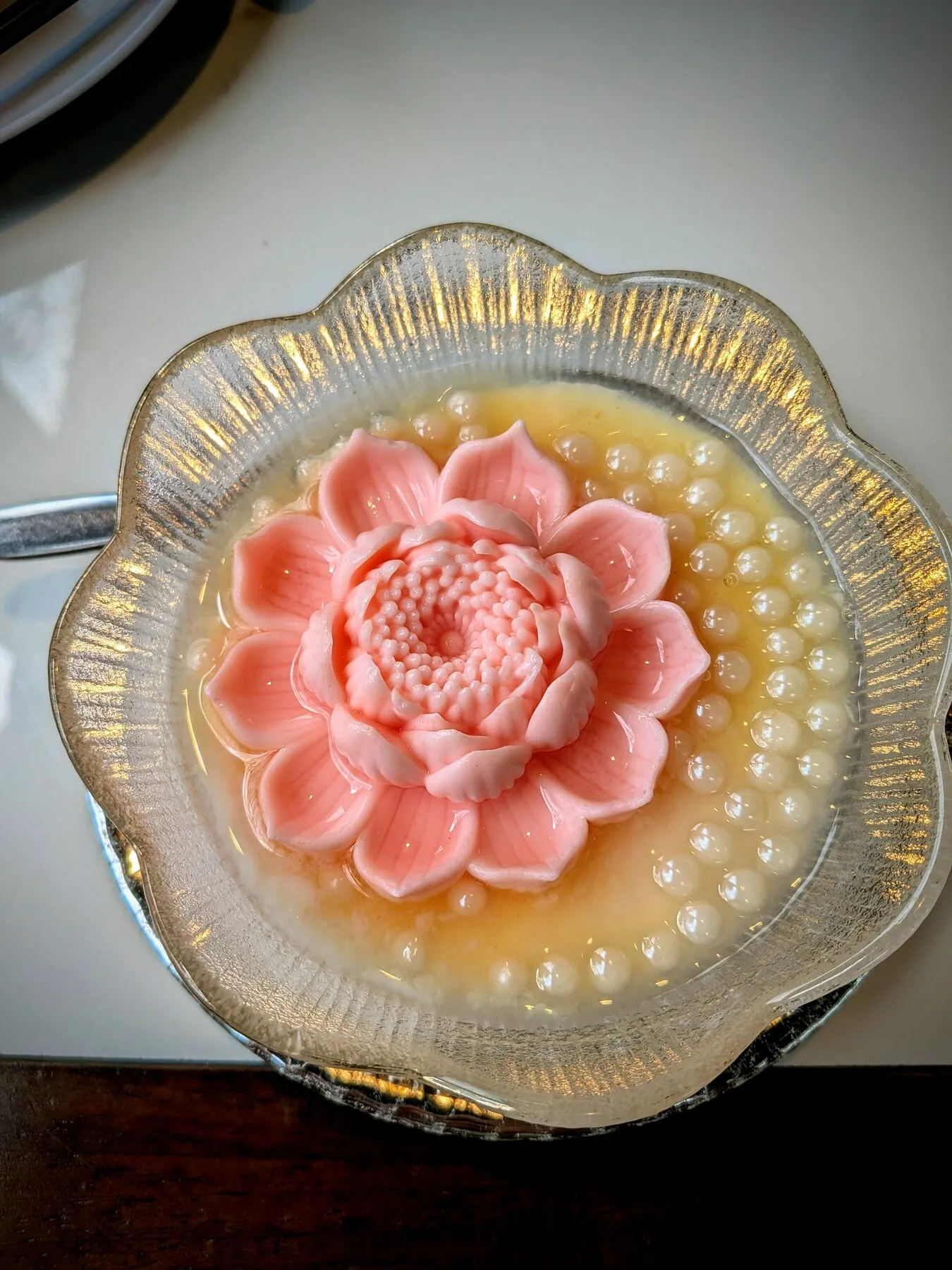 Lotus shaped dessert
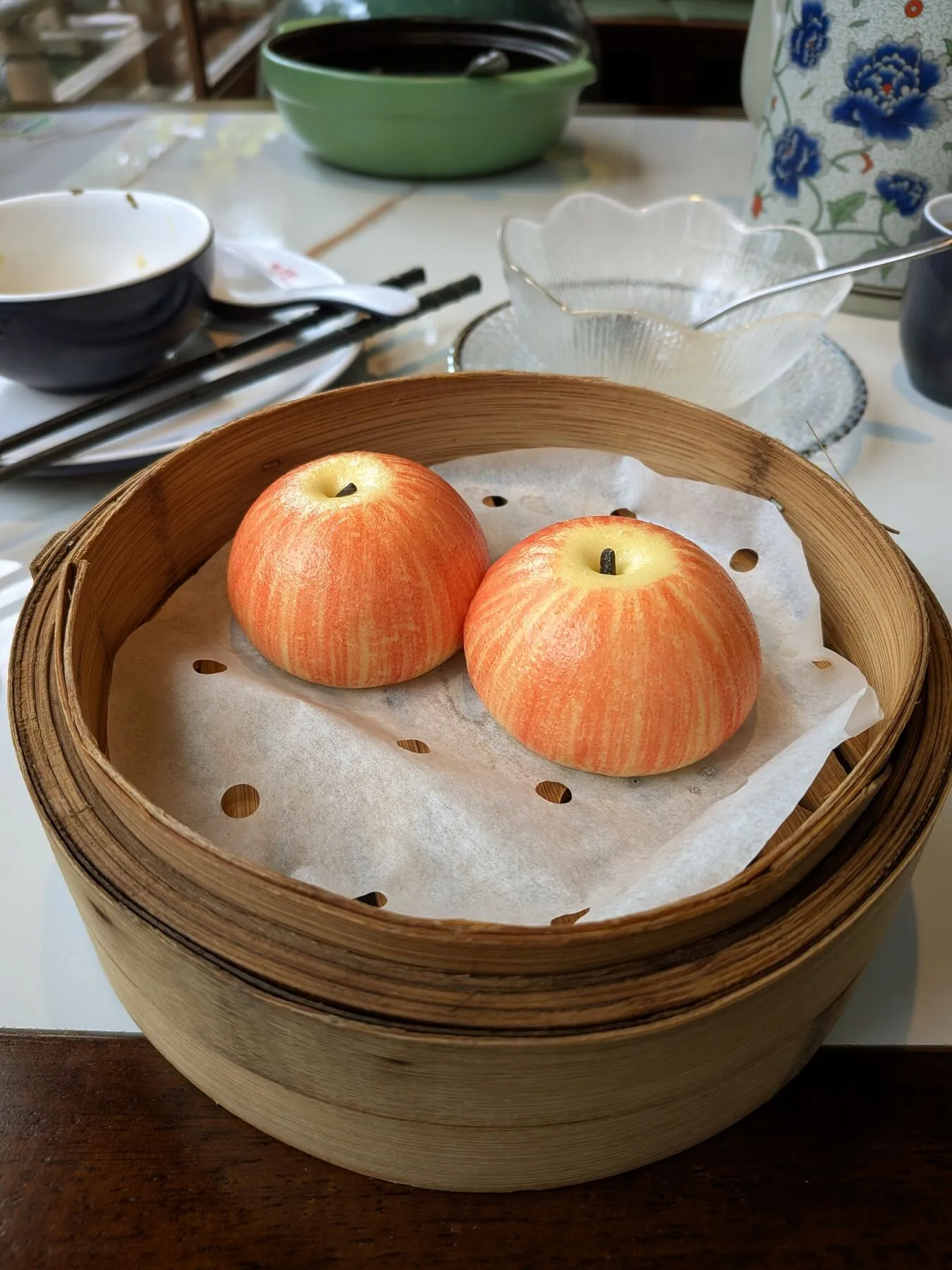 Apple-shaped buns filled with unsweetened jam
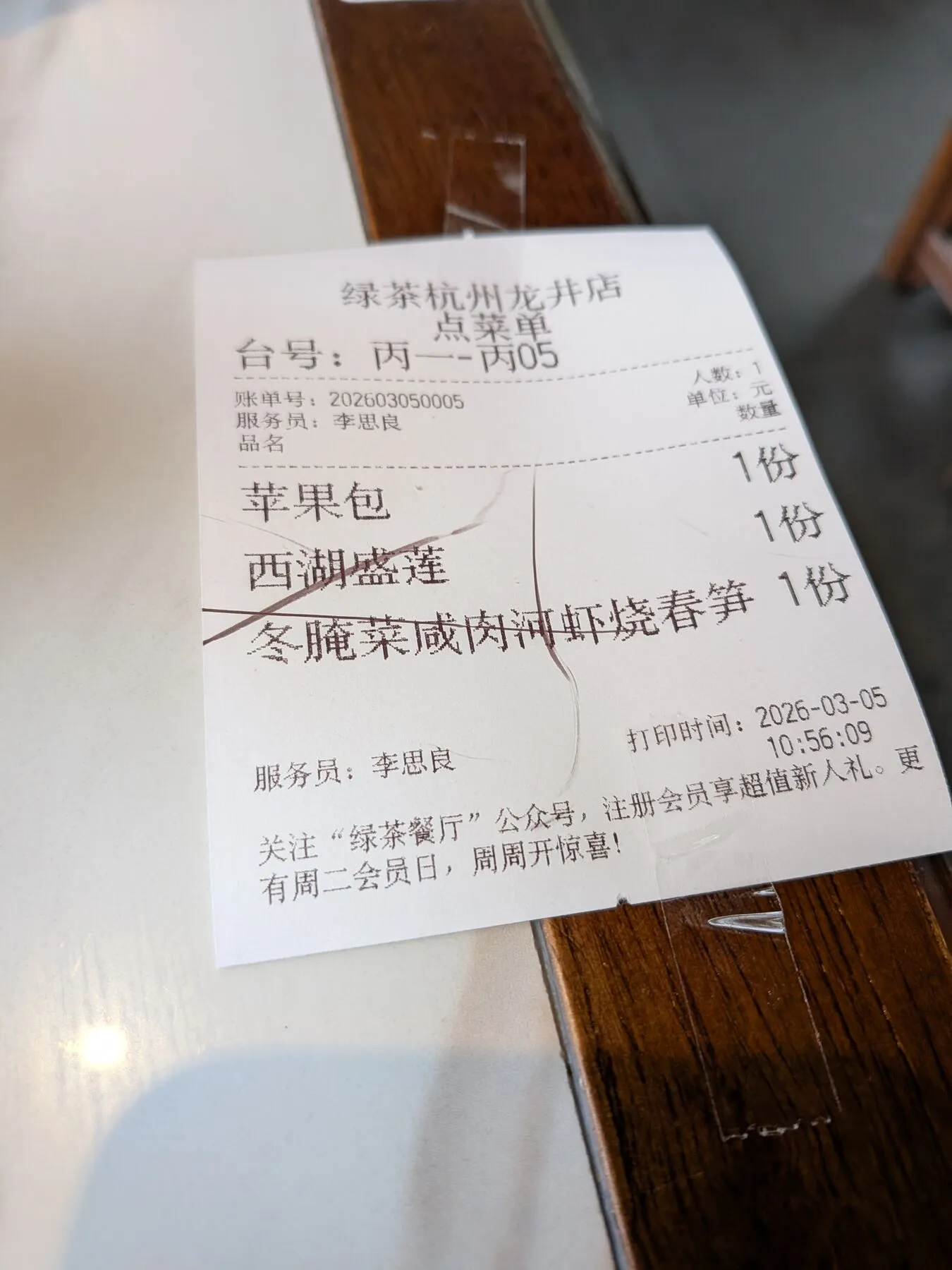 Waiter using his ink-covered nail to strike through the served dishes
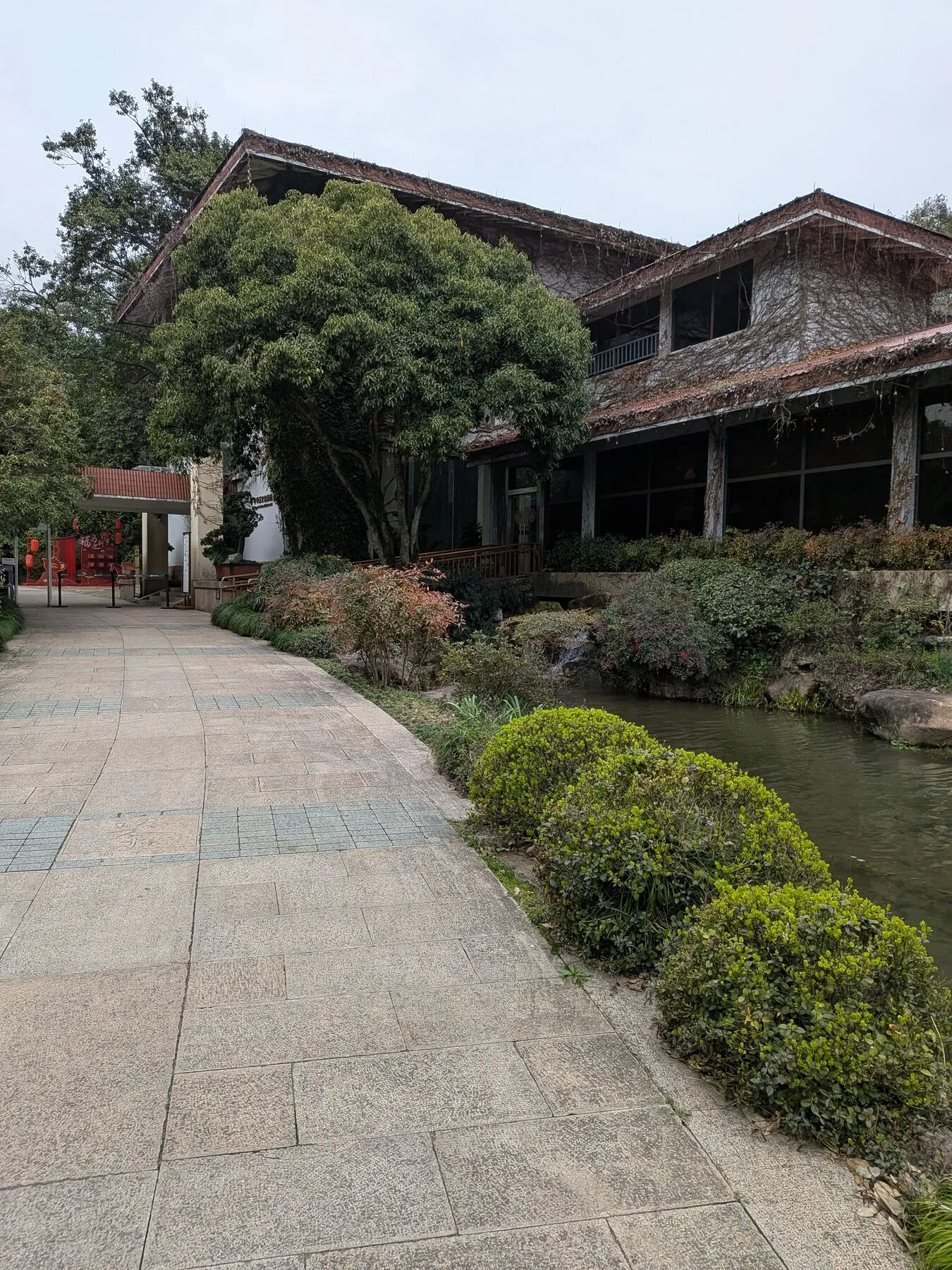 China National Tea Museum
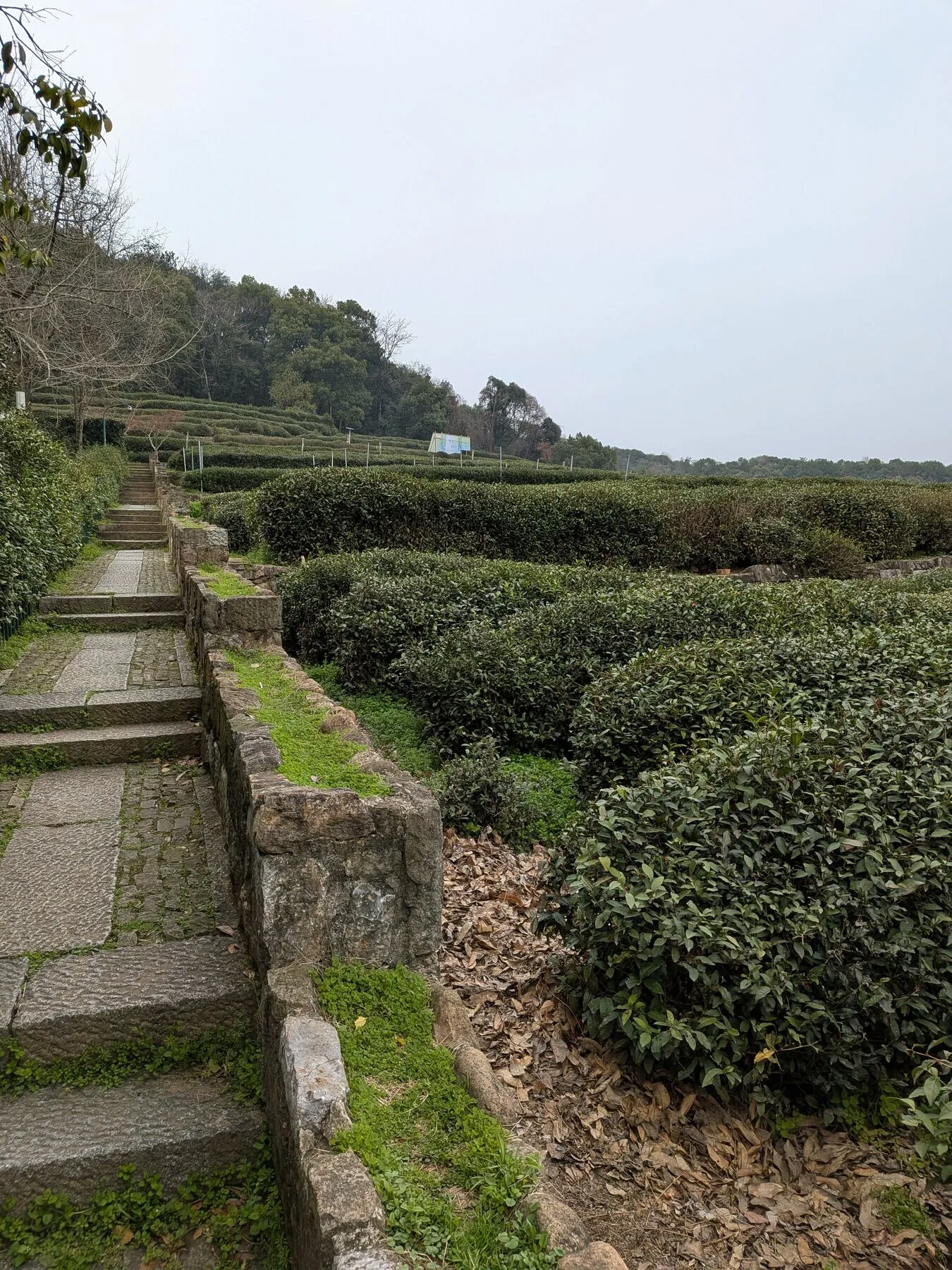 The tea plantations behind the museum
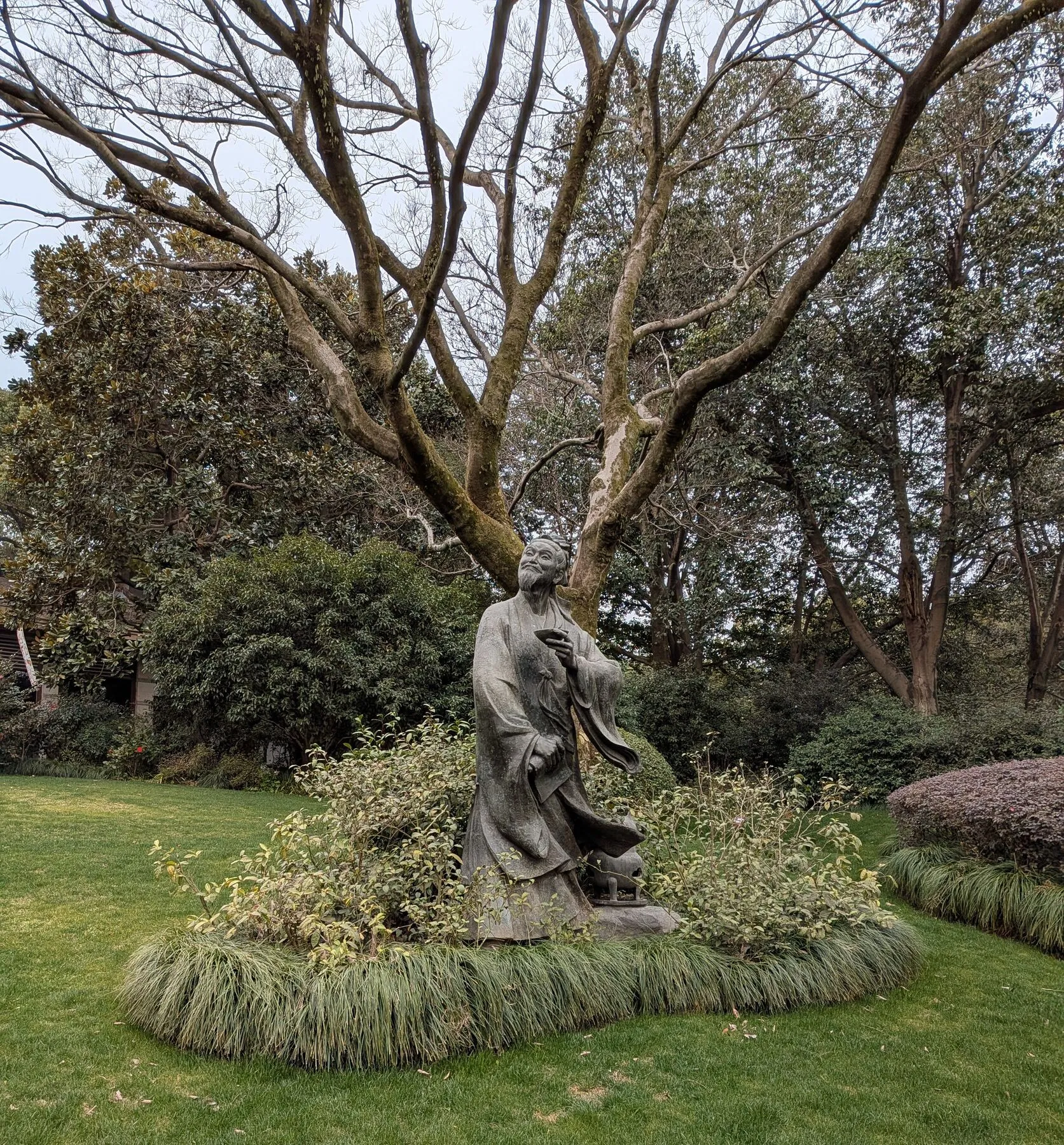 A statue of the tea sage Lu Yu
After a thorough visit to the museum, I continued on foot toward Longjingcun village. The main purpose of my visit to that village was to taste Dragon Well (or Long Jing) tea, a known symbol of Chinese tea culture, which proudly ranks among the top 10 most famous teas in the world and the most famous green tea in the country since the Tang Dynasty.
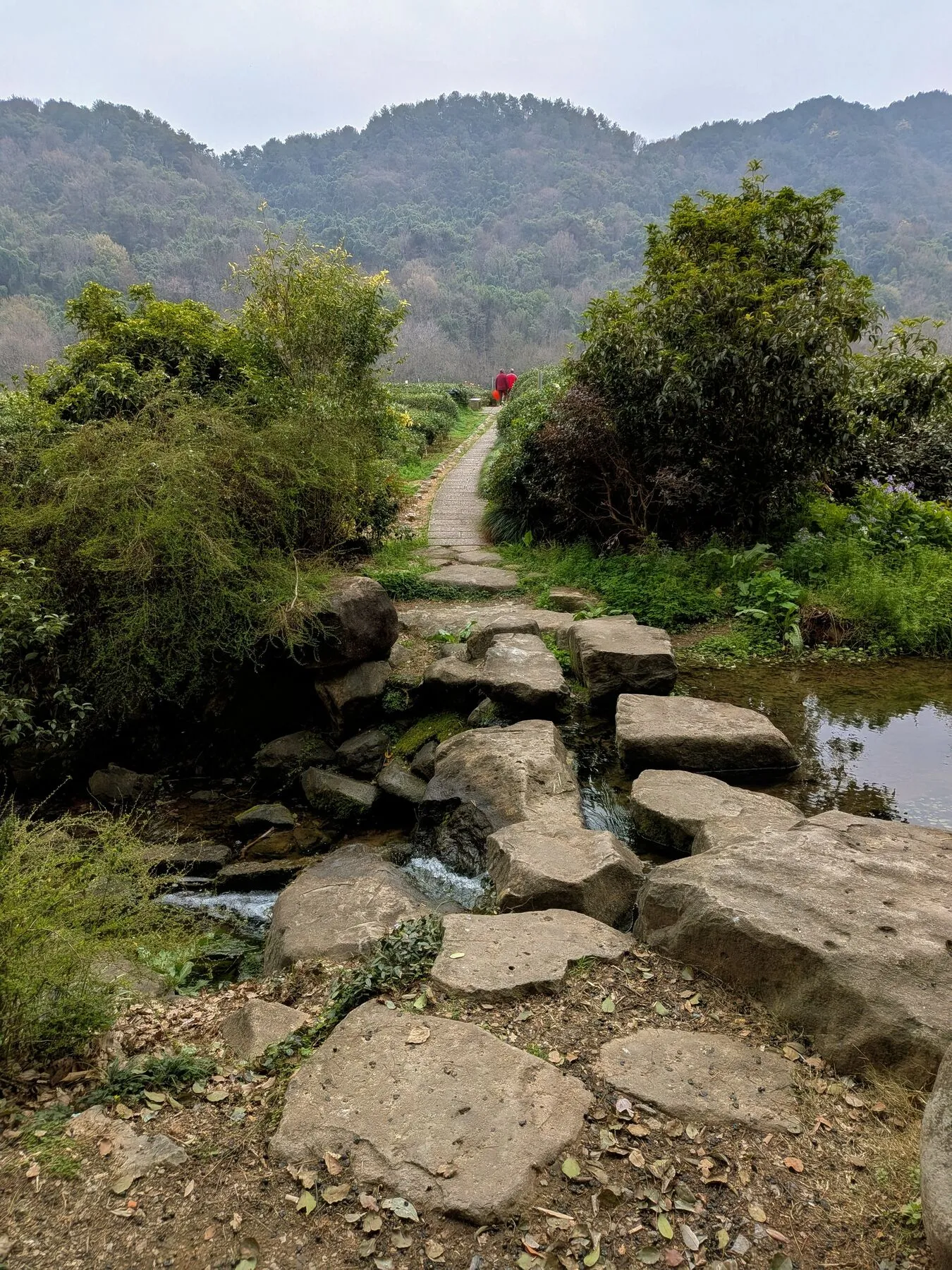 On the road to Longjingcun
First, though, I had to stop at the famous Longjing well, which local legend connects to Chinese alchemists making elixirs there.
A sign there claimed that if you stirred the water with a stick, the surface would show a clear wriggling dividing line.
So naturally I picked up the conveniently placed stick and gave it my full commitment.
I stirred violently. I stirred calmly. I ran from one side to the other stirring the well. I mentally said the hocus pocus words.
Nothing.
No wriggling line. No magical revelation. No hidden powers unlocked.
Lucky for me, I chose software engineering rather than magic as a profession.
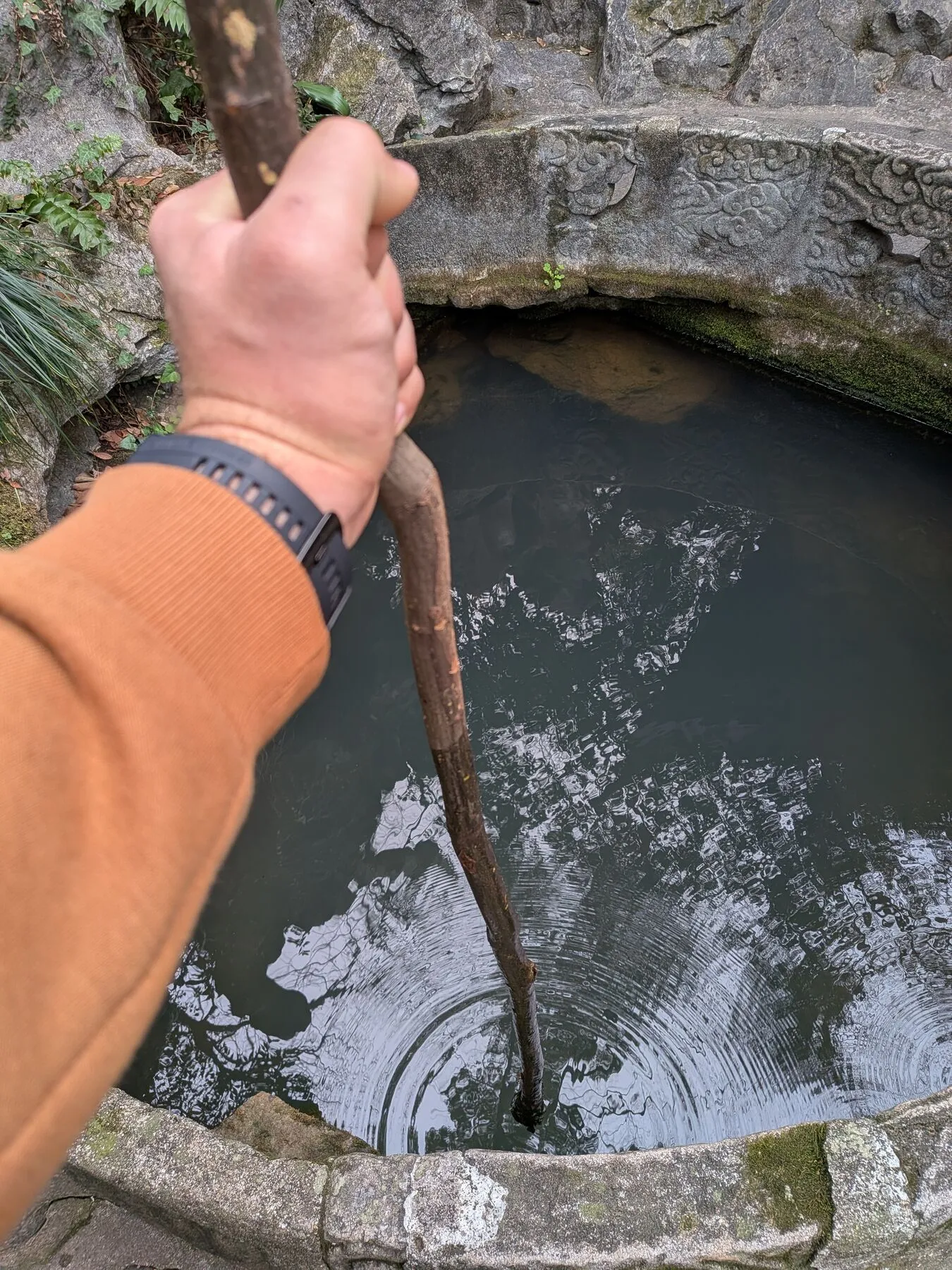 The famous stick and the disappointing lack of supernatural results
The beauty of the village was jaw-dropping. Tea sellers and domestic tourists filled the roads, and the setting was gorgeous.
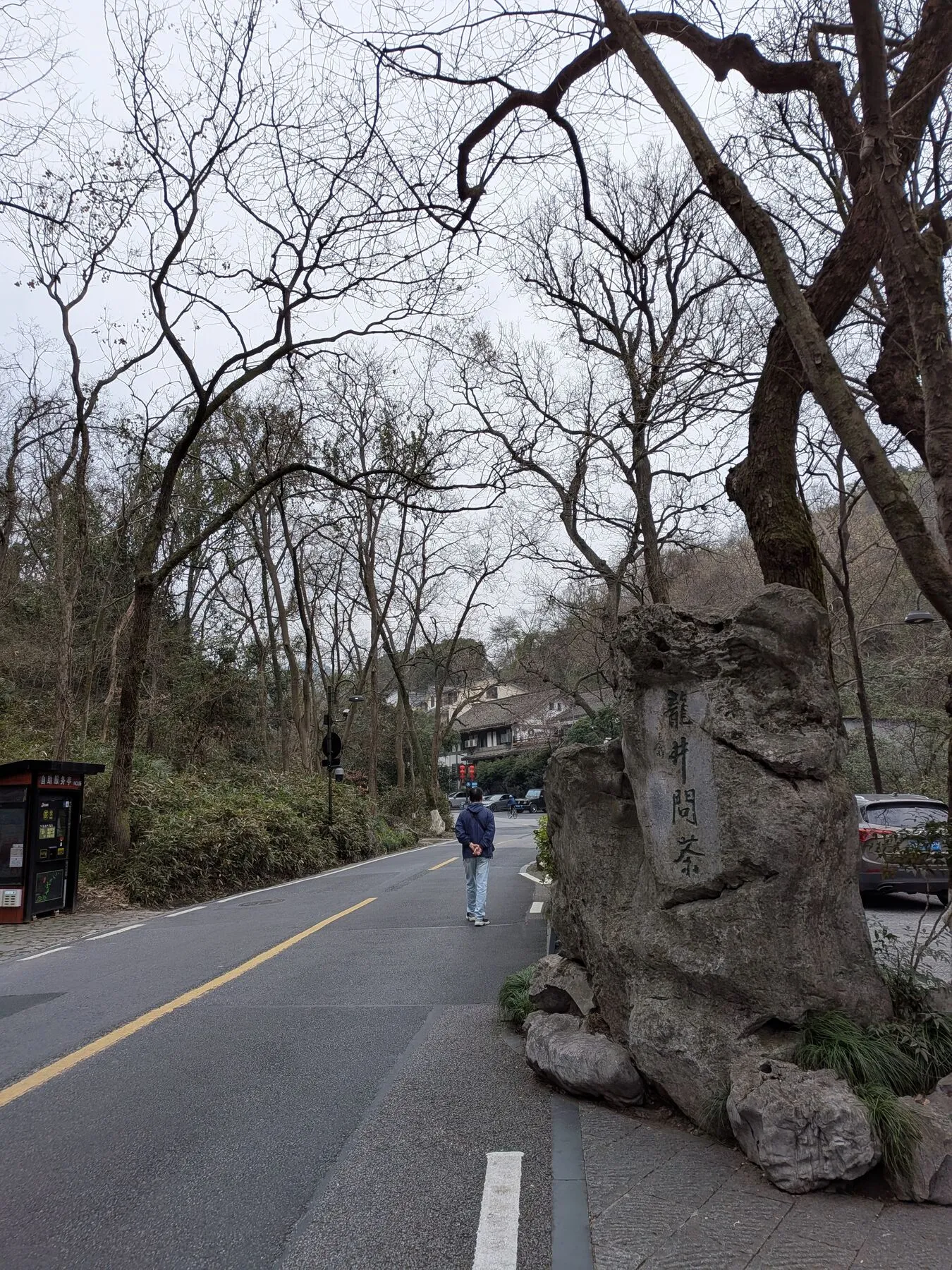 The entrance of Longjingcun
I had the feeling that tea prices there were too high because of the tourism and not necessarily matched by the quality. A couple of Chinese tourists validated my suspicion and kindly recommended a tea market in Hangzhou where locals buy their tea.
I was later very thankful for that.
At one point, while I was climbing for a panoramic view, a woman approached me. My scam radar immediately activated. She kept speaking Chinese, I kept not understanding, and eventually, we ended up walking through the plantations together, with her acting as an unofficial guide.
Our communication strategy was not exactly robust. She spoke Chinese, I answered in English, and at some point I even started replying in Greek just for the comedy of it, which helped absolutely nobody.
When language stopped pretending to work, I introduced Google Translate into the relationship.
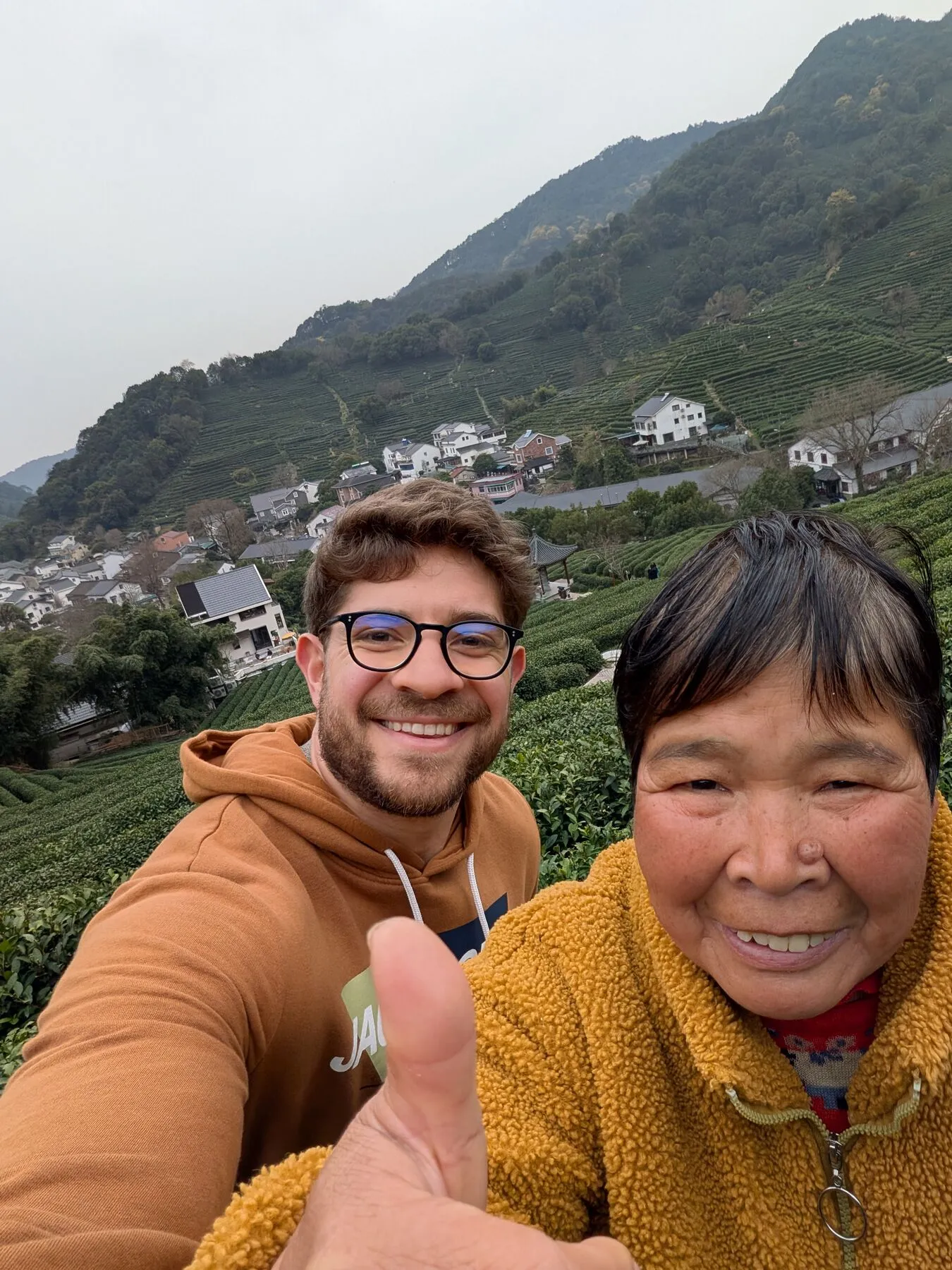 The unexpected tea-plantation guide
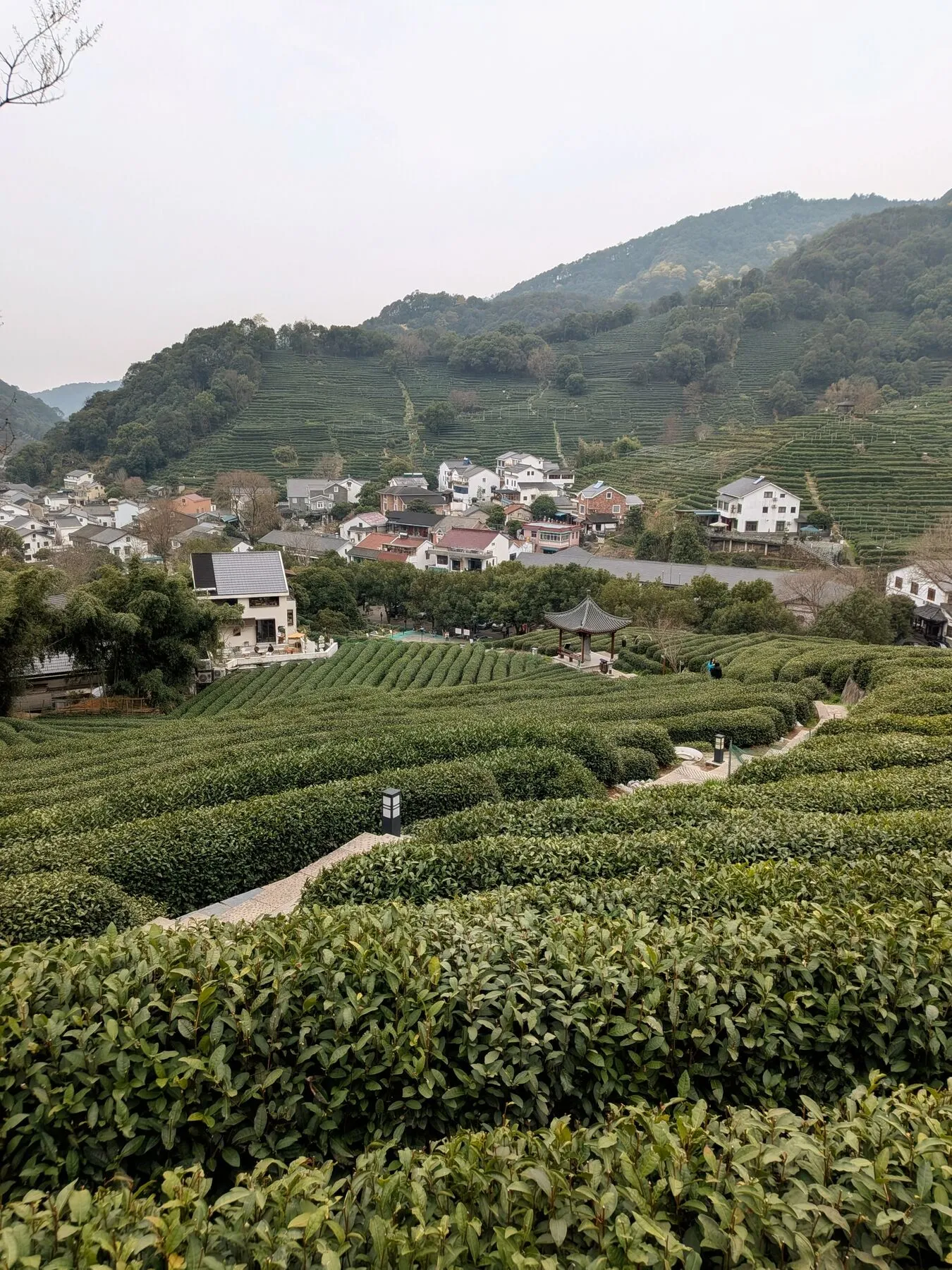 The view from the top of the tea plantation
At some point she invited me to her house, where she lived with her older sister, and offered me the world-famous and China’s best Longjing tea. I didn’t want to buy quantity, but I definitely wanted to try it. So I paid the equivalent of around 5€ for a glass of tea and a plate of peanuts, and we sat on the balcony drinking tea together.
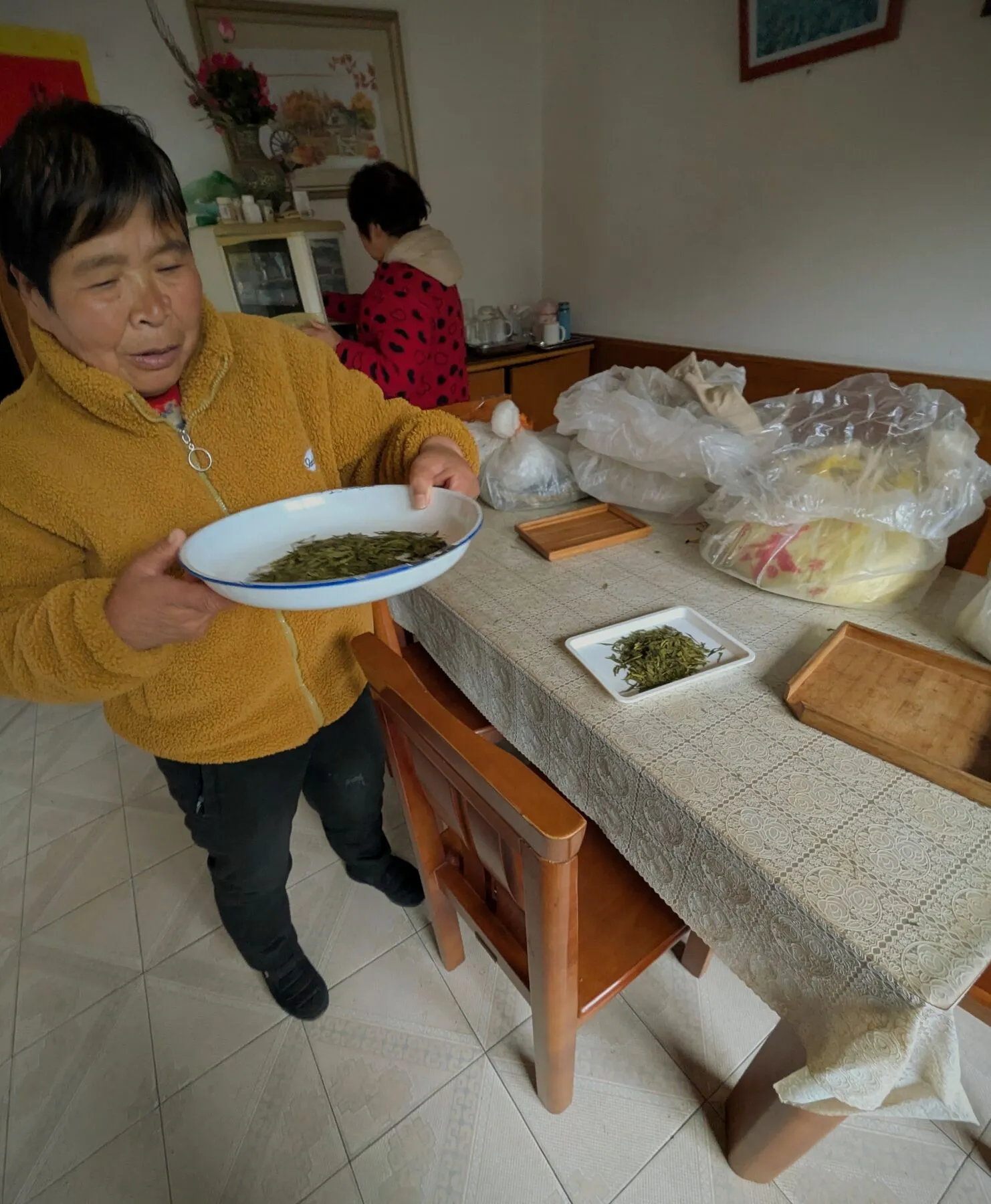 The two sisters’ house
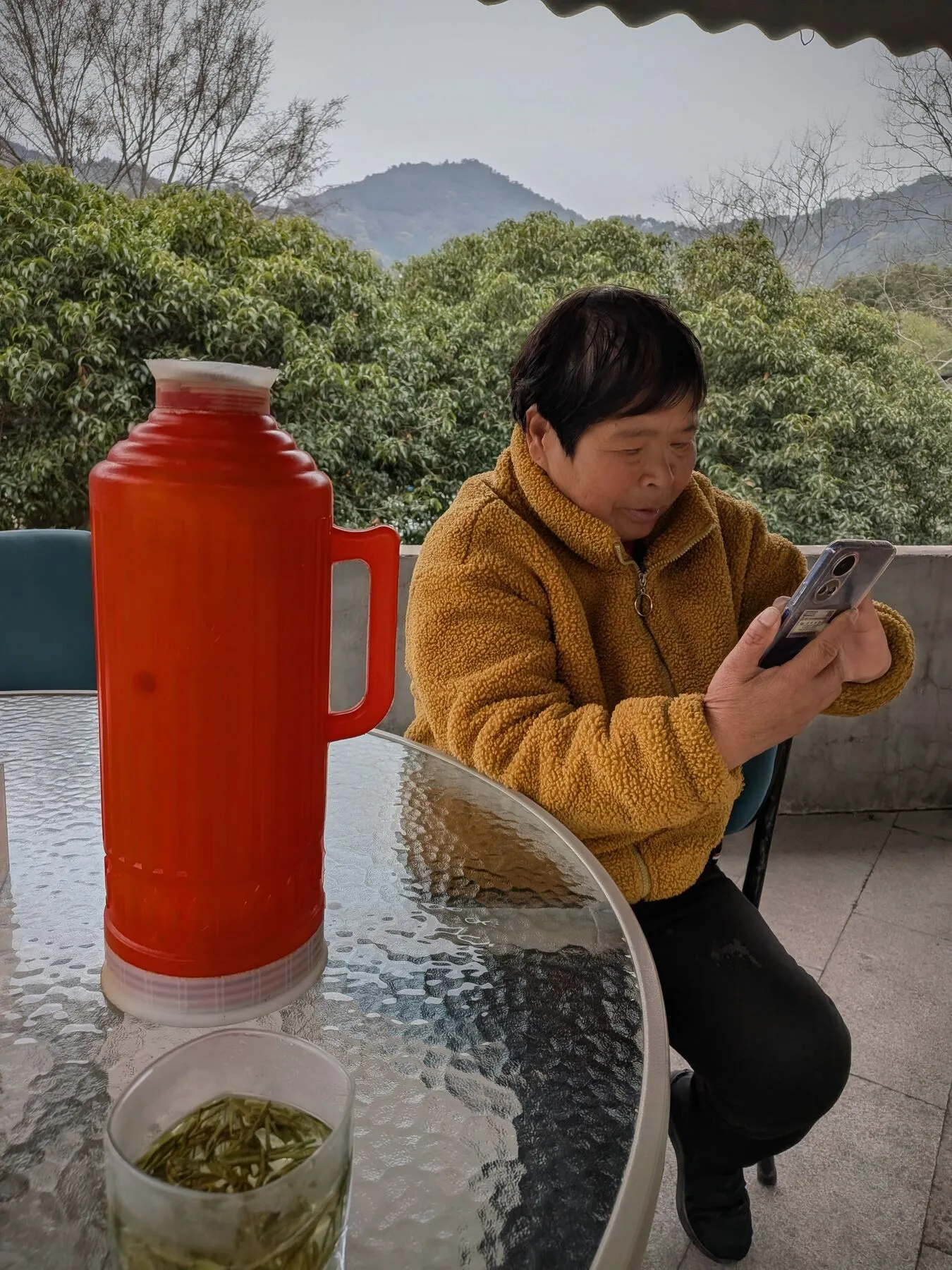 Drinking tea on the balcony
After that, I took a DiDi (provided through Alipay) to the tea market I had been recommended earlier in the day. The ride costed 1€.
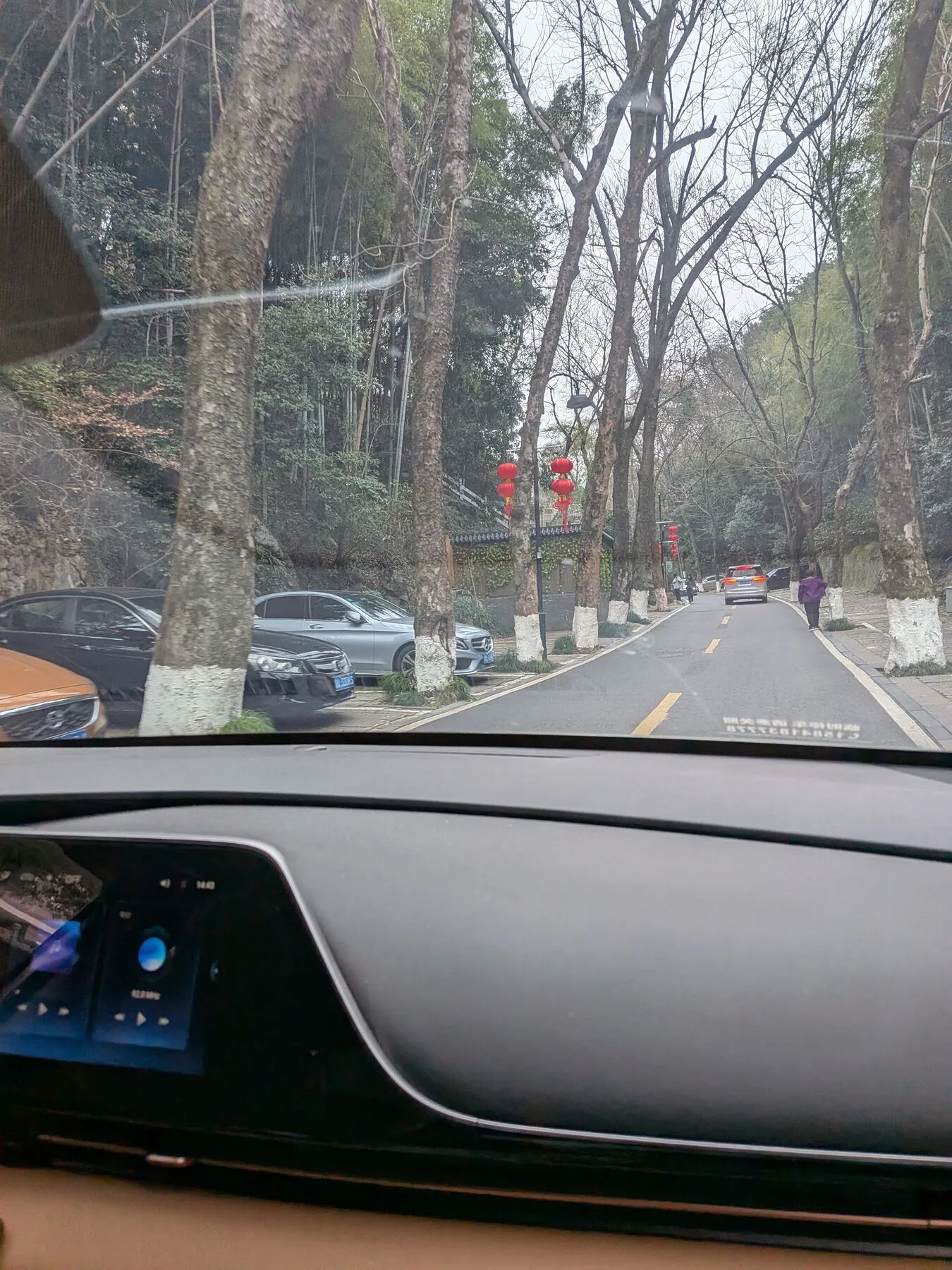 On the electric DiDi back to the city
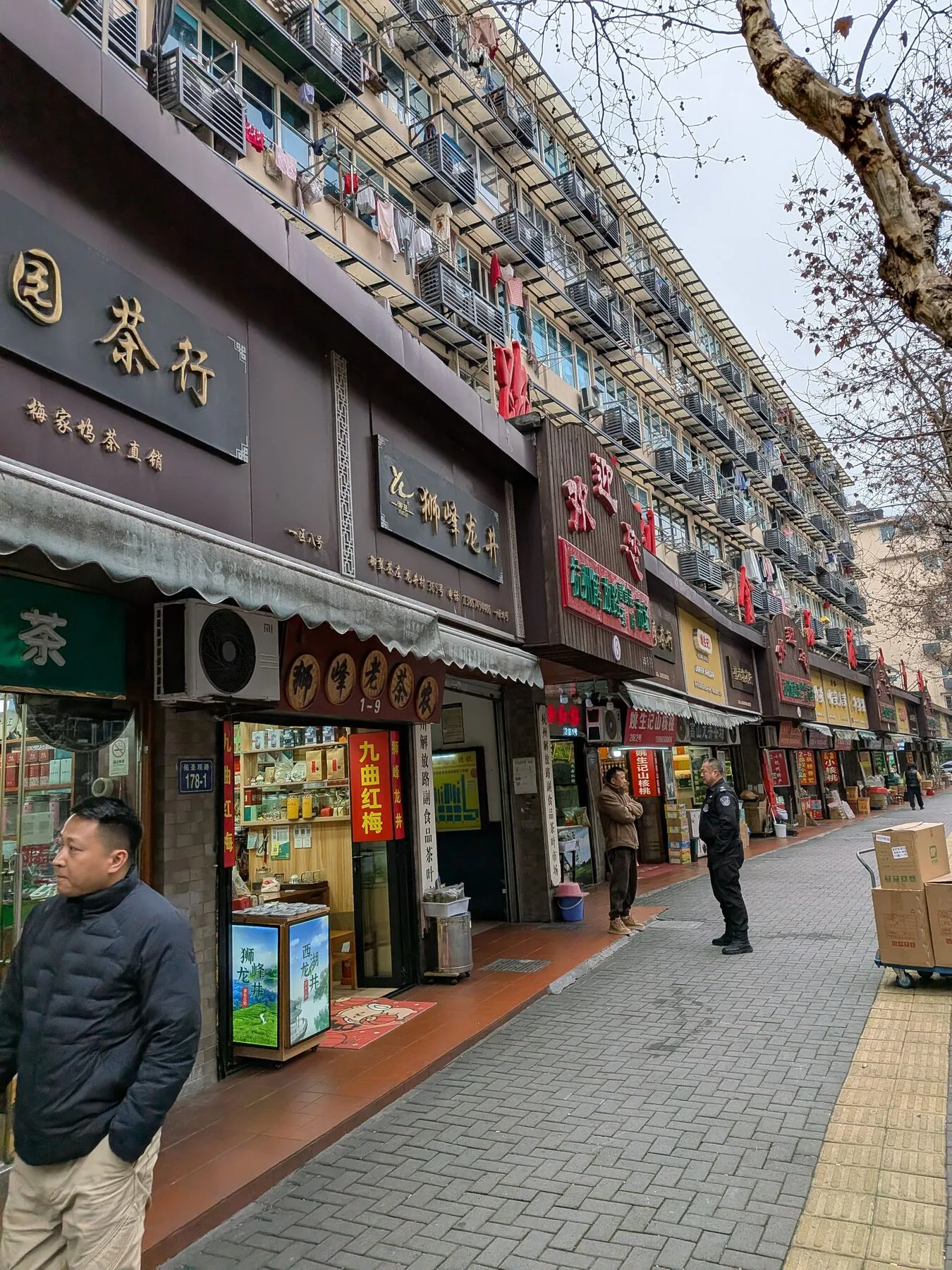 Tea market in Hangzhou
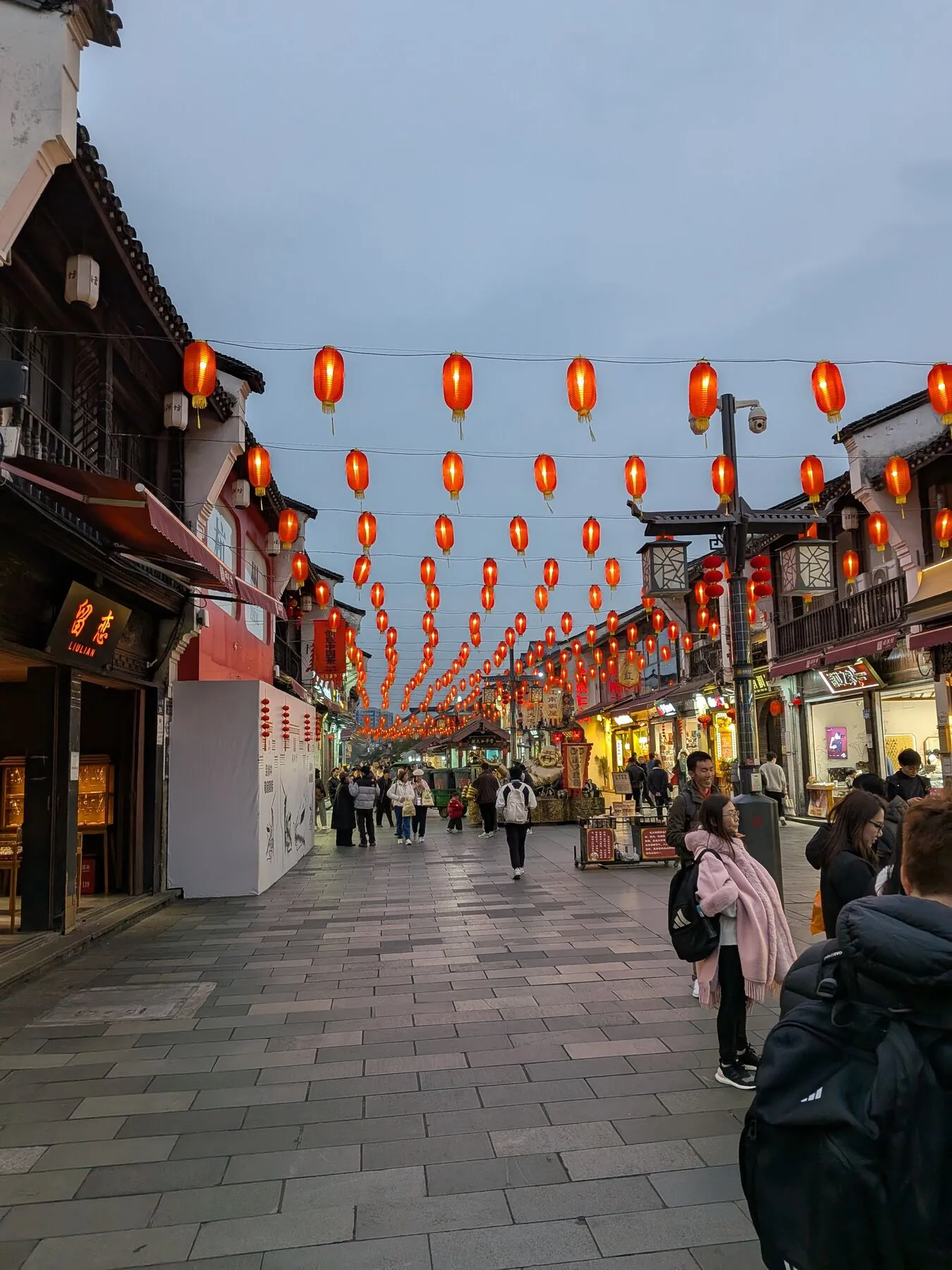
The market was close to my next stop, Qinghefang Historical Block, where I walked around briefly before rushing to Hu Qing Yu Tang, the traditional pharmacy museum, before it closed at 17:00.
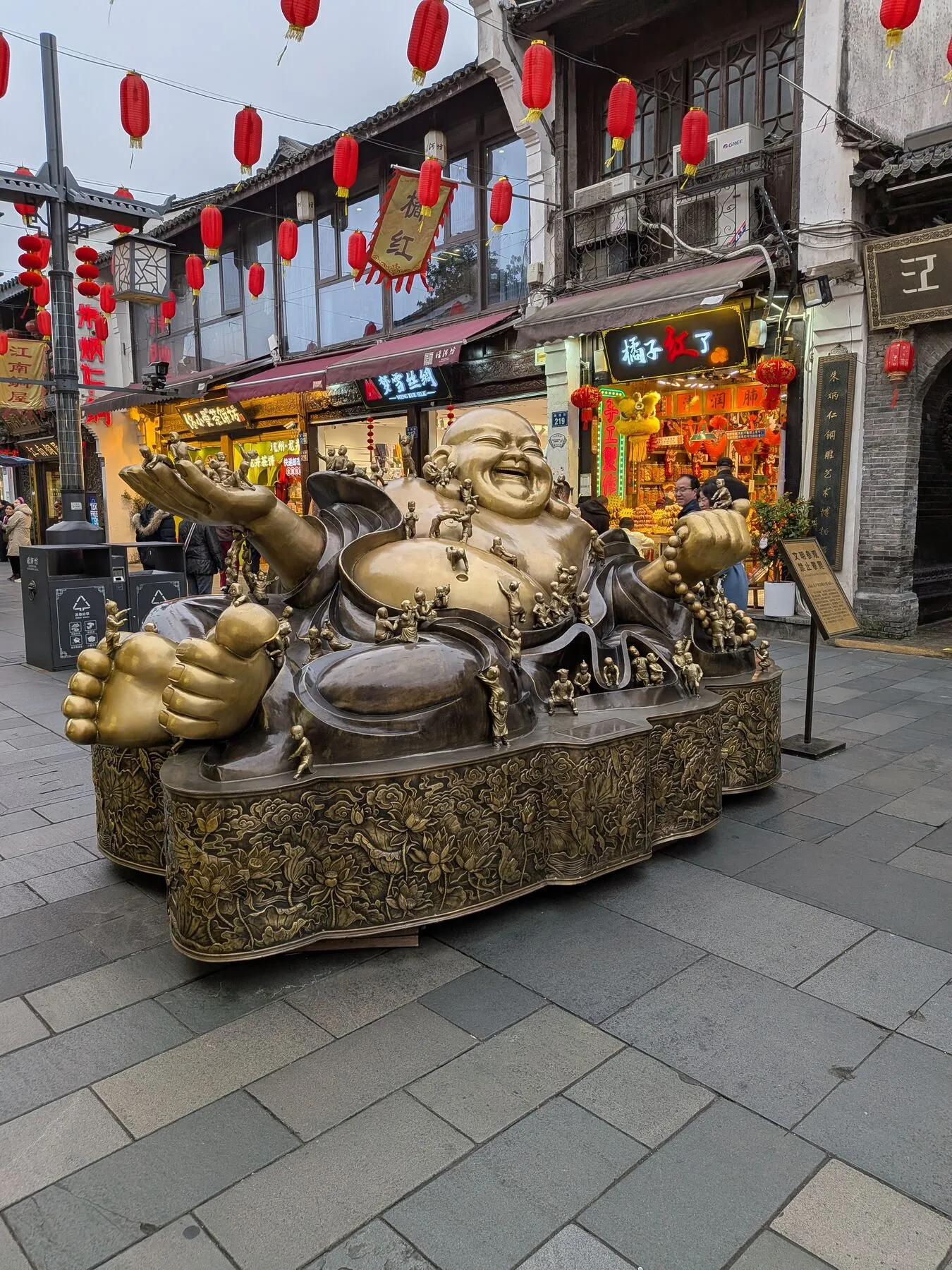 Entrance of Qinghefang Historical Block
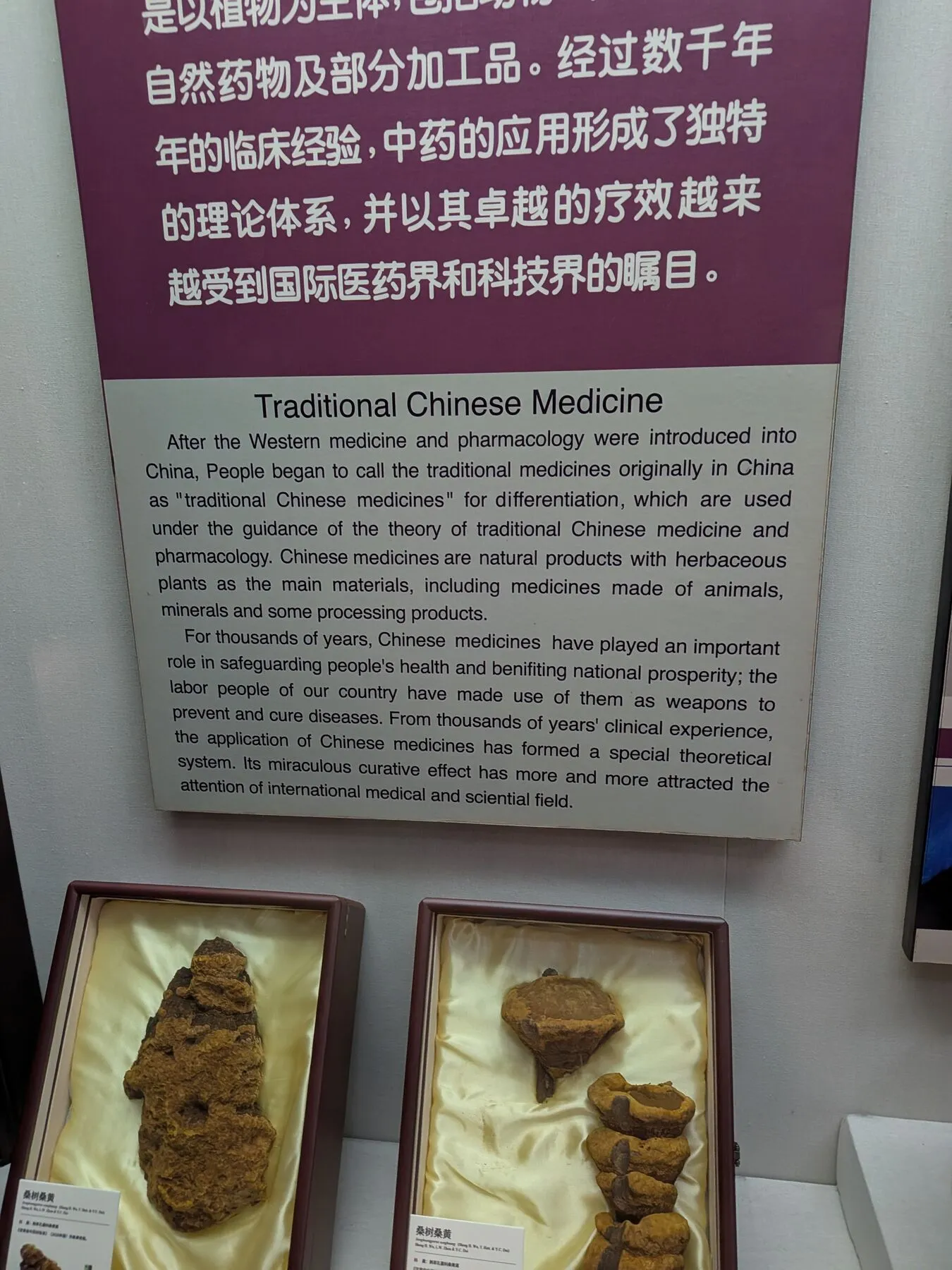
The entrance fee was small and absolutely worth it. The place offered a fascinating look into traditional Chinese medicine and how it was practiced.
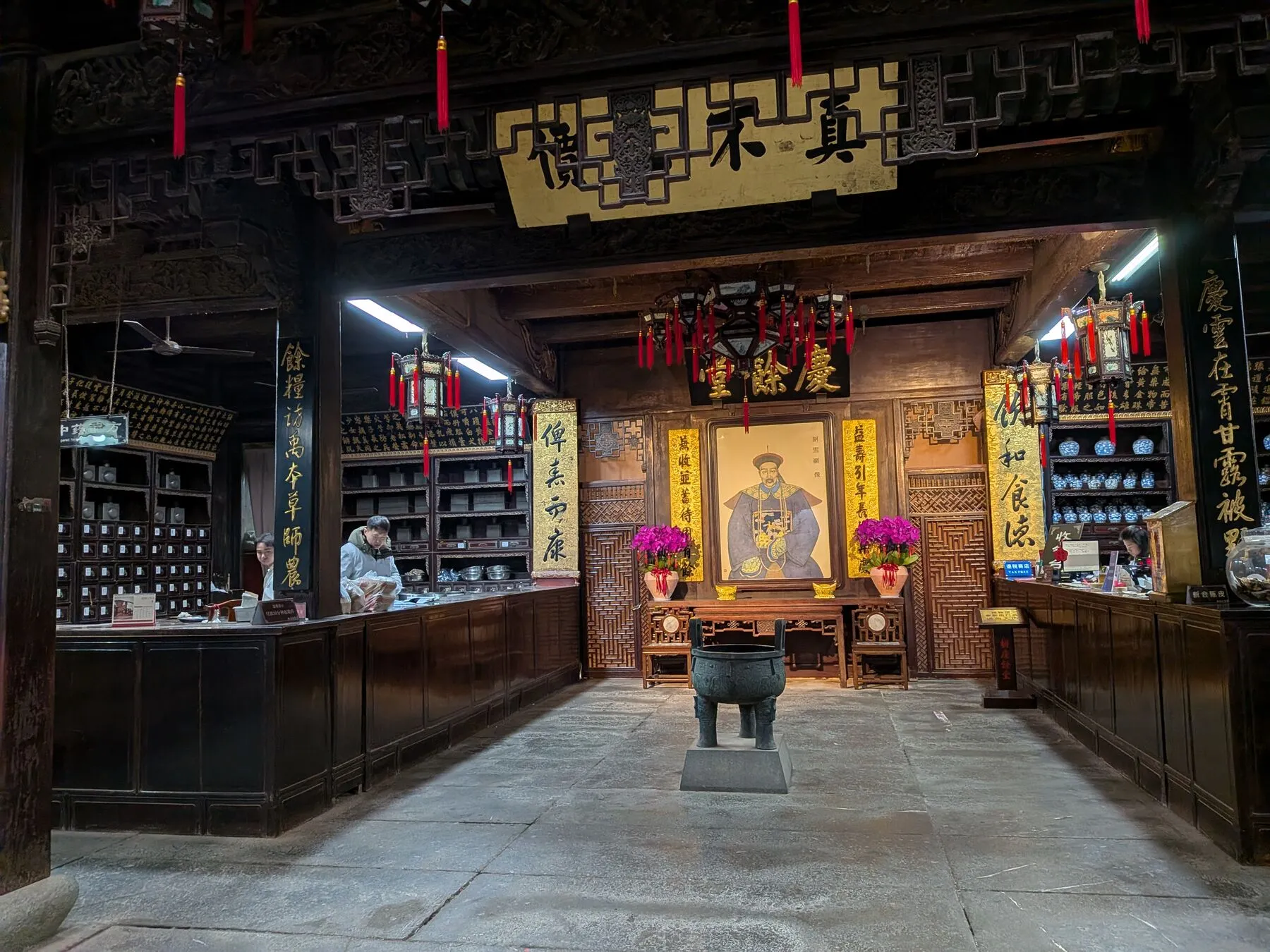 Hu Qing Yu Tang pharmacy store
Later I returned to West Lake to enjoy the golden hour and wind down a bit.
I sat on a bench to admire the endless blue. Little did my peace last, though, since some locals started filming me. By that point I was already used to people staring at me and occasionally taking photos of me during the trip, especially in Hangzhou. I suppose Western visitors were less common there than in central Shanghai.
Still, the lake at sunset was beautiful enough to remain the main memory.
Then came a full snack onslaught around the historical block.
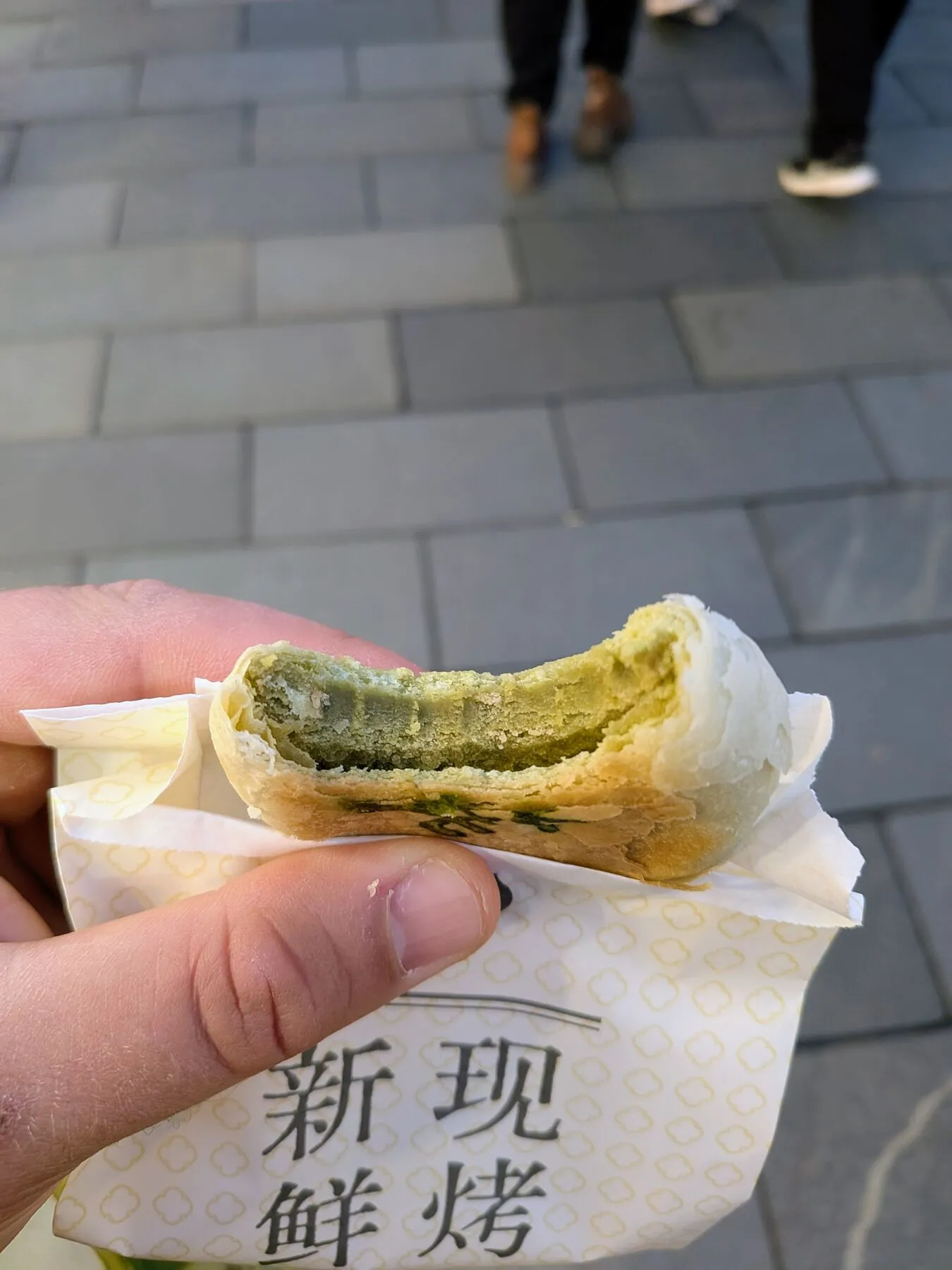 Pastry filled with tea tasting cream
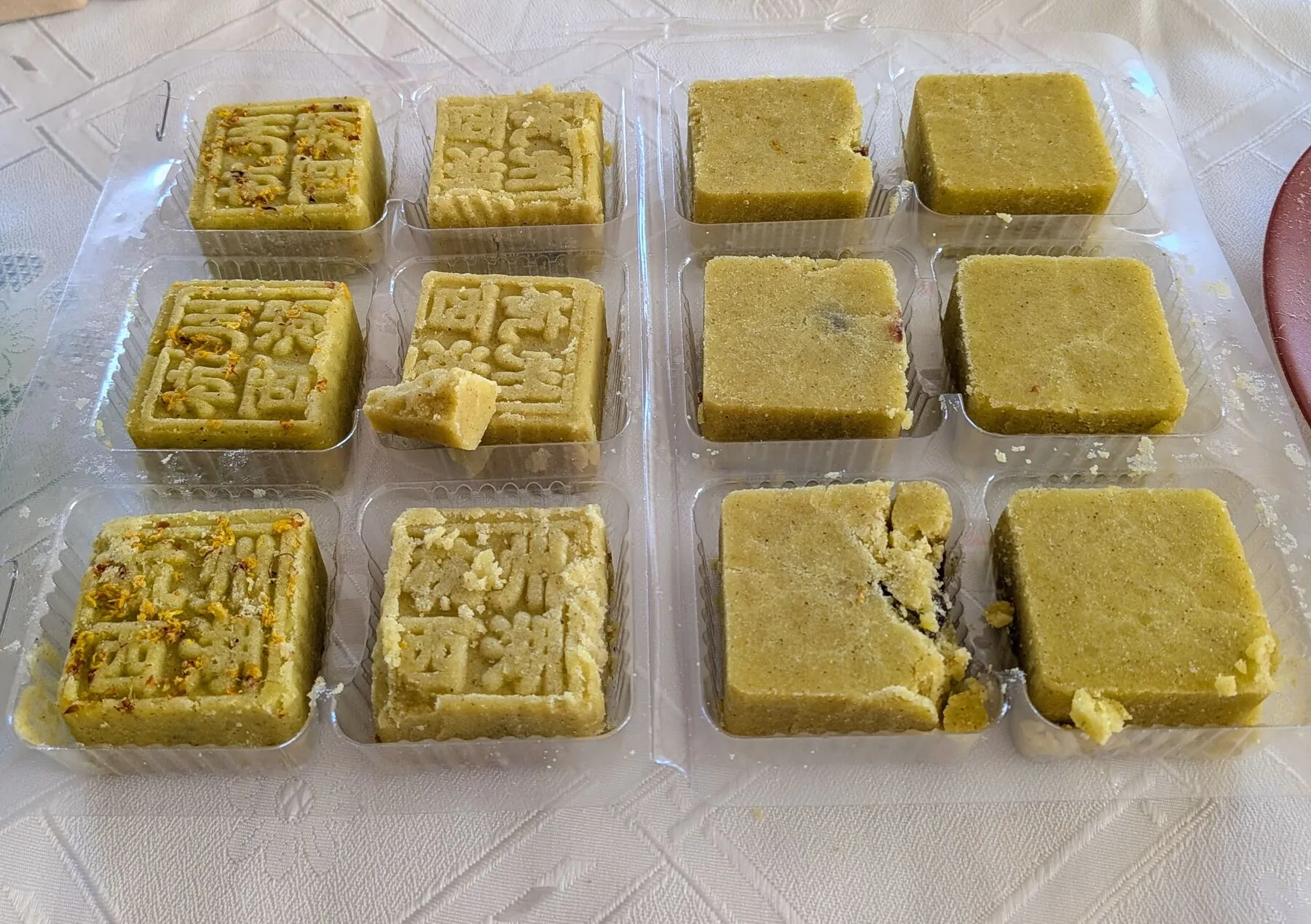 Tea infused bean cakes, brought back as a tasteful souvenir
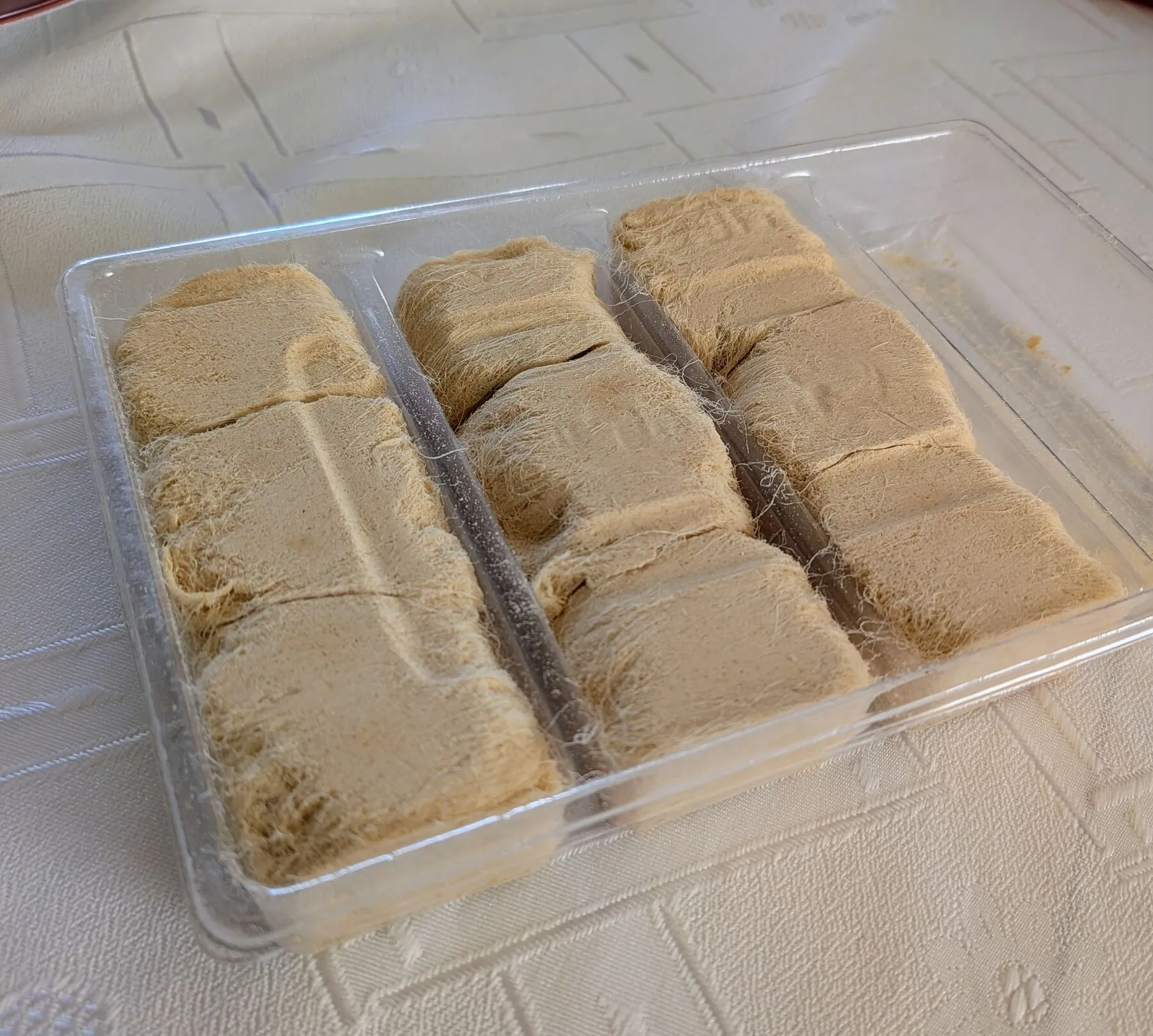 Dragon’s beard candy, a traditional candy made by hand pulling sugar into thousand thin threads. The seller had been really happy that somebody not local was trying his handmade dessert.
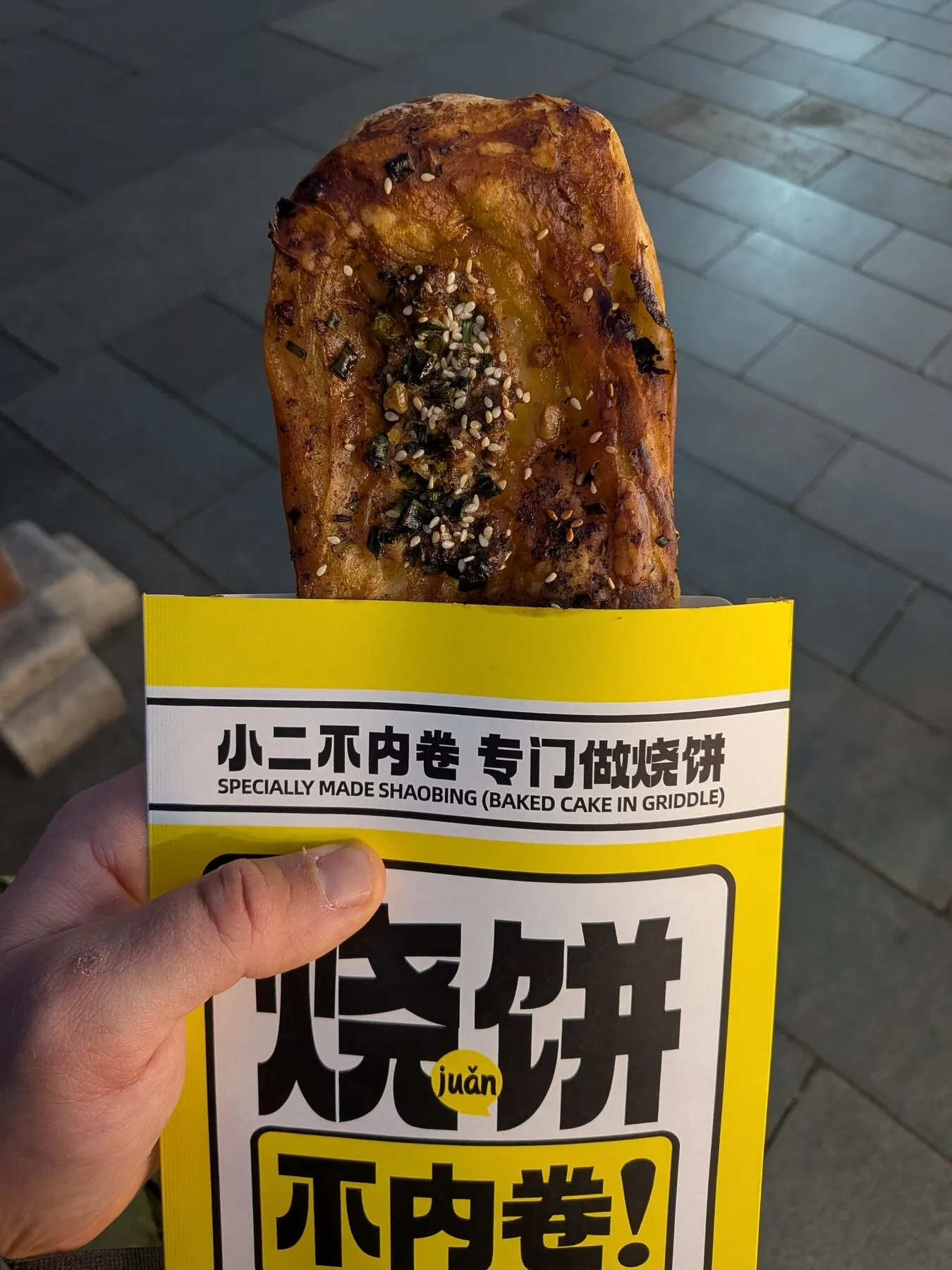 Flaky pastry with beef sauce
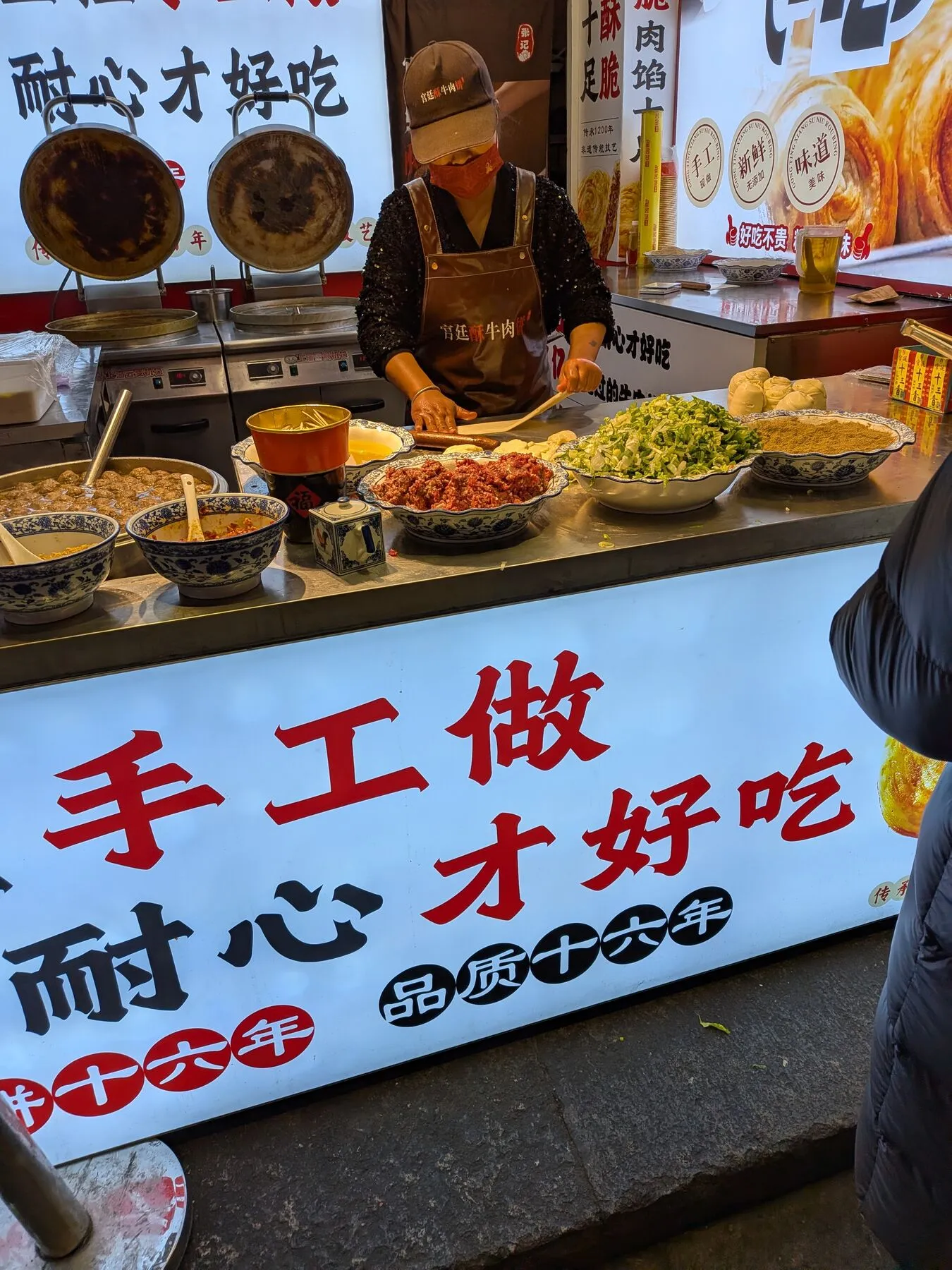 Seller making dough on site
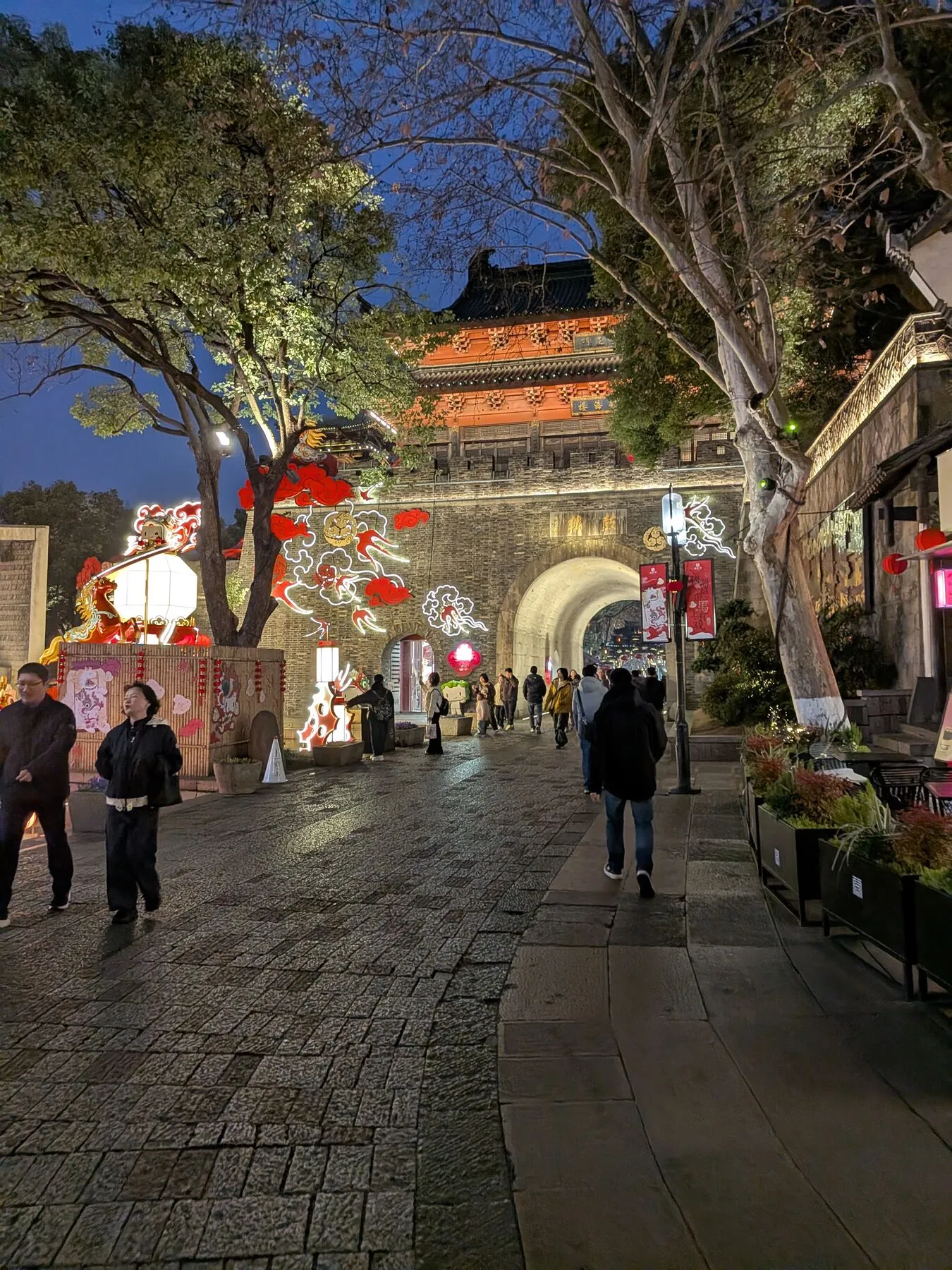
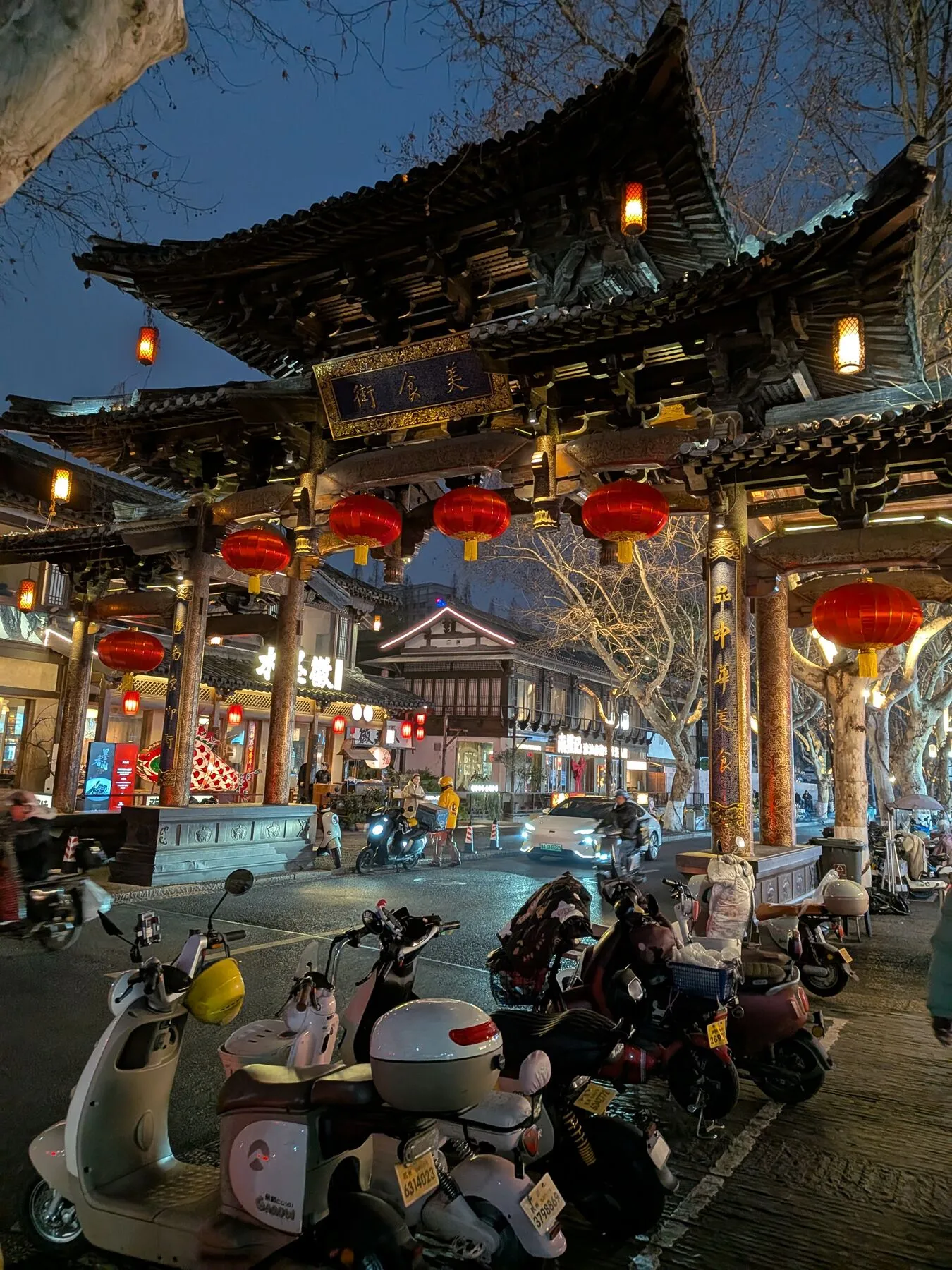 Walking around the old block
Because I had spent too much time wandering around Hangzhou, I was running late and had to take another DiDi back to Hangzhou East Railway Station.
On the train back, I found a few people sitting in my reserved seat area with rubbish around them. Once they realized I was actually looking for my seat and not just wandering in confusion, they moved immediately and apologized.
At around 240 km/h, we headed back to Shanghai.
Back in the city, I performed my now-daily ritual: one more walk through Nanjing Road before heading back to the hostel.
But Thursday had an extra feature.
By then, I was already used to people approaching me daily trying to lure me into stores selling copy products, so unsolicited street approaches were no longer exactly a novelty. That evening, though, several women also came up to me with lines like “let’s be friends” and “come drink beer,” which was scam-adjacent in a slightly different format.
To see whether they were all running the same scam scheme, I was asking from which city they are from. Funny enough, the reply was always Changshu.
I did not make any new friends that night.
On my way back to the hostel, I passed once again by a specific Sichuan restaurant I had noticed every day. Although I wasn’t hungry, I thought it would be a good chance to try it and scratch it off my list.
Not one of my proudest decisions.
Without a single clue what I was doing, I ended up ordering a dish that looked like meat with red peppers. In my head, those were harmless sweet peppers.
They were not.
One chopstick grab and one mouthful later, I was transferred to hell and back. To this day, it remains the spiciest and hottest thing I have ever eaten.
People around me were laughing out loud.
Fair enough.
Still made a great memory.
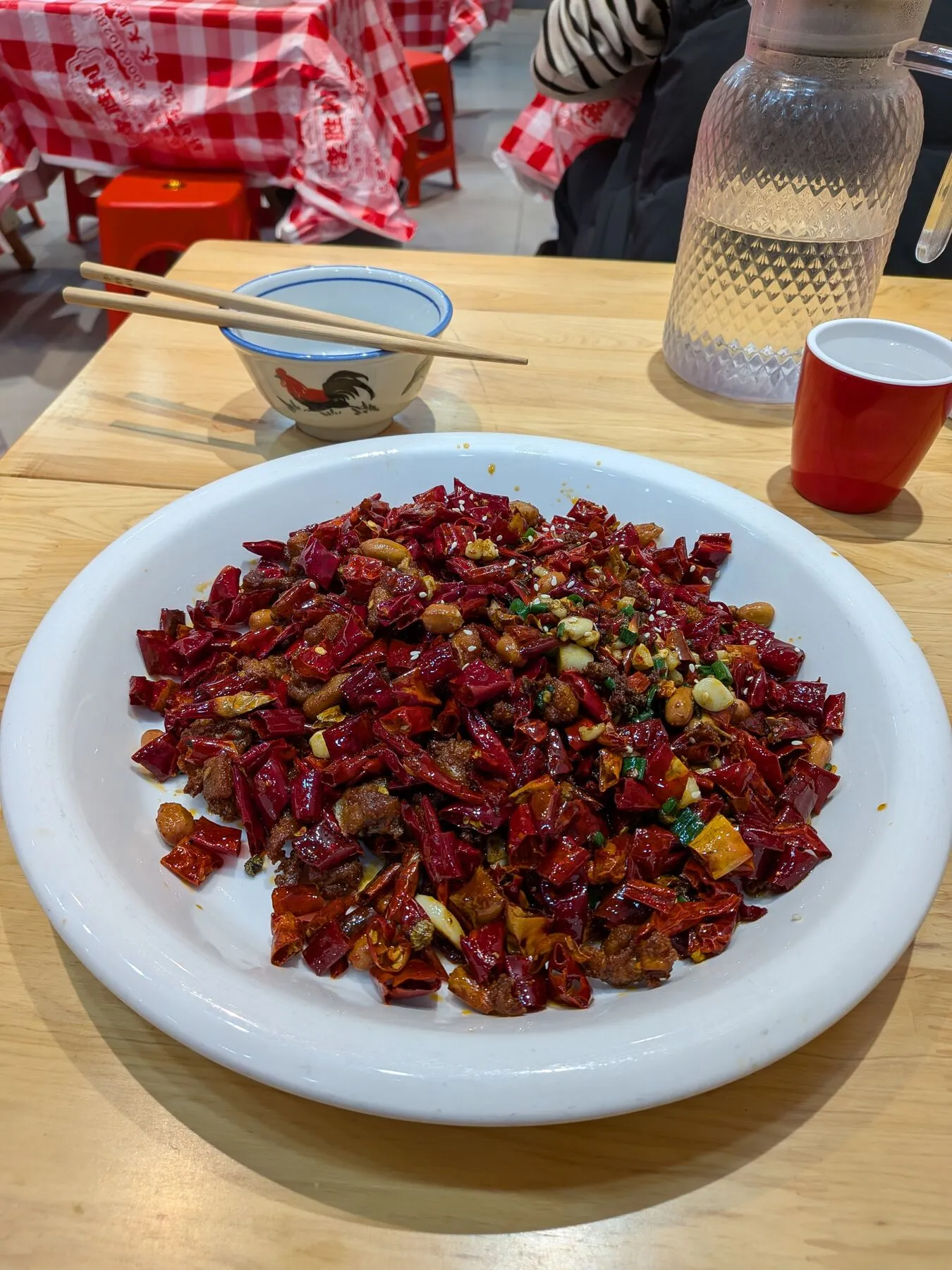 The dish that almost transformed me to a fire breathing dragon
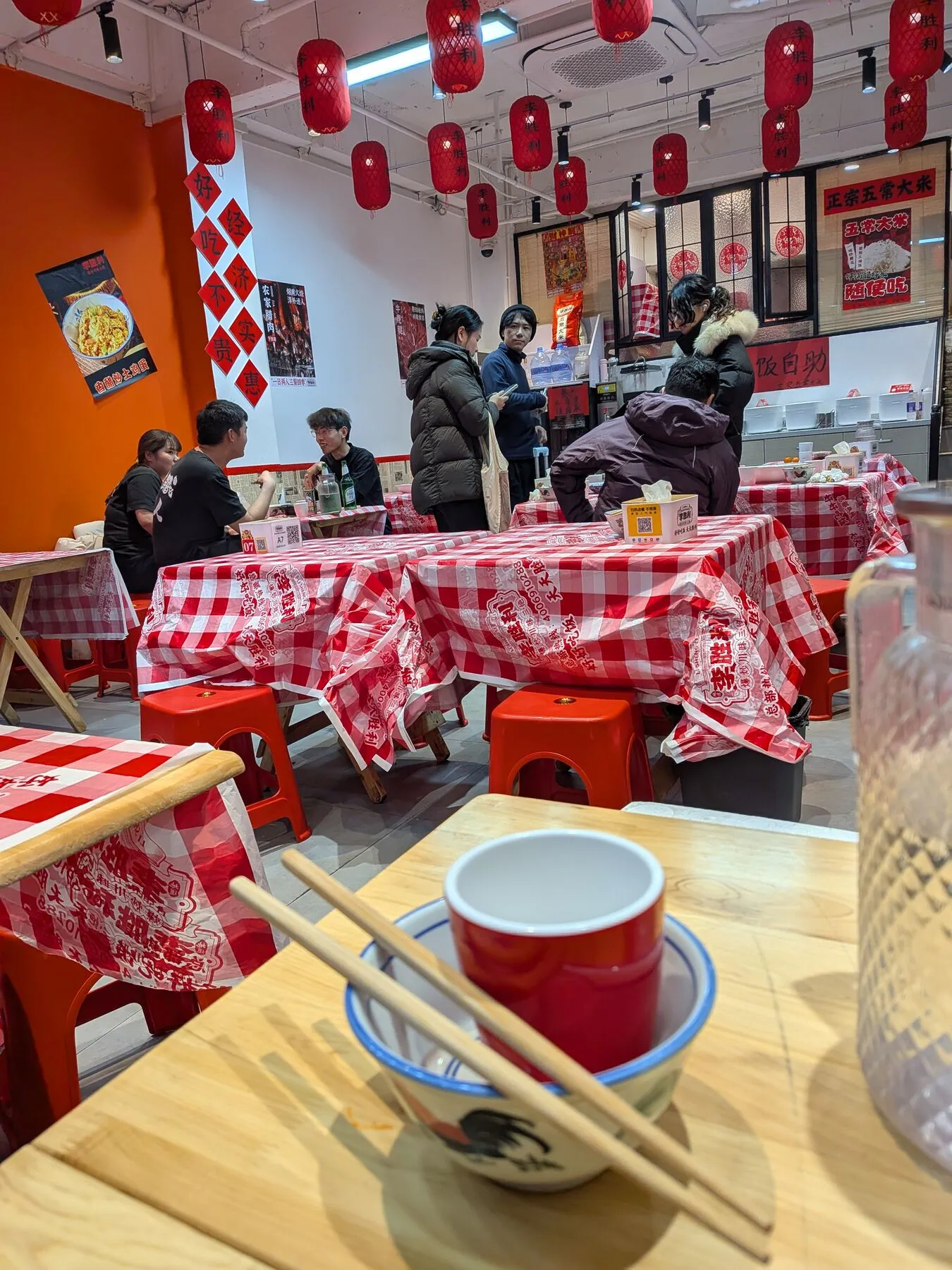 How the restaurant looked like
Friday: old slaughterhouses, wedding shoots, and the final food boxes to tick
Friday was my last day in Shanghai, so I checked my list to see which boxes were still empty.
One of them was 1933 Old Millfun, once the greatest slaughterhouse in the world and now transformed into a mall.
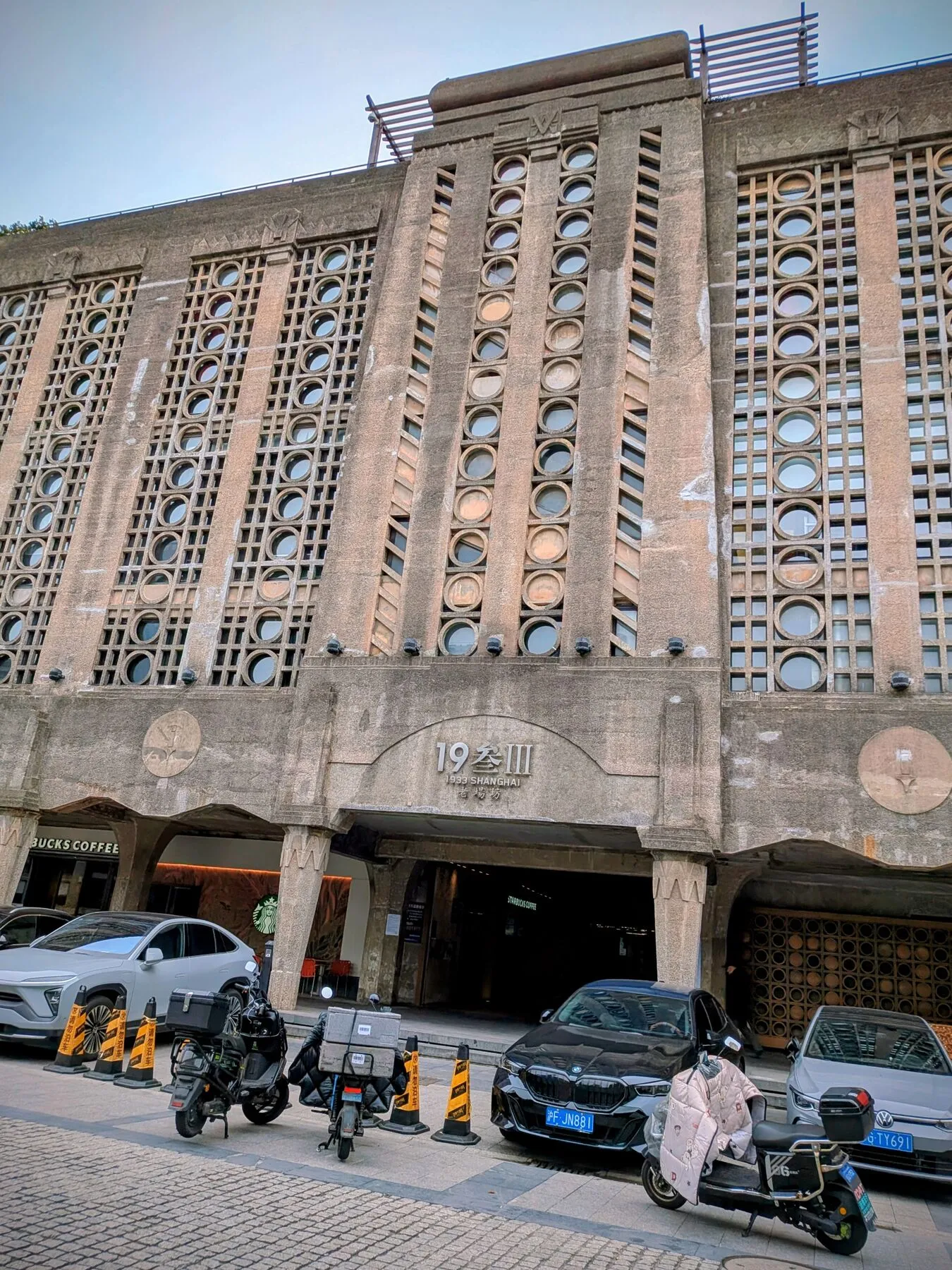 1933 Old Millfun.
On my way there, still on foot as usual, I passed an area where multiple couples were doing wedding photo shoots.
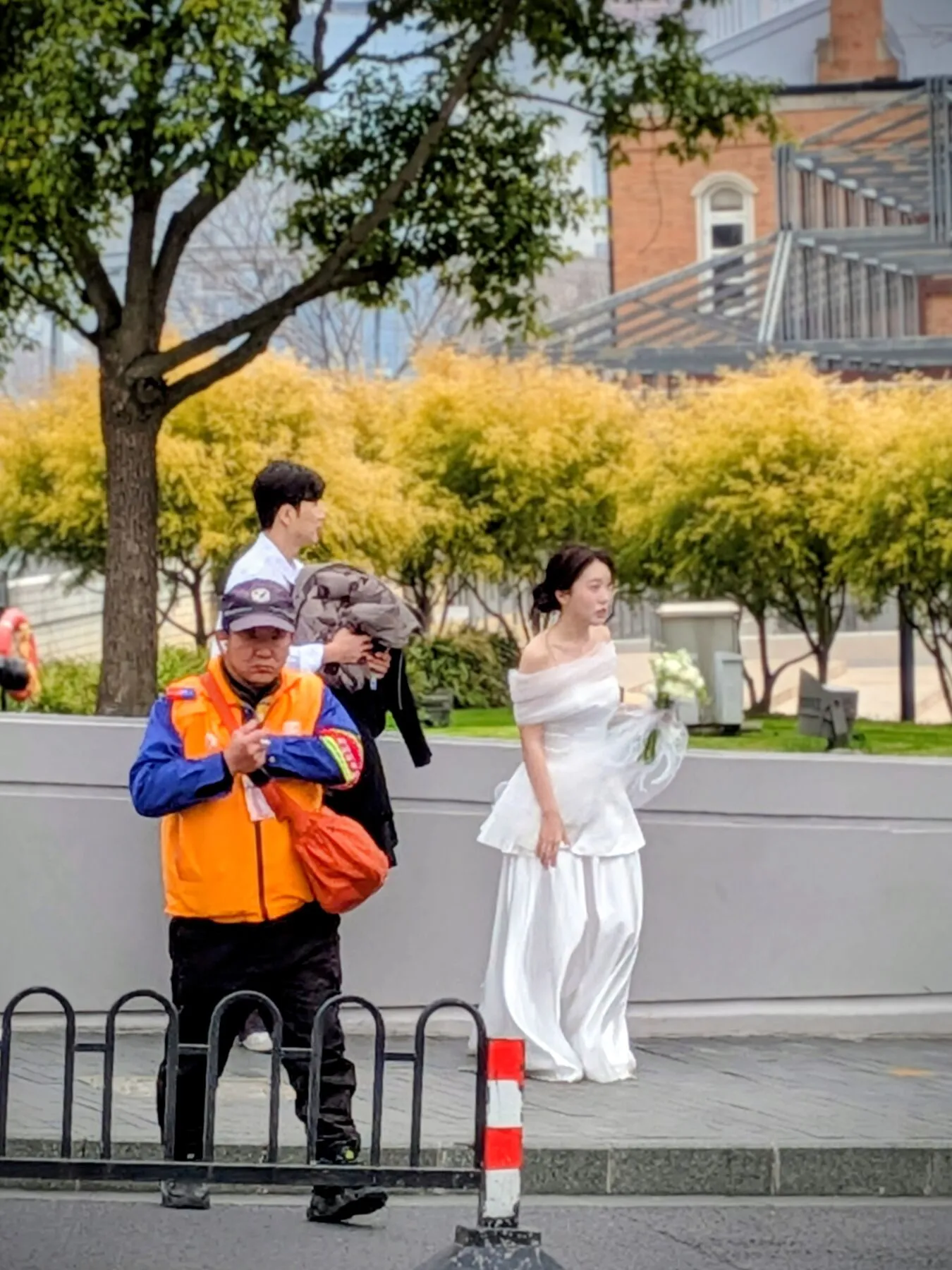 Wedding photoshoots on the way to Old Millfun
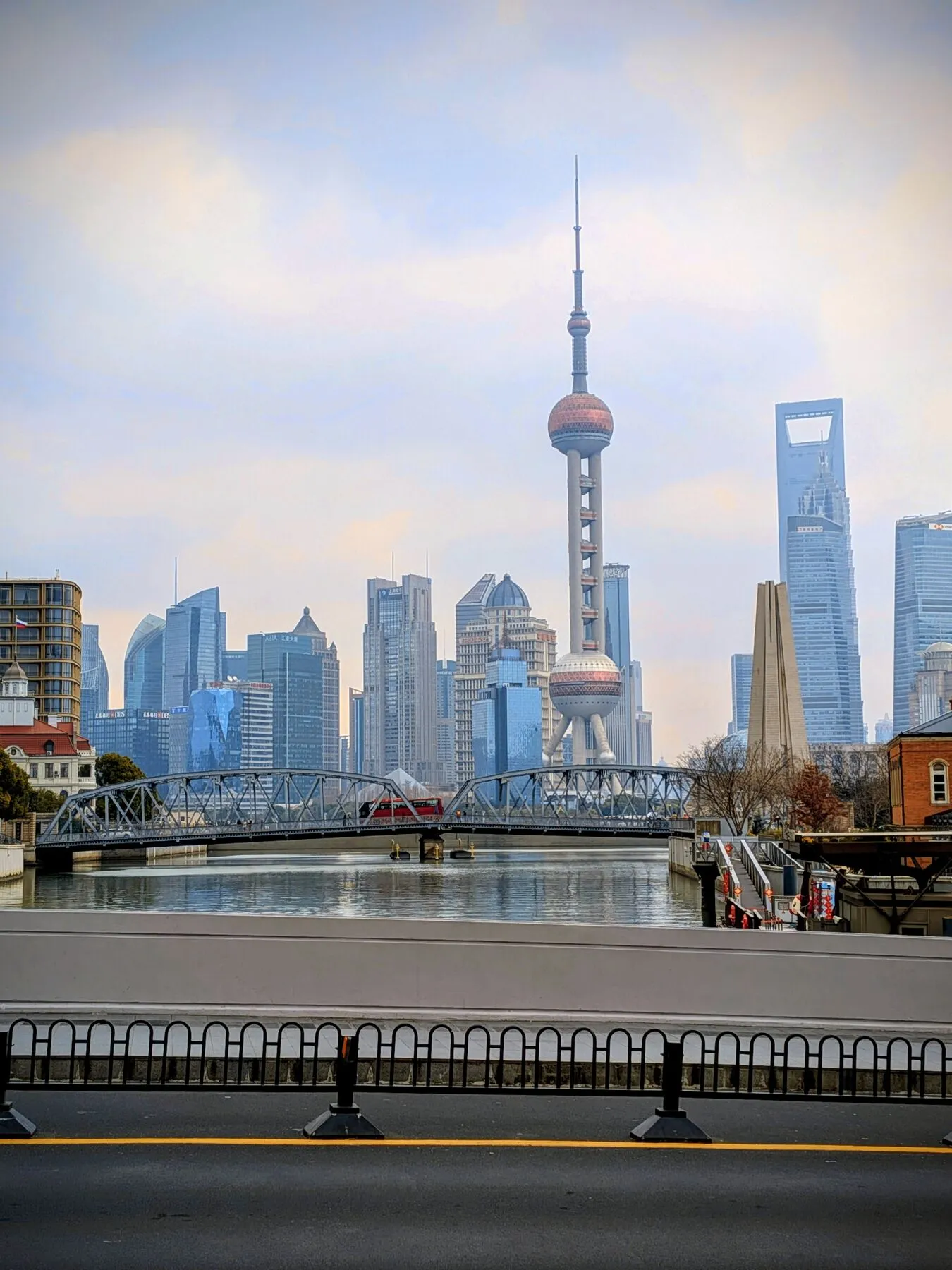 The photoshooting background
Bride after bride, groom after groom, all posing in carefully staged romance while I was out there walking around with sore legs and a travel checklist.
The contrast was excellent.
I spent the rest of the day revisiting Yuyuan Garden, Shanghai Old Street, and various malls along Nanjing Road, mainly enjoying the last hours without trying to force anything ambitious.
And then I realized there were still two food items I hadn’t tried yet: tea-boiled eggs and a sesame bun.
So naturally I fixed that.
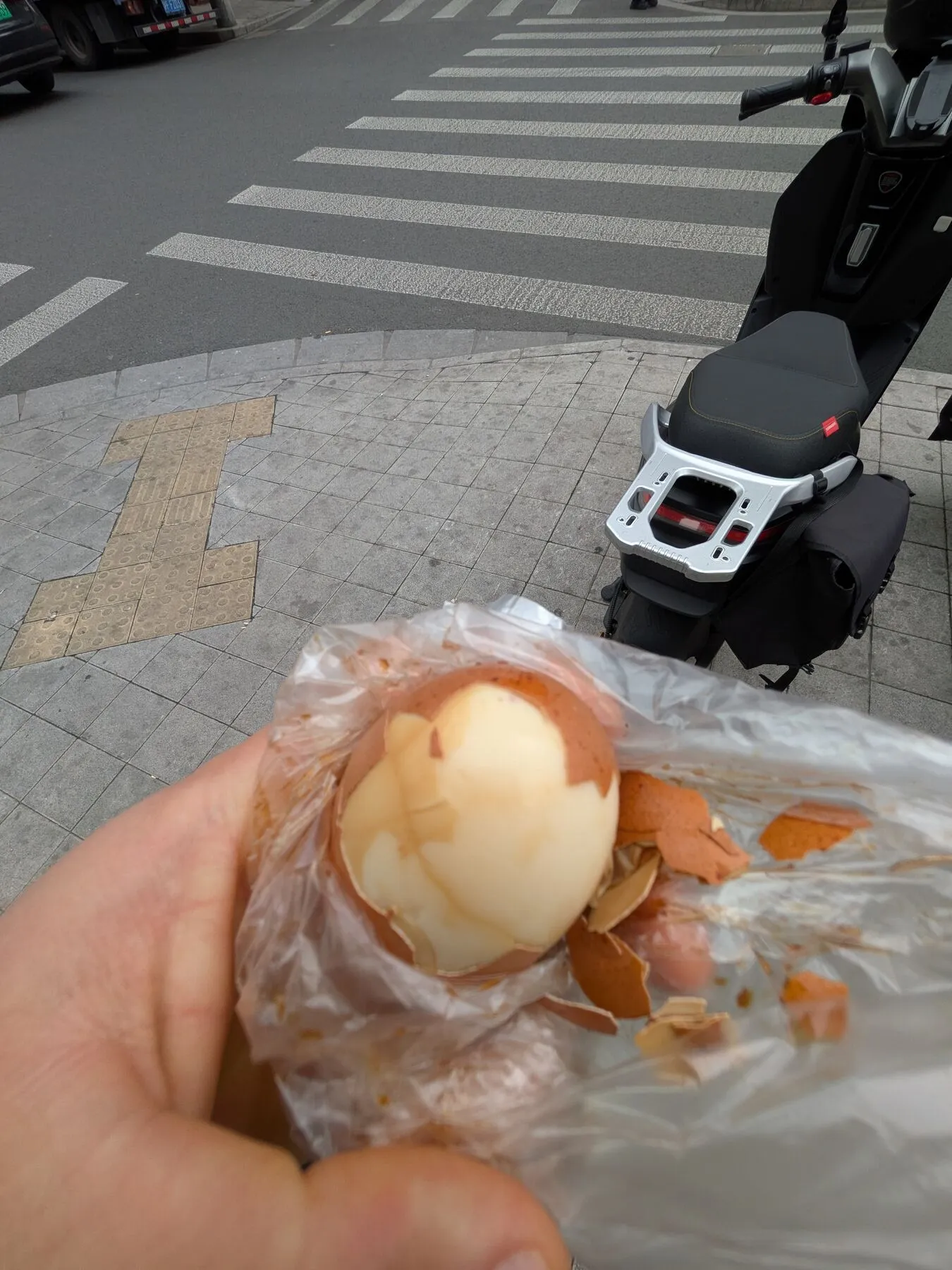
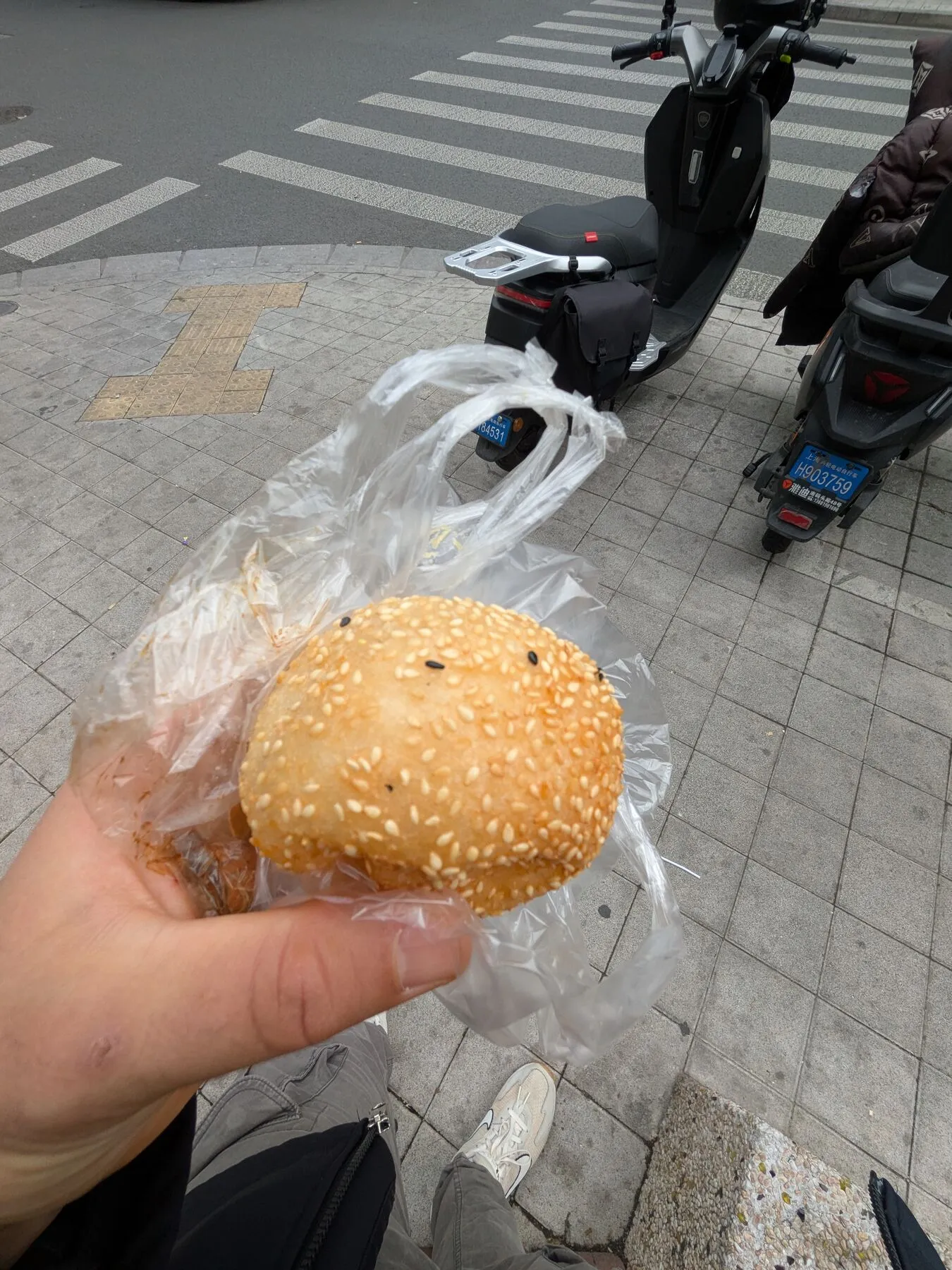
Both were tasty, although the egg still tasted mostly like… a boiled egg.
And that was that.
Epilogue
That was my first trip to China, and it is not one I will forget anytime soon.
The people were consistently courteous, the infrastructure was impressive, the food was adventurous in every possible direction, and the whole experience forced me out of my comfort zone in exactly the way a good trip should.
China did not feel easy at first. But once I adapted, it rewarded the effort.
A few random notes before I close:
-
Chinese people spit. A lot. I found it disgusting at first, then gradually got used to it. From what I read afterward, it has historical and cultural reasons behind it and seems to be declining among younger generations.
-
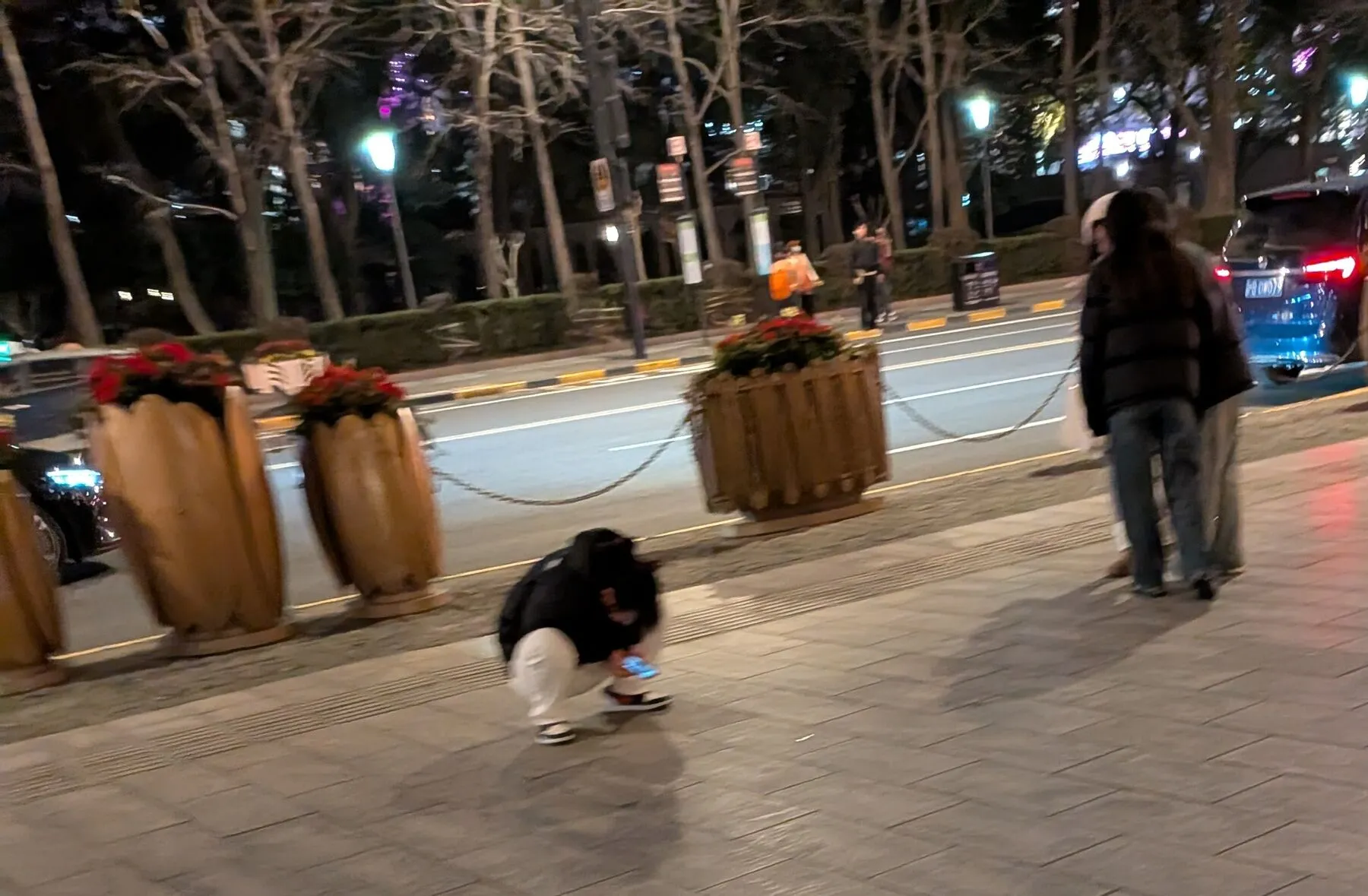
I also noticed, as in other parts of Asia, that many people squat casually on pavements instead of looking for a bench. At some point it stopped looking unusual and just became part of the scenery.
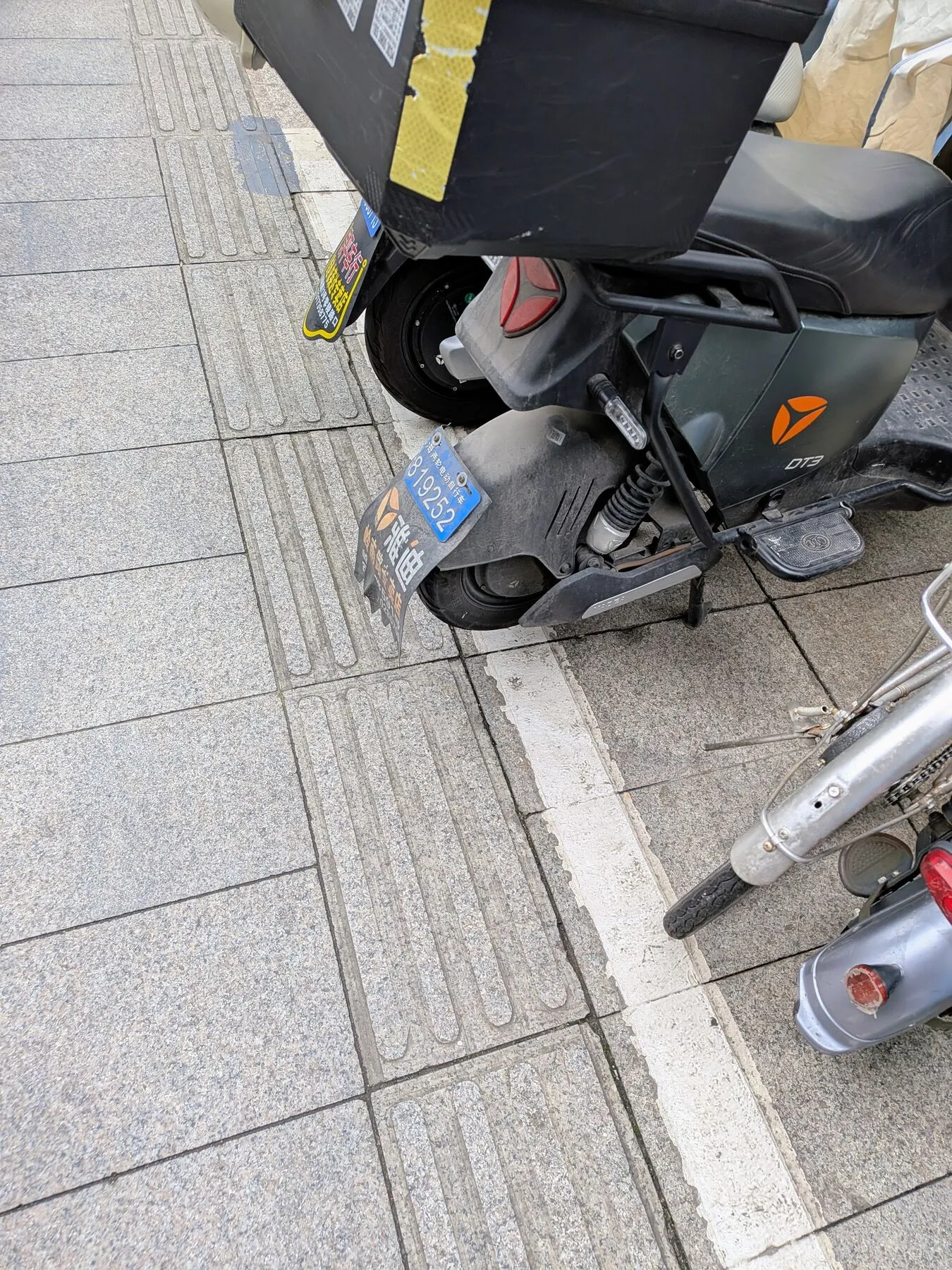
- People parking their scooters on ramps meant for blind pedestrians. That felt strangely familiar. A little piece of home from Greece, with the exact same level of respect.
-
Cameras were everywhere, even in the quietest corners, and I couldn’t shake the feeling of being constantly watched.
-
Food was really cheap. Full meals in restaurants cost around 14€ on average, and street snacks were about 0.3€ each.
Would I go back?
Absolutely.
Practical Notes
If you are planning a similar trip, here are a few things I wish I had known or that made a real difference:
- Set up Alipay and WeChat before arrival. You will need them for almost everything - ordering food, paying, scanning menus, and even navigating.
- Amap may require phone verification inside China. It worked fine without it abroad, but once I arrived it demanded a Chinese number. Have a backup plan or a temporary number service ready.
- Google services do not work in Chinese networks without a VPN. No Google Maps, no Google Search, no Gmail. Prepare accordingly.
- Trip.com worked well for booking trains and accommodation. Straightforward, English-friendly, and reliable.
- QR-code payment is everywhere.
- Book Hangzhou trains early. Even two weeks ahead, popular time slots were already selling out.